THE ADVENTURE COLLECTIVE® · Independent discovery and booking for outdoor travel

Skip uncertain mountain flights and trade altitude delays for panoramic skies. This 40-minute helicopter transfer between Lukla and Kathmandu offers reliable routing and unforgettable Himalayan views—ideal for trekkers tight on time or anyone seeking a dramatic aerial arrival.
Skip uncertain mountain flights and trade altitude delays for panoramic skies. This 40-minute helicopter transfer between Lukla and Kathmandu offers reliable routing and unforgettable Himalayan views—ideal for trekkers tight on time or anyone seeking a dramatic aerial arrival.
The rotor thrum lifts you above terraced hills and braided rivers, and Kathmandu shrinks into a patterned mosaic beneath the helicopter.
Verified experiences and guided adventures in the surrounding area.
Operated by Master Himalaya Treks and Expedition · Lukla, Province No. 1
The rotor thrum lifts you above terraced hills and braided rivers, and Kathmandu shrinks into a patterned mosaic beneath the helicopter.
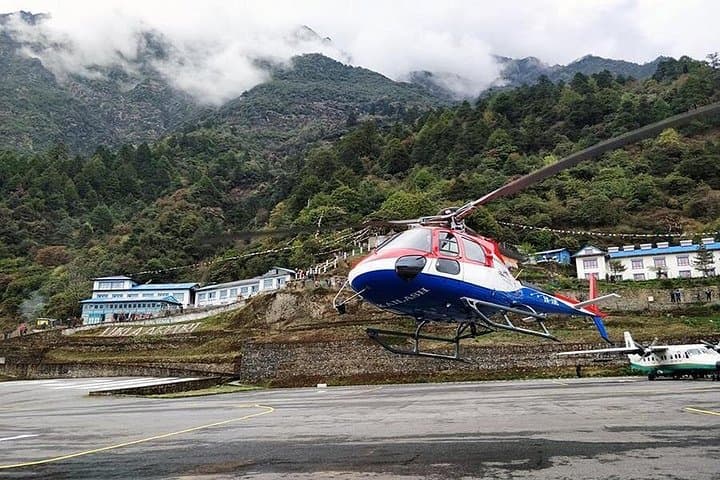
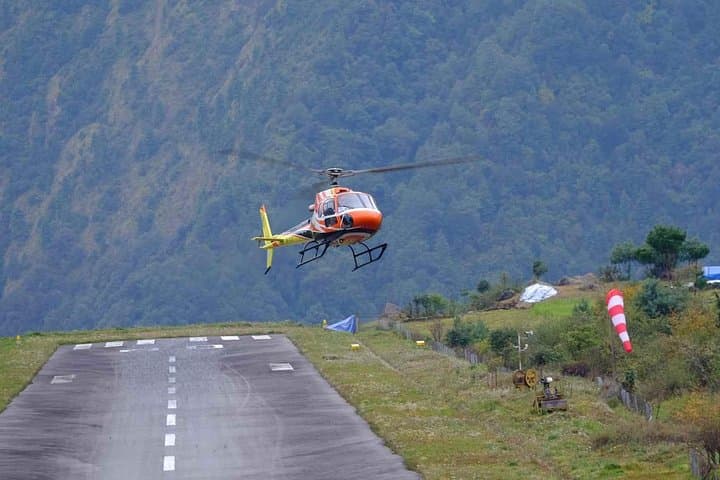
This 40-minute transfer between Lukla and Kathmandu delivers an aerial perspective few land routes can match—deep valleys cut by glacial rivers, steep forested ridges, and the sharp white teeth of the high Himalaya pushing the skyline. Historically, Lukla’s tiny airstrip (Tenzing-Hillary Airport) has been the vital link for Everest-region trekkers; helicopters now add reliability when fixed-wing flights are grounded by wind or low clouds.
Geology here is raw: uplifted metamorphic rock, granite plutons, and young glacial valleys. Culturally, the flight crosses regions shaped by Sherpa villages and Buddhist gompas clinging to slopes, their prayer flags flicking at ridgelines.
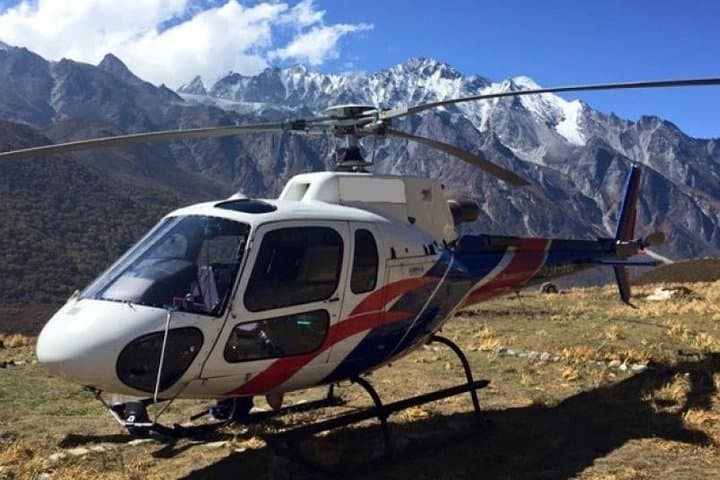
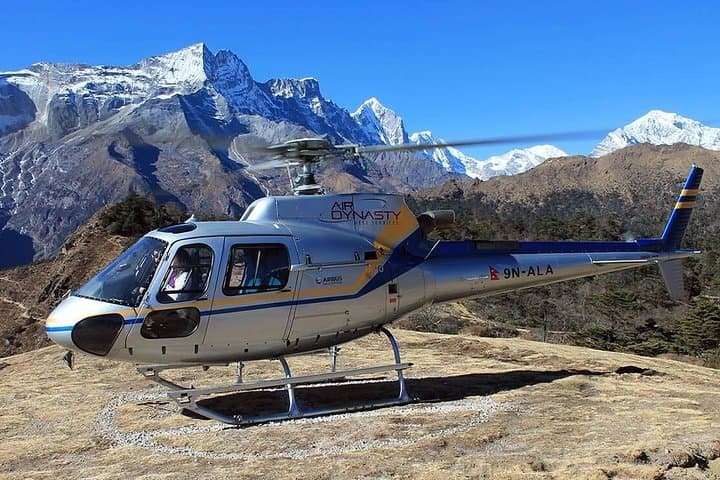
Expect sweeping panoramas of snow-capped peaks—on clear days even Everest and Nuptse can be visible—while valleys below dare you to imagine the footpaths that connect remote communities.
Practical guidance: flights run seasonally with best visibility in the pre-monsoon (spring) and post-monsoon (autumn) windows; mornings are clearest. Baggage is limited (15 kg per passenger). The operator provides hotel pickup in Kathmandu and instant booking options, but all flights remain weather-dependent; allow buffer time for onward connections. Not recommended for guests with serious heart conditions; infants must sit on laps.
Bring layered clothing, a camera with secure strap, and your passport—Lukla–Kathmandu transfers are efficient, time-saving, and a memorable start or finish to an Everest-region itinerary.
easy.
40 minutes (one-way).
Minimal physical fitness required; passengers must be able to board a helicopter and follow crew instructions
The helicopter transfer takes about 40 minutes one-way between Lukla and Kathmandu under normal conditions.
The operator allows a maximum of 15 kg per passenger; pack accordingly and use soft-sided luggage when possible.
Yes—mountain weather can force cancellations; the operator usually offers refunds if cancelled at least 24 hours prior or will reschedule when possible.
Yes, infants are allowed but must sit on an adult’s lap; passengers with serious cardiovascular issues are advised not to fly.
Lukla’s airstrip became famous as the main gateway to the Everest region; it was expanded in the late 1960s and named for Tenzing Norgay and Sir Edmund Hillary.
Flight operators limit passenger numbers and encourage efficient transfers to reduce multiple land trips; visitors should respect local communities and avoid littering in fragile mountain ecosystems.
Master Himalaya Treks and Expedition operates guided outdoor trips and adventures with an emphasis on safety, stewardship, and memorable experiences.
The rotor thrum lifts you above terraced hills and braided rivers, and Kathmandu shrinks into a patterned mosaic beneath the helicopter.
The rotor thrum lifts you above terraced hills and braided rivers, and Kathmandu shrinks into a patterned mosaic beneath the helicopter.
This 40-minute transfer between Lukla and Kathmandu delivers an aerial perspective few land routes can match—deep valleys cut by glacial rivers, steep forested ridges, and the sharp white teeth of the high Himalaya pushing the skyline. Historically, Lukla’s tiny airstrip (Tenzing-Hillary Airport) has been the vital link for Everest-region trekkers; helicopters now add reliability when fixed-wing flights are grounded by wind or low clouds.
Geology here is raw: uplifted metamorphic rock, granite plutons, and young glacial valleys. Culturally, the flight crosses regions shaped by Sherpa villages and Buddhist gompas clinging to slopes, their prayer flags flicking at ridgelines.
Expect sweeping panoramas of snow-capped peaks—on clear days even Everest and Nuptse can be visible—while valleys below dare you to imagine the footpaths that connect remote communities.
Practical guidance: flights run seasonally with best visibility in the pre-monsoon (spring) and post-monsoon (autumn) windows; mornings are clearest. Baggage is limited (15 kg per passenger). The operator provides hotel pickup in Kathmandu and instant booking options, but all flights remain weather-dependent; allow buffer time for onward connections. Not recommended for guests with serious heart conditions; infants must sit on laps.
Bring layered clothing, a camera with secure strap, and your passport—Lukla–Kathmandu transfers are efficient, time-saving, and a memorable start or finish to an Everest-region itinerary.