THE ADVENTURE COLLECTIVE® · Independent discovery and booking for outdoor travel

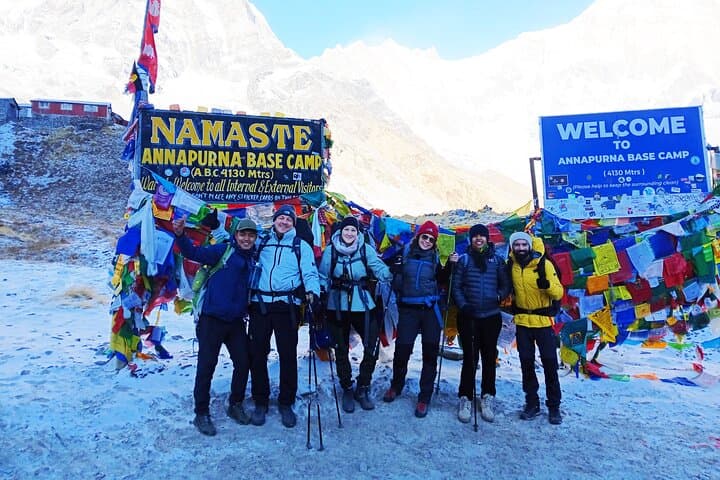
A compact seven-day trek from Kathmandu to Annapurna Base Camp that threads Gurung villages, rhododendron forests, and high alpine meadows. Designed for walkers with limited time, it finishes at ABC (4,130 m) inside the dramatic Annapurna Sanctuary.
A compact seven-day trek from Kathmandu to Annapurna Base Camp that threads Gurung villages, rhododendron forests, and high alpine meadows. Designed for walkers with limited time, it finishes at ABC (4,130 m) inside the dramatic Annapurna Sanctuary.
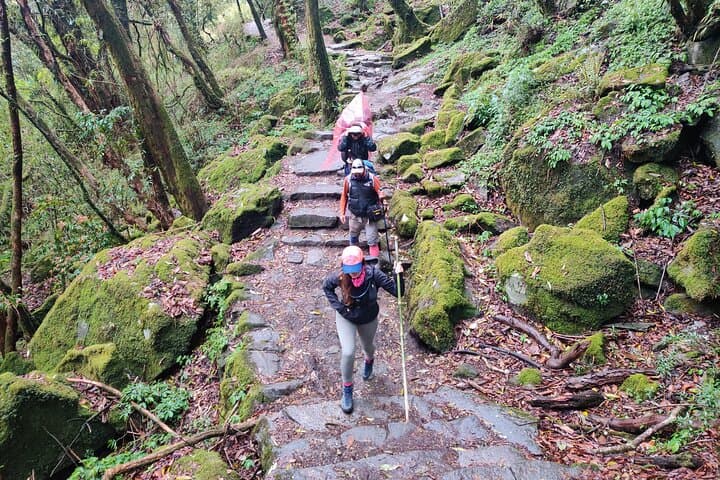
A chill morning in Kathmandu, tea steaming from a paper cup, and the bus easing onto Prithvi Highway—your first miles toward the Annapurna Sanctuary feel like a deliberate undoing of city haste. Mountain ridgelines appear between rice terraces as the road drops into Pokhara; from Birethanti the trail turns to stone and root, and the forest begins to pull you inward.
Verified experiences and guided adventures in the surrounding area.
Operated by Cordial Trek Pvt. Ltd. · Pokhara, Gandaki Province
A chill morning in Kathmandu, tea steaming from a paper cup, and the bus easing onto Prithvi Highway—your first miles toward the Annapurna Sanctuary feel like a deliberate undoing of city haste. Mountain ridgelines appear between rice terraces as the road drops into Pokhara; from Birethanti the trail turns to stone and root, and the forest begins to pull you inward.
The route climbs through Gurung villages—Ghandruk and Chomrong—places shaped by centuries of trans-Himalayan trade and resilient mountain agriculture. Geologically the sanctuary is a glacial amphitheater carved by ice and fed by streams from Annapurna I and Machhapuchhre; the moraine-lined bowl at ABC frames a raw skyline of serrated ridges and hanging glaciers.
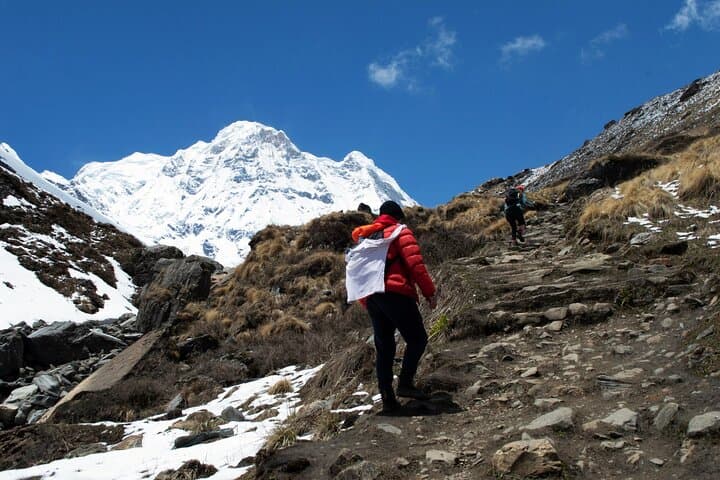
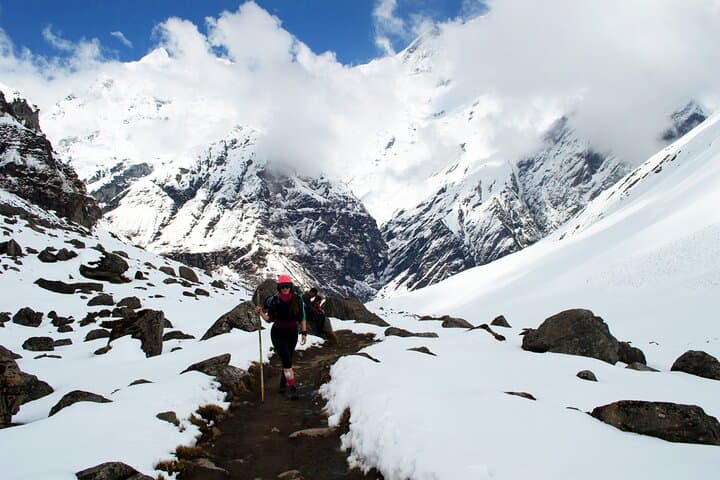
Culturally, expect warm teahouse hospitality and simple Dal-Bhat meals, and time your mornings to watch sunlight march across Annapurna South and Fishtail. The trail is largely stone steps, mixed with rhododendron and oak forests at lower levels and barren alpine meadows near base camp; you’ll encounter narrow ridgelines, stream crossings and occasional steep stair sections.
Practical guidance: pace for altitude—gain no more than 300–500 m per day when possible—and carry layers for sudden wind and temperature drops above 3,000 m. Hydrate often; water can be purchased or treated at teahouses. Footwear should be broken-in and offer ankle support for long descents. Nights are in mountain guest houses with basic facilities; be prepared for simple sleeping arrangements and early starts to catch the views. With seven days you get a compact but achievable ascent to 4,130 m, where the sanctuary’s cirque opens and the mountains feel close enough to touch.
challenging.
7 days.
Suitable for hikers with regular cardio fitness and experience on long day hikes; be prepared for sustained uphill days and altitude.
Yes—trekking in the Annapurna Conservation Area requires the ACAP permit and a TIMS card; your operator typically arranges these before departure.
The trek is physically demanding due to sustained uphill sections and altitude; good fitness and gradual pacing over the 7-day itinerary make it achievable for most fit walkers.
Nights are spent in mountain guest houses (teahouses) offering basic twin rooms and local meals like dal-bhat; hot showers and charging are sometimes payable extras at higher stops.
If you follow acclimatization guidance—ascending slowly, hydrating, and monitoring symptoms—the risk is manageable, but be prepared to descend if moderate to severe symptoms appear.
The Annapurna Sanctuary has long been a seasonal grazing and pilgrimage landscape for local Gurung communities; the modern trekking route grew after the 1970s when Nepal opened to international trekking.
The trek passes through the Annapurna Conservation Area Project (ACAP), which emphasizes waste management and supports community-run lodges—minimize waste and use designated facilities.
Cordial Trek Pvt. Ltd. operates guided outdoor trips and adventures with an emphasis on safety, stewardship, and memorable experiences.
A chill morning in Kathmandu, tea steaming from a paper cup, and the bus easing onto Prithvi Highway—your first miles toward the Annapurna Sanctuary feel like a deliberate undoing of city haste. Mountain ridgelines appear between rice terraces as the road drops into Pokhara; from Birethanti the trail turns to stone and root, and the forest begins to pull you inward.
A chill morning in Kathmandu, tea steaming from a paper cup, and the bus easing onto Prithvi Highway—your first miles toward the Annapurna Sanctuary feel like a deliberate undoing of city haste. Mountain ridgelines appear between rice terraces as the road drops into Pokhara; from Birethanti the trail turns to stone and root, and the forest begins to pull you inward.
The route climbs through Gurung villages—Ghandruk and Chomrong—places shaped by centuries of trans-Himalayan trade and resilient mountain agriculture. Geologically the sanctuary is a glacial amphitheater carved by ice and fed by streams from Annapurna I and Machhapuchhre; the moraine-lined bowl at ABC frames a raw skyline of serrated ridges and hanging glaciers.
Culturally, expect warm teahouse hospitality and simple Dal-Bhat meals, and time your mornings to watch sunlight march across Annapurna South and Fishtail. The trail is largely stone steps, mixed with rhododendron and oak forests at lower levels and barren alpine meadows near base camp; you’ll encounter narrow ridgelines, stream crossings and occasional steep stair sections.
Practical guidance: pace for altitude—gain no more than 300–500 m per day when possible—and carry layers for sudden wind and temperature drops above 3,000 m. Hydrate often; water can be purchased or treated at teahouses. Footwear should be broken-in and offer ankle support for long descents. Nights are in mountain guest houses with basic facilities; be prepared for simple sleeping arrangements and early starts to catch the views. With seven days you get a compact but achievable ascent to 4,130 m, where the sanctuary’s cirque opens and the mountains feel close enough to touch.