THE ADVENTURE COLLECTIVE® · Independent discovery and booking for outdoor travel

Walk a compact cultural circuit through Kathmandu Valley’s most iconic spiritual sites. This guided day tour links Swayambhunath’s hilltop stupa, the sacred banks of Pashupatinath and the medieval courtyards of Bhaktapur for a practical, immersive introduction to the valley’s living history.
Walk a compact cultural circuit through Kathmandu Valley’s most iconic spiritual sites. This guided day tour links Swayambhunath’s hilltop stupa, the sacred banks of Pashupatinath and the medieval courtyards of Bhaktapur for a practical, immersive introduction to the valley’s living history.
You begin on a low, wind-scoured hill where prayer flags snap and monkeys pick through stone steps—Swayambhunath looks over the valley, white dome bright against a sky that can change in an instant.
Verified experiences and guided adventures in the surrounding area.
Operated by Liberty Holidays · Kathmandu, Bagmati Province
You begin on a low, wind-scoured hill where prayer flags snap and monkeys pick through stone steps—Swayambhunath looks over the valley, white dome bright against a sky that can change in an instant.
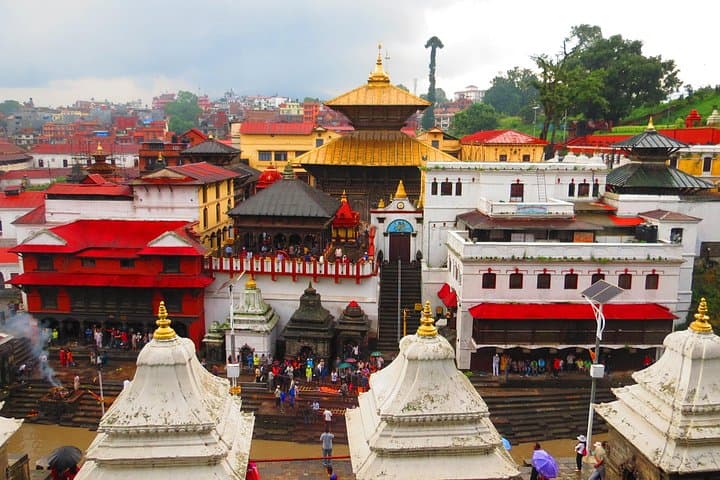
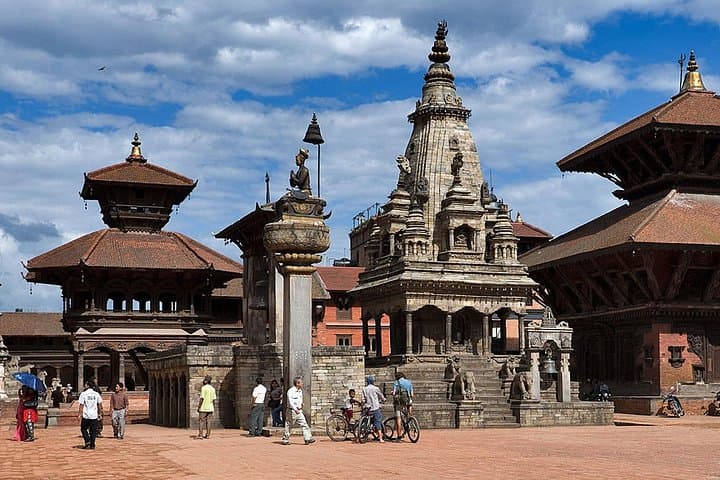
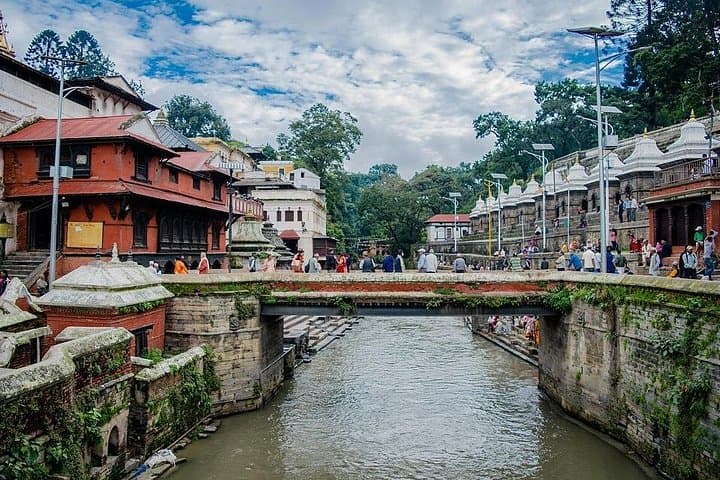
From that vantage the city spills out: terracotta roofs, the braided Bagmati River below, and the gilded roofs of Pashupatinath across a narrow bank where rituals of life and death unfold in plain sight. Later the bus hums east to Bhaktapur, where narrow alleys open into sun-warmed courtyards, carved wood porches and the squat, towering line of Nyatapola temple.
This loop covers three UNESCO-listed expressions of the Kathmandu Valley’s layered history: Swayambhunath’s ancient stupa and its mix of Buddhist and Hindu iconography; Pashupatinath’s millennia of Shaiva practice and open-air cremation rites; Bhaktapur’s 12th–18th century Newar architecture and craft traditions. The valley itself is a bowl of lacustrine deposits—old lake sediments that allowed durable clay architecture and a dense urban fabric to develop.
Practical guidance: expect 5–7 hours of mostly easy walking with many stone steps and cobbled streets. Dress modestly (shoulders and knees covered) and bring water, a sun hat and small change for temple donations. Photography is fine at most exterior sites but be discreet at Pashupatinath and avoid photographing cremations. A local guide will smooth logistics, explain iconography and point out artisan workshops in Bhaktapur. Start early to beat traffic and the midday heat; the rhythm of the day—prayer wheels, sadhus, pottery kilns—will give you more than sights: it gives context.
easy.
6–7 hours.
Light aerobic fitness for walking and climbing stairs; able to manage several short stair sections and uneven cobbles.
Yes—this tour’s inclusions list guide fees and all entrance fees as covered in the booking.
Exterior photography is generally allowed; at Pashupatinath be mindful of privacy and avoid photographing cremation ceremonies or restricted sanctums.
The tour is suitable for all fitness levels; infants must sit on an adult’s lap during transfers per operator policy.
No special permits are required for foreign visitors beyond normal entry fees; a licensed local guide is included with this private tour and recommended for context and smooth access.
Kathmandu Valley’s UNESCO sites reflect centuries of Newar craftsmanship and religious interchange—Bhaktapur’s durbar complex dates back to medieval Malla kings while Swayambhunath and Pashupatinath carry millennia of Buddhist and Shaiva practice.
Sites are sensitive to foot traffic and ritual waste; respect barriers, don’t feed wildlife, and support local craftspeople and guide services to keep cultural landscapes viable.
Liberty Holidays operates guided outdoor trips and adventures with an emphasis on safety, stewardship, and memorable experiences.

You begin on a low, wind-scoured hill where prayer flags snap and monkeys pick through stone steps—Swayambhunath looks over the valley, white dome bright against a sky that can change in an instant.
You begin on a low, wind-scoured hill where prayer flags snap and monkeys pick through stone steps—Swayambhunath looks over the valley, white dome bright against a sky that can change in an instant.
From that vantage the city spills out: terracotta roofs, the braided Bagmati River below, and the gilded roofs of Pashupatinath across a narrow bank where rituals of life and death unfold in plain sight. Later the bus hums east to Bhaktapur, where narrow alleys open into sun-warmed courtyards, carved wood porches and the squat, towering line of Nyatapola temple.
This loop covers three UNESCO-listed expressions of the Kathmandu Valley’s layered history: Swayambhunath’s ancient stupa and its mix of Buddhist and Hindu iconography; Pashupatinath’s millennia of Shaiva practice and open-air cremation rites; Bhaktapur’s 12th–18th century Newar architecture and craft traditions. The valley itself is a bowl of lacustrine deposits—old lake sediments that allowed durable clay architecture and a dense urban fabric to develop.
Practical guidance: expect 5–7 hours of mostly easy walking with many stone steps and cobbled streets. Dress modestly (shoulders and knees covered) and bring water, a sun hat and small change for temple donations. Photography is fine at most exterior sites but be discreet at Pashupatinath and avoid photographing cremations. A local guide will smooth logistics, explain iconography and point out artisan workshops in Bhaktapur. Start early to beat traffic and the midday heat; the rhythm of the day—prayer wheels, sadhus, pottery kilns—will give you more than sights: it gives context.