THE ADVENTURE COLLECTIVE® · Independent discovery and booking for outdoor travel

An accessible high-mountain trek north of Kathmandu that reaches Kyanjin Gompa and offers optional climbs to Kyanjin Ri or Tsergo Ri. Expect forested river trails, teahouse nights and panoramic views of Langtang Lirung.
An accessible high-mountain trek north of Kathmandu that reaches Kyanjin Gompa and offers optional climbs to Kyanjin Ri or Tsergo Ri. Expect forested river trails, teahouse nights and panoramic views of Langtang Lirung.
Dawn breaks over the Kathmandu Valley and the bus winds north through terraced fields, climbing toward the tree-line that marks the entry to Langtang National Park. By the time trekkers step onto the trails at Syabrubesi, the river is already daring the path to keep pace: braided, swift, and constant.
Verified experiences and guided adventures in the surrounding area.
Operated by Mosaic Adventure · Syabrubesi, Bagmati Province
Dawn breaks over the Kathmandu Valley and the bus winds north through terraced fields, climbing toward the tree-line that marks the entry to Langtang National Park. By the time trekkers step onto the trails at Syabrubesi, the river is already daring the path to keep pace: braided, swift, and constant.
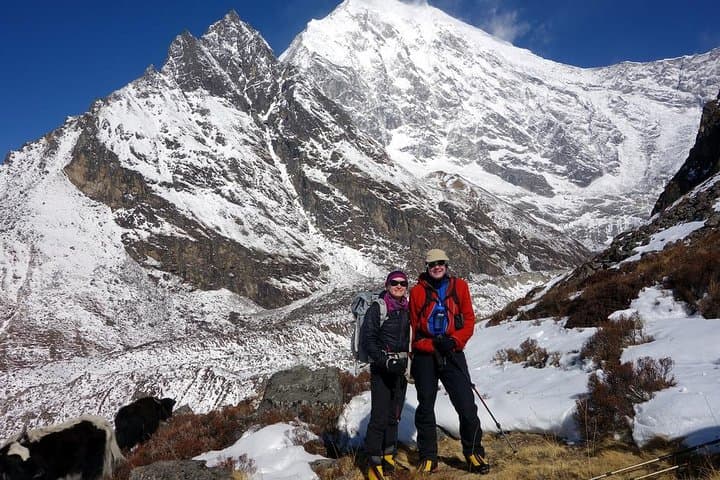
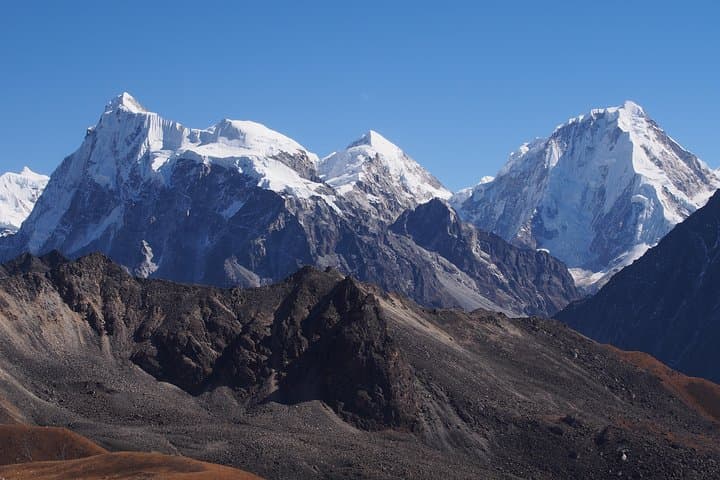
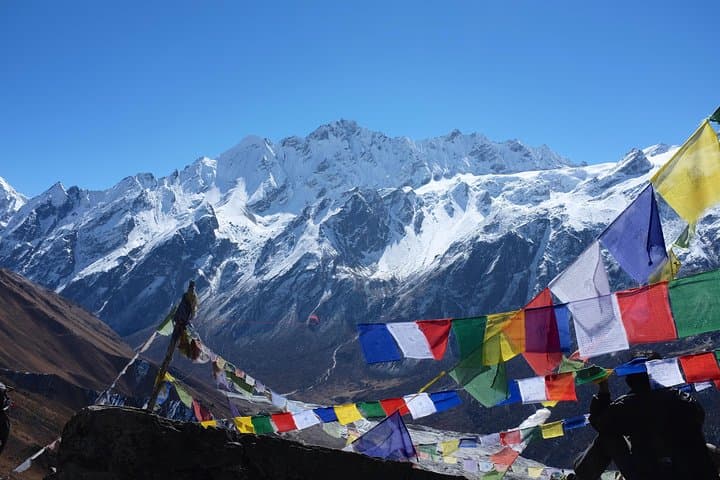
The Langtang Valley trail follows the Langtang Khola through rhododendron and oak forest, across suspension bridges and into broad meadows overlooked by Langtang Lirung (7,246 m). Geologically the valley is a classic glacial trough carved from uplifted Himalayan thrusts; moraines and high lakes crop up above the treeline near Kyanjin. Culturally the route threads Tamang villages and Kyanjin Gompa, a small Buddhist monastery that preserves Tibetan-influenced art, cheese-making traditions and oral histories tied to the Tibetan plateau.
Expect 7–8 days on trail with daily walks from 4–7 hours, steady elevation gain from ~1,460 m (Syabrubesi) to Kyanjin at ~3,830 m, and optional day climbs to Kyanjin Ri (~4,773 m) or Tsergo Ri (~4,984 m). Terrain alternates packed dirt, river-bank trails, pine-scented ascents and some steep, rocky sections near high camps.
Practical guidance: pace your ascent for altitude, carry layered insulation and a warm sleeping layer for teahouses, and bank extra time for weather-affected days. Hydrate early and often—streams are frequent but treat water. Local teahouses provide basic meals and lodging, and porters are commonly used to share loads. The reward is close-up high-mountain panoramas and village life that moves to the rhythm of the valley.
challenging.
8 days.
Moderate to strong cardiovascular fitness with experience on multi-day hikes; comfortable with 4–7 hour walking days and uphill sections.
Yes—Langtang is inside Langtang National Park; trekkers typically need a TIMS card and a national park entry permit obtained in Kathmandu or via operator.
Nighttime temperatures at Kyanjin (3,830 m) can drop below freezing, especially fall and winter; bring an insulated jacket and warm sleeping layers.
Yes—this itinerary uses teahouse lodging throughout the valley; facilities are basic but provide meals, a bed and hot drinks.
Hikers with solid fitness and some multi-day trekking experience can manage it, but altitude and longer days make it more appropriate for those with prior trail experience.
Langtang Valley lies within Langtang National Park (established 1976) and has long been inhabited by Tamang communities with Tibetan cultural links; Kyanjin Gompa is a local spiritual center.
Trail communities emphasize waste reduction and controlled trekking permits; visitors can support by carrying out trash, minimizing single-use plastics and choosing local guides.
Mosaic Adventure operates guided outdoor trips and adventures with an emphasis on safety, stewardship, and memorable experiences.
Dawn breaks over the Kathmandu Valley and the bus winds north through terraced fields, climbing toward the tree-line that marks the entry to Langtang National Park. By the time trekkers step onto the trails at Syabrubesi, the river is already daring the path to keep pace: braided, swift, and constant.
Dawn breaks over the Kathmandu Valley and the bus winds north through terraced fields, climbing toward the tree-line that marks the entry to Langtang National Park. By the time trekkers step onto the trails at Syabrubesi, the river is already daring the path to keep pace: braided, swift, and constant.
The Langtang Valley trail follows the Langtang Khola through rhododendron and oak forest, across suspension bridges and into broad meadows overlooked by Langtang Lirung (7,246 m). Geologically the valley is a classic glacial trough carved from uplifted Himalayan thrusts; moraines and high lakes crop up above the treeline near Kyanjin. Culturally the route threads Tamang villages and Kyanjin Gompa, a small Buddhist monastery that preserves Tibetan-influenced art, cheese-making traditions and oral histories tied to the Tibetan plateau.
Expect 7–8 days on trail with daily walks from 4–7 hours, steady elevation gain from ~1,460 m (Syabrubesi) to Kyanjin at ~3,830 m, and optional day climbs to Kyanjin Ri (~4,773 m) or Tsergo Ri (~4,984 m). Terrain alternates packed dirt, river-bank trails, pine-scented ascents and some steep, rocky sections near high camps.
Practical guidance: pace your ascent for altitude, carry layered insulation and a warm sleeping layer for teahouses, and bank extra time for weather-affected days. Hydrate early and often—streams are frequent but treat water. Local teahouses provide basic meals and lodging, and porters are commonly used to share loads. The reward is close-up high-mountain panoramas and village life that moves to the rhythm of the valley.