THE ADVENTURE COLLECTIVE® · Independent discovery and booking for outdoor travel

Spend a day moving through Kathmandu’s most significant religious and historical sites — Durbar Square, Boudhanath, Pashupatinath and Swayambhunath — with a local guide. Expect temple steps, ritual life, and sweeping valley views on a 6–8 hour shared tour.
Spend a day moving through Kathmandu’s most significant religious and historical sites — Durbar Square, Boudhanath, Pashupatinath and Swayambhunath — with a local guide. Expect temple steps, ritual life, and sweeping valley views on a 6–8 hour shared tour.
Morning light slices between brick houses as your driver threads through Kathmandu’s narrow lanes, depositing you at the threshold of a city that wears centuries visibly — wood-carved temples, prayer flags snapping, and the distant buzz of markets. This joining tour strings together four of the valley’s essential sites: Kathmandu Durbar Square, Boudhanath Stupa, Pashupatinath Temple and Swayambhunath (the Monkey Temple).
Verified experiences and guided adventures in the surrounding area.
Operated by Outshine Adventure Pvt Ltd · Kathmandu, Bagmati Province
Morning light slices between brick houses as your driver threads through Kathmandu’s narrow lanes, depositing you at the threshold of a city that wears centuries visibly — wood-carved temples, prayer flags snapping, and the distant buzz of markets. This joining tour strings together four of the valley’s essential sites: Kathmandu Durbar Square, Boudhanath Stupa, Pashupatinath Temple and Swayambhunath (the Monkey Temple).
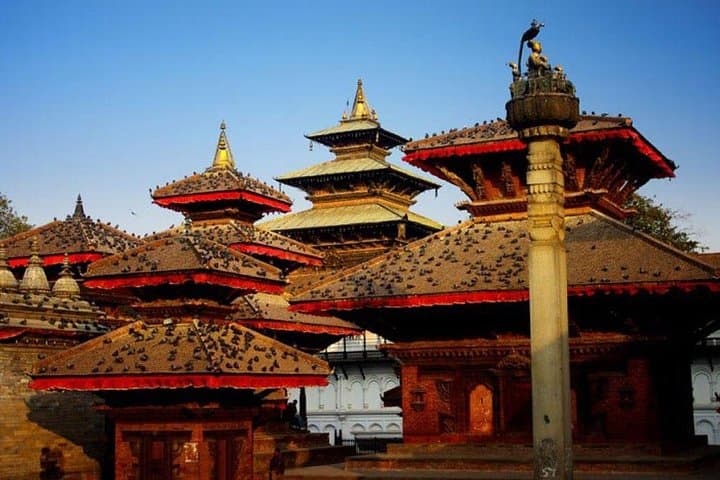
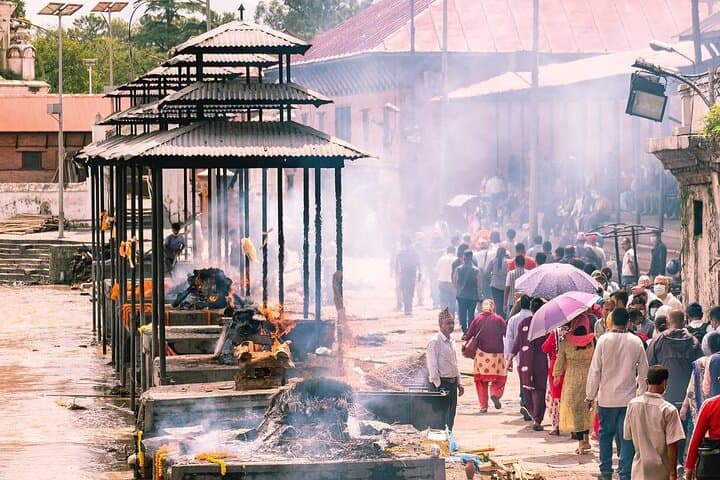
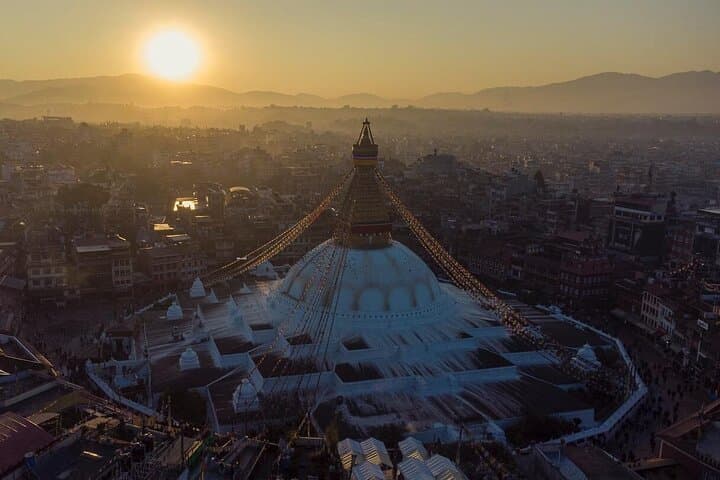
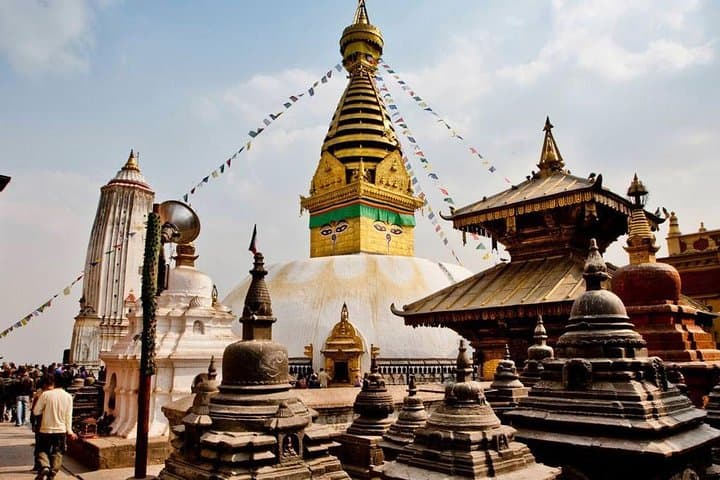
Kathmandu Durbar Square centers historical power and Newar craft: tiered pagodas and palaces, some structures surviving medieval earthquakes, others painstakingly restored. Boudhanath’s vast white dome and painted eyes rotate with clockwise pilgrims and prayer wheels; it’s a focal point of Tibetan Buddhism in South Asia. Pashupatinath, on the banks of the Bagmati River, is the living core of Shaiva worship—sadhus, cremation ghats and brass-ornamented shrines press inward. Perched on a hill, Swayambhunath offers a panoramic read of the valley and a close encounter with playful macaques.
Geology and history converge here: the Kathmandu basin’s alluvial floor and surrounding hills created a defensible valley that fostered dense urban and religious growth for millennia. Culturally, expect to see ritual offerings, votive scarves, and the pace of devotion as much as monuments.
Practical guidance: the full-day shared tour runs roughly 6–8 hours; wear comfortable walking shoes for temple steps and courtyards, bring water and a scarf for modesty at shrines, and budget time for photography and small donations. Respect photography rules at Pashupatinath and follow your guide’s cues in crowded areas.
easy.
6–8 hours.
Suitable for most fitness levels; involves walking on uneven stone, stairs, and standing during rituals.
The joining tour runs approximately 6–8 hours, depending on traffic and group size.
This tour description indicates admissions are not included; bring cash in Nepali rupees for site fees where applicable.
Yes — the itinerary is classified easy and suitable for most fitness levels, but expect stairs and walking on uneven surfaces.
Photography is permitted at many locations but restricted in certain sanctums and at some areas of Pashupatinath; follow your guide’s directions.
Kathmandu Valley’s palace and temple architecture reflects centuries of Newar craftsmanship and a mix of Hindu and Buddhist patronage, with major monuments dating back to medieval Malla rulers and earlier.
The valley’s archaeological sites face pressure from urban growth and air pollution; support local conservation by following site rules and avoiding plastic waste.
Outshine Adventure Pvt Ltd operates guided outdoor trips and adventures with an emphasis on safety, stewardship, and memorable experiences.
Morning light slices between brick houses as your driver threads through Kathmandu’s narrow lanes, depositing you at the threshold of a city that wears centuries visibly — wood-carved temples, prayer flags snapping, and the distant buzz of markets. This joining tour strings together four of the valley’s essential sites: Kathmandu Durbar Square, Boudhanath Stupa, Pashupatinath Temple and Swayambhunath (the Monkey Temple).
Morning light slices between brick houses as your driver threads through Kathmandu’s narrow lanes, depositing you at the threshold of a city that wears centuries visibly — wood-carved temples, prayer flags snapping, and the distant buzz of markets. This joining tour strings together four of the valley’s essential sites: Kathmandu Durbar Square, Boudhanath Stupa, Pashupatinath Temple and Swayambhunath (the Monkey Temple).
Kathmandu Durbar Square centers historical power and Newar craft: tiered pagodas and palaces, some structures surviving medieval earthquakes, others painstakingly restored. Boudhanath’s vast white dome and painted eyes rotate with clockwise pilgrims and prayer wheels; it’s a focal point of Tibetan Buddhism in South Asia. Pashupatinath, on the banks of the Bagmati River, is the living core of Shaiva worship—sadhus, cremation ghats and brass-ornamented shrines press inward. Perched on a hill, Swayambhunath offers a panoramic read of the valley and a close encounter with playful macaques.
Geology and history converge here: the Kathmandu basin’s alluvial floor and surrounding hills created a defensible valley that fostered dense urban and religious growth for millennia. Culturally, expect to see ritual offerings, votive scarves, and the pace of devotion as much as monuments.
Practical guidance: the full-day shared tour runs roughly 6–8 hours; wear comfortable walking shoes for temple steps and courtyards, bring water and a scarf for modesty at shrines, and budget time for photography and small donations. Respect photography rules at Pashupatinath and follow your guide’s cues in crowded areas.