THE ADVENTURE COLLECTIVE® · Independent discovery and booking for outdoor travel

Spend a focused half-day with a private guide through Kopan Monastery, Jamchen (Peace) Stupa and the monumental Boudhanath Stupa. This cultural walking loop pairs accessible uphill steps with deep introductions to Tibetan Buddhist practice.
Spend a focused half-day with a private guide through Kopan Monastery, Jamchen (Peace) Stupa and the monumental Boudhanath Stupa. This cultural walking loop pairs accessible uphill steps with deep introductions to Tibetan Buddhist practice.
You step from Kathmandu traffic into a courtyard of prayer flags and low bells; the air tastes faintly of butter lamp smoke and boiled tea. Over three to four hours a private guide threads you through a loop of Buddhist life — a hilltop monastery where cornices creak with history, a compact peace stupa that invites quiet, and the great ringed Boudhanath Stupa that spins prayer wheels and pigeons alike.
Verified experiences and guided adventures in the surrounding area.
Operated by Enticing Himalayas · Kathmandu, Bagmati Province
You step from Kathmandu traffic into a courtyard of prayer flags and low bells; the air tastes faintly of butter lamp smoke and boiled tea. Over three to four hours a private guide threads you through a loop of Buddhist life — a hilltop monastery where cornices creak with history, a compact peace stupa that invites quiet, and the great ringed Boudhanath Stupa that spins prayer wheels and pigeons alike.
These sites sit on the edge of the Kathmandu Valley, carved from river sediments and framed by the low hills that catch monsoon clouds. Boudhanath grew into a major Tibetan Buddhist center after medieval trade routes funneled pilgrims here; Kopan Monastery was established in the later 20th century as a center for Tibetan Buddhist study and meditation. Together they offer a view into Nepal’s living Himalayan culture: chant, butter lamps, circumambulation, and the steady rhythm of offerings.
Expect paved steps, short uphill walks, and crowds around key chokepoints. The tour balances history and practice — your guide explains iconography, mantra meanings, and monastery routines, then gives time for personal reflection or tea at a rooftop cafe with stupa views.
Practicalities: wear modest clothing that covers shoulders and knees, bring a reusable water bottle, and plan for light walking on uneven stone. Morning departures are cooler and less crowded; late afternoon brings warm light across prayer flags. Respect photography rules in interior shrines and consider a small cash donation to support monasteries. This half-day is low-impact but deeply immersive: it’s cultural walking, not trekking, and rewards attention more than endurance.
easy.
3–4 hours.
Light walking ability; comfortable on uneven paved surfaces and short flights of stairs.
The private half-day runs about 3–4 hours, covering Kopan Monastery, a peace stupa visit, and Boudhanath Stupa with short guided stops.
Yes—walking is gentle with short uphill sections; mobility aids may be useful for those with limited stamina, and the trip is rated physically easy.
Photography rules vary; many interior shrines restrict photos or flash—always ask your guide or signage before shooting.
Tipping is discretionary but appreciated; small cash tips for a good private guide and driver are common practice.
Boudhanath became a major Tibetan Buddhist center after medieval trade routes brought pilgrims to Kathmandu; Kopan Monastery was established in the late 20th century as a teaching and meditation center for Tibetan Buddhism.
Stick to marked paths, avoid touching painted surfaces or flags, and support monasteries with small donations; minimize single-use plastics and respect local ritual practices.
Enticing Himalayas operates guided outdoor trips and adventures with an emphasis on safety, stewardship, and memorable experiences.
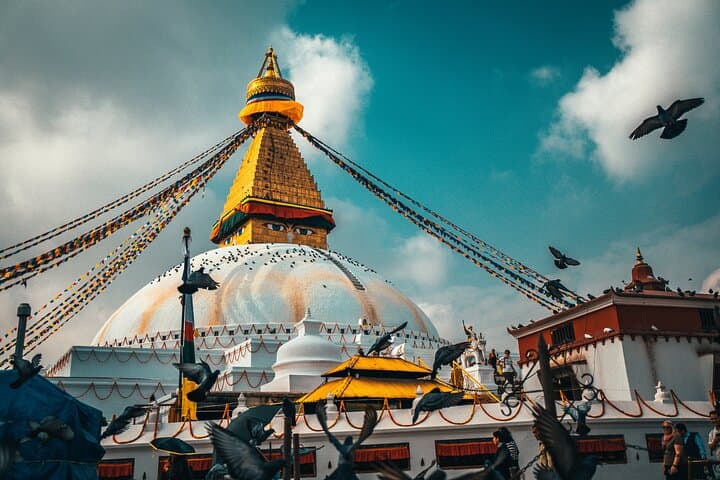

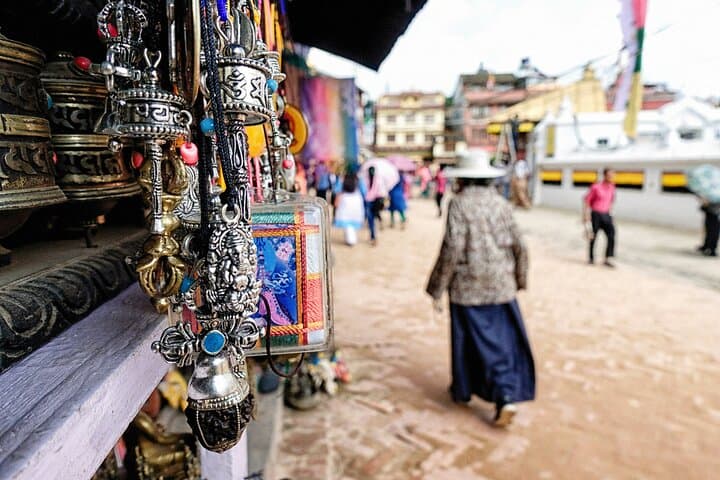

You step from Kathmandu traffic into a courtyard of prayer flags and low bells; the air tastes faintly of butter lamp smoke and boiled tea. Over three to four hours a private guide threads you through a loop of Buddhist life — a hilltop monastery where cornices creak with history, a compact peace stupa that invites quiet, and the great ringed Boudhanath Stupa that spins prayer wheels and pigeons alike.
You step from Kathmandu traffic into a courtyard of prayer flags and low bells; the air tastes faintly of butter lamp smoke and boiled tea. Over three to four hours a private guide threads you through a loop of Buddhist life — a hilltop monastery where cornices creak with history, a compact peace stupa that invites quiet, and the great ringed Boudhanath Stupa that spins prayer wheels and pigeons alike.
These sites sit on the edge of the Kathmandu Valley, carved from river sediments and framed by the low hills that catch monsoon clouds. Boudhanath grew into a major Tibetan Buddhist center after medieval trade routes funneled pilgrims here; Kopan Monastery was established in the later 20th century as a center for Tibetan Buddhist study and meditation. Together they offer a view into Nepal’s living Himalayan culture: chant, butter lamps, circumambulation, and the steady rhythm of offerings.
Expect paved steps, short uphill walks, and crowds around key chokepoints. The tour balances history and practice — your guide explains iconography, mantra meanings, and monastery routines, then gives time for personal reflection or tea at a rooftop cafe with stupa views.
Practicalities: wear modest clothing that covers shoulders and knees, bring a reusable water bottle, and plan for light walking on uneven stone. Morning departures are cooler and less crowded; late afternoon brings warm light across prayer flags. Respect photography rules in interior shrines and consider a small cash donation to support monasteries. This half-day is low-impact but deeply immersive: it’s cultural walking, not trekking, and rewards attention more than endurance.