THE ADVENTURE COLLECTIVE® · Independent discovery and booking for outdoor travel

A private full-day car tour that links Kathmandu’s most significant religious and historical sites—Pashupatinath, Boudhanath, Durbar Square and Swayambhunath—into a single, accessible route. Expect cobbled courtyards, temple rituals, and short uphill walks with a local guide to explain the city’s intersecting Hindu and Buddhist traditions.
A private full-day car tour that links Kathmandu’s most significant religious and historical sites—Pashupatinath, Boudhanath, Durbar Square and Swayambhunath—into a single, accessible route. Expect cobbled courtyards, temple rituals, and short uphill walks with a local guide to explain the city’s intersecting Hindu and Buddhist traditions.
Morning light spills across the terrace roofs of Kathmandu as a private car winds out of a narrow lane and into the valley’s open courtyards. The day moves from the smoke-scented ghats of Pashupatinath to the slow circumambulation of Boudhanath’s white dome, then threads through the carved stone of Kathmandu Durbar Square before climbing the steep stairway to Swayambhunath’s monkey-populated hilltop. Each stop feels like a different tempo of the same city—prayer flags tugging at the wind, temple bells marking transitions.
Verified experiences and guided adventures in the surrounding area.
Operated by Transport Hub Nepal · Kathmandu, Bagmati Province
Morning light spills across the terrace roofs of Kathmandu as a private car winds out of a narrow lane and into the valley’s open courtyards. The day moves from the smoke-scented ghats of Pashupatinath to the slow circumambulation of Boudhanath’s white dome, then threads through the carved stone of Kathmandu Durbar Square before climbing the steep stairway to Swayambhunath’s monkey-populated hilltop. Each stop feels like a different tempo of the same city—prayer flags tugging at the wind, temple bells marking transitions.
Kathmandu Valley has been a political and spiritual crossroads for centuries; the sites on this route contain elements from medieval Newar craftsmanship, Hindu worship centered on Shiva at Pashupatinath, and Tibetan Buddhist practice around Boudhanath. Geologically the valley is a bowl at about 1,400 m elevation, hemmed by ridgelines that influence local weather and views.
Expect uneven stone courtyards, flights of steps at Swayambhu, and crowded alleys around Durbar Square. The private car reduces walking between dispersed sites but you should be ready for short uphill walks and exposed sun on terraces. Modest clothing is required at religious sites; bring water, sunscreen and a light layer for early mornings or late afternoons.
Plan for a 5–7 hour window to move deliberately through each monument, allow time for photography and brief tea breaks, and budget small cash for donations or entrance fees. A local guide will explain iconography and customs, helping you move respectfully through this compact, layered world of living history.
easy.
5–7 hours.
Suitable for most fitness levels; involves moderate walking and some stairs but no sustained strenuous effort.
Most entrance fees and temple donations are not included; bring small cash for any admissions noted by your guide.
The itinerary lists wheelchair accessibility for the vehicle, but many heritage sites have uneven ground and steps—access at each monument varies.
Yes, the private guide typically explains Hindu and Buddhist practices, iconography and appropriate behavior at each site.
Pickup is normally from central Kathmandu hotels; confirm your exact pickup point when booking as the tour is private and door-to-door within the city limits.
The Kathmandu Valley’s core monuments date back centuries and reflect a long co-existence of Newar artisanship, Hindu kingship and Tibetan Buddhist influence, many sites listed as UNESCO World Heritage.
High visitor numbers and urban pollution stress fragile monuments; carry out waste, avoid single-use plastics, and respect site signage to reduce impact.
Transport Hub Nepal operates guided outdoor trips and adventures with an emphasis on safety, stewardship, and memorable experiences.
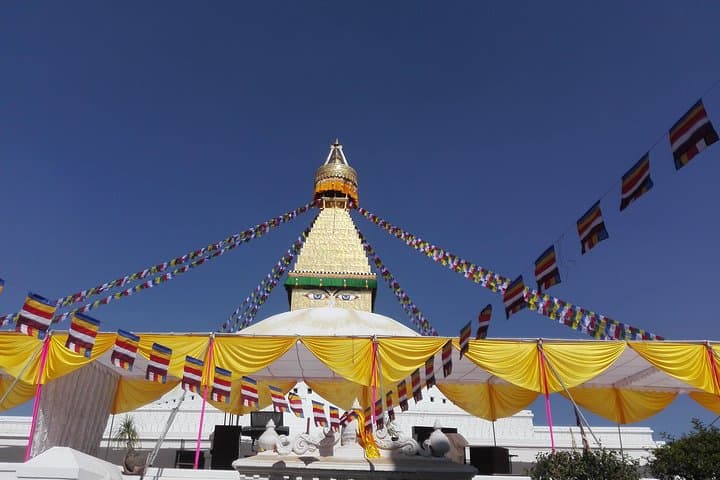
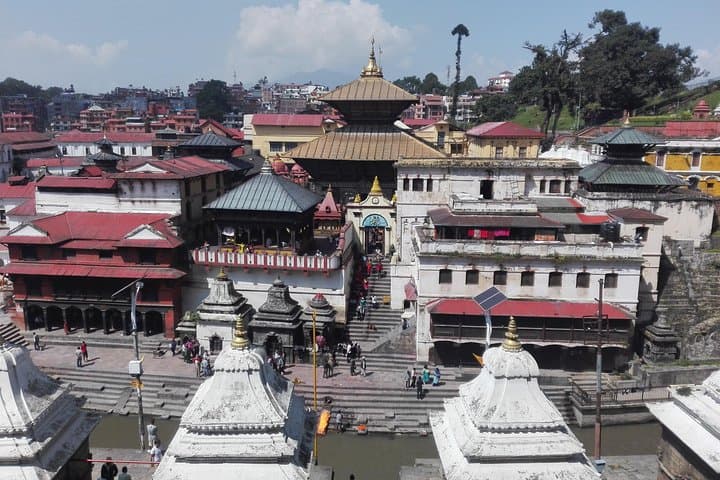
Morning light spills across the terrace roofs of Kathmandu as a private car winds out of a narrow lane and into the valley’s open courtyards. The day moves from the smoke-scented ghats of Pashupatinath to the slow circumambulation of Boudhanath’s white dome, then threads through the carved stone of Kathmandu Durbar Square before climbing the steep stairway to Swayambhunath’s monkey-populated hilltop. Each stop feels like a different tempo of the same city—prayer flags tugging at the wind, temple bells marking transitions.
Morning light spills across the terrace roofs of Kathmandu as a private car winds out of a narrow lane and into the valley’s open courtyards. The day moves from the smoke-scented ghats of Pashupatinath to the slow circumambulation of Boudhanath’s white dome, then threads through the carved stone of Kathmandu Durbar Square before climbing the steep stairway to Swayambhunath’s monkey-populated hilltop. Each stop feels like a different tempo of the same city—prayer flags tugging at the wind, temple bells marking transitions.
Kathmandu Valley has been a political and spiritual crossroads for centuries; the sites on this route contain elements from medieval Newar craftsmanship, Hindu worship centered on Shiva at Pashupatinath, and Tibetan Buddhist practice around Boudhanath. Geologically the valley is a bowl at about 1,400 m elevation, hemmed by ridgelines that influence local weather and views.
Expect uneven stone courtyards, flights of steps at Swayambhu, and crowded alleys around Durbar Square. The private car reduces walking between dispersed sites but you should be ready for short uphill walks and exposed sun on terraces. Modest clothing is required at religious sites; bring water, sunscreen and a light layer for early mornings or late afternoons.
Plan for a 5–7 hour window to move deliberately through each monument, allow time for photography and brief tea breaks, and budget small cash for donations or entrance fees. A local guide will explain iconography and customs, helping you move respectfully through this compact, layered world of living history.