THE ADVENTURE COLLECTIVE® · Independent discovery and booking for outdoor travel

A classic high‑altitude trek from Lukla to Kala Patthar and Everest Base Camp, this 14‑day route combines glacial moraine, Sherpa villages and Himalayan panoramas. Read on for what to expect at altitude, how to prepare, and practical route notes.
A classic high‑altitude trek from Lukla to Kala Patthar and Everest Base Camp, this 14‑day route combines glacial moraine, Sherpa villages and Himalayan panoramas. Read on for what to expect at altitude, how to prepare, and practical route notes.
The trail begins with a thirty-five minute flight into Lukla, the mountains opening like a book with pages of moraine and ice. Wind teases the prayer flags on suspension bridges as the Dudh Koshi River dares you across its braided channels; each step up toward Namche Bazaar raises the air and the stakes.
Verified experiences and guided adventures in the surrounding area.
Operated by Nepal Adventure Pilgrimage Treks and Expedition Pvt. Ltd · Kathmandu, Bagmati Province
The trail begins with a thirty-five minute flight into Lukla, the mountains opening like a book with pages of moraine and ice. Wind teases the prayer flags on suspension bridges as the Dudh Koshi River dares you across its braided channels; each step up toward Namche Bazaar raises the air and the stakes.
This route threads Sagarmatha (Everest) National Park, a UNESCO-protected landscape carved by glaciation where the Khumbu Glacier sculpts jagged moraines and rock. Sherpa culture anchors villages and monasteries—Tengboche’s chants and Namche’s bakeries are living history shaped by trade, Tibetan influence, and mountaineering since Hillary and Tenzing’s 1953 ascent.
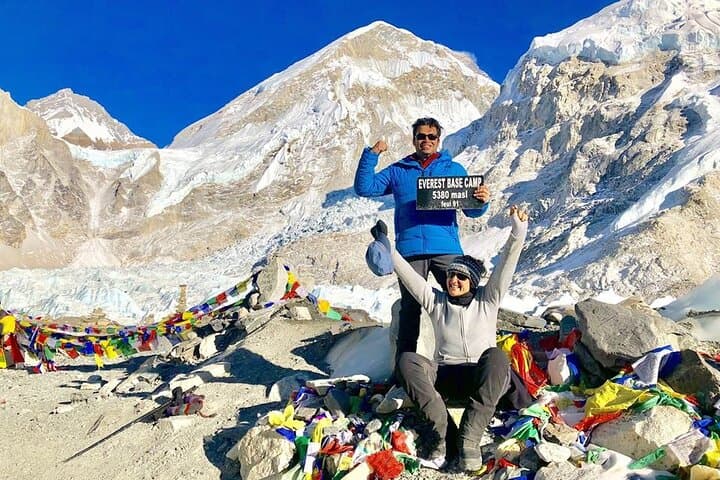
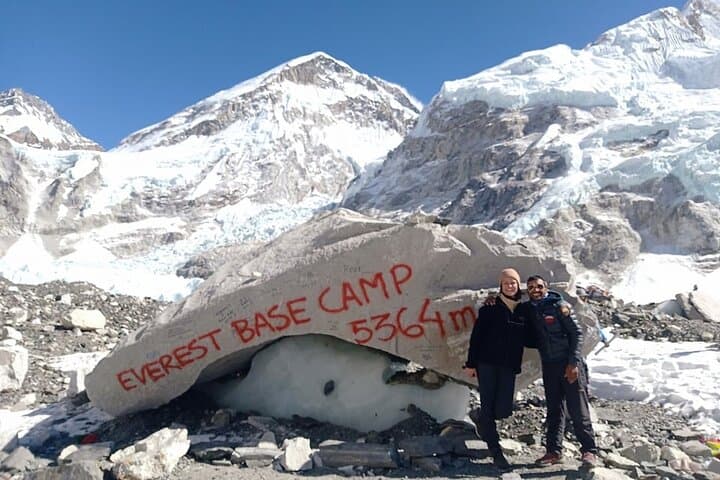
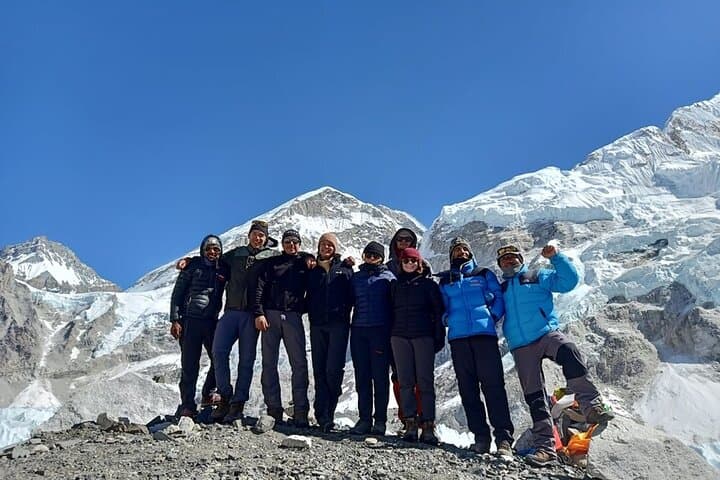
Expect terrain that moves between forested footpaths, rocky switchbacks, loose moraine, and compacted glacial trail. Key altitude points: Lukla (2,804 m), Namche (3,441 m), Dingboche (4,350 m), Lobuche (4,910 m), Everest Base Camp (5,365 m), and Kala Patthar (5,555 m) for the finest panorama of Everest and its neighbors.
Practical guidance: acclimatize—built-in rest days at Namche and Dingboche are essential. Drink often (aim for 3–4 L/day at altitude), layer for dramatic temperature swings, and use trekking poles to reduce knee and fatigue on descents. Lodge (tea-house) accommodation is the norm—pack a high-quality sleeping liner and a sturdy down jacket for nights above 4,000 m. The Lukla flight is weather-dependent; plan buffer days and buy permits (Sagarmatha NP and TIMS) in advance or through an operator. Porters commonly carry bags (1 porter per 2 trekkers here), letting you focus on steady pacing.
This trek is a high-altitude expedition in walking-clothing: respect weather windows, follow guide advice on acclimatization, and leave no trace—these ridgelines and glaciers are fragile and worth protecting.
challenging.
13–14 days.
Good aerobic fitness with regular hiking experience; ability to walk 5–7 hours on consecutive days and carry a daypack at altitude.
No—Everest Base Camp is reached by walking on trail and glacial moraine; technical mountaineering gear is not required for the EBC trek itself.
Most operators provide a porter for shared luggage; carry a 20–30 L daypack with water, layers, snacks, documents and any medications.
You’ll need a Sagarmatha National Park permit and a TIMS card; operators commonly handle permit processing as part of the trip package.
Mild altitude symptoms are common; prevention is gradual ascent and hydration. Severe symptoms require immediate descent and medical attention—carry a guide’s radio/phone plan and consider acetazolamide after consulting a physician.
The Khumbu is home to Sherpa communities whose Tibetan roots and Himalayan trade networks shaped local culture; the area became globally prominent after the 1953 Everest ascent.
The route passes through Sagarmatha National Park; practice leave‑no‑trace, use refillable bottles, and support local tea houses to minimize environmental impact.
Nepal Adventure Pilgrimage Treks and Expedition Pvt. Ltd operates guided outdoor trips and adventures with an emphasis on safety, stewardship, and memorable experiences.
The trail begins with a thirty-five minute flight into Lukla, the mountains opening like a book with pages of moraine and ice. Wind teases the prayer flags on suspension bridges as the Dudh Koshi River dares you across its braided channels; each step up toward Namche Bazaar raises the air and the stakes.
The trail begins with a thirty-five minute flight into Lukla, the mountains opening like a book with pages of moraine and ice. Wind teases the prayer flags on suspension bridges as the Dudh Koshi River dares you across its braided channels; each step up toward Namche Bazaar raises the air and the stakes.
This route threads Sagarmatha (Everest) National Park, a UNESCO-protected landscape carved by glaciation where the Khumbu Glacier sculpts jagged moraines and rock. Sherpa culture anchors villages and monasteries—Tengboche’s chants and Namche’s bakeries are living history shaped by trade, Tibetan influence, and mountaineering since Hillary and Tenzing’s 1953 ascent.
Expect terrain that moves between forested footpaths, rocky switchbacks, loose moraine, and compacted glacial trail. Key altitude points: Lukla (2,804 m), Namche (3,441 m), Dingboche (4,350 m), Lobuche (4,910 m), Everest Base Camp (5,365 m), and Kala Patthar (5,555 m) for the finest panorama of Everest and its neighbors.
Practical guidance: acclimatize—built-in rest days at Namche and Dingboche are essential. Drink often (aim for 3–4 L/day at altitude), layer for dramatic temperature swings, and use trekking poles to reduce knee and fatigue on descents. Lodge (tea-house) accommodation is the norm—pack a high-quality sleeping liner and a sturdy down jacket for nights above 4,000 m. The Lukla flight is weather-dependent; plan buffer days and buy permits (Sagarmatha NP and TIMS) in advance or through an operator. Porters commonly carry bags (1 porter per 2 trekkers here), letting you focus on steady pacing.
This trek is a high-altitude expedition in walking-clothing: respect weather windows, follow guide advice on acclimatization, and leave no trace—these ridgelines and glaciers are fragile and worth protecting.