THE ADVENTURE COLLECTIVE® · Independent discovery and booking for outdoor travel

Watch Kata Tjuta transform from rust to deep purple as the desert cools. This half‑day trip from Ayers Rock Resort pairs short interpretive walks with sparkling wine and a sunset viewpoint inside Uluru‑Kata Tjuta National Park.
Watch Kata Tjuta transform from rust to deep purple as the desert cools. This half‑day trip from Ayers Rock Resort pairs short interpretive walks with sparkling wine and a sunset viewpoint inside Uluru‑Kata Tjuta National Park.
The bus whispers over the red dust and, as the sky thins toward evening, the domes of Kata Tjuta rise like a line of aged ships on the horizon. Sunlight slides across rounded faces of rust and ochre; the rocks take on new hues with each passing minute and the driver-guide’s voice softens, giving space for the landscape to speak. Guests step down—a small, expectant crowd—glasses of sparkling wine ready in hand, and the desert cools around them.
Verified experiences and guided adventures in the surrounding area.
Operated by AAT Kings · Yulara, Northern Territory
The bus whispers over the red dust and, as the sky thins toward evening, the domes of Kata Tjuta rise like a line of aged ships on the horizon. Sunlight slides across rounded faces of rust and ochre; the rocks take on new hues with each passing minute and the driver-guide’s voice softens, giving space for the landscape to speak. Guests step down—a small, expectant crowd—glasses of sparkling wine ready in hand, and the desert cools around them.
Kata Tjuta (often called The Olgas) sits inside Uluru‑Kata Tjuta National Park, a place shaped by deep time and living culture. Geologically the domes are a hard conglomerate—smashed fragments of older rocks cemented into chunky beds—that were once part of a far larger block. Over millions of years wind and water sculpted the domes from that original mass, carving the steep sides that now catch and bend light at sunset.
This place also belongs to the Anangu people, whose law, stories and care for country are woven through the valleys and gorges. Guides on the trip provide respectful context: which sites are open to public viewing, where access is restricted for cultural reasons, and how to behave as a visitor.
The 2.5‑hour excursion leaves Ayers Rock Resort roughly 90 minutes before sunset to reach a vantage point where the domes unfold across the plain. The program blends commentary on flora and fauna with time to wander short, uneven paths from coach to viewpoints and a small area where sparkling wine and nibbles are served as the sky deepens.
Practical edge: the national park requires an entry ticket (currently A$38 per adult) and the tour runs regardless of varied sunset times—so reconfirm pickup with the operator 24–48 hours ahead. Expect short walks—up to a kilometre—over packed red dirt; enclosed walking shoes are required. In summer bring a flynet and sun protection; cooler months call for warm layers after dusk. The operation is wheelchair and stroller accessible for core viewing points, but some paths are natural and may be bumpy.
This trip is ideal for travelers who want a short, interpretive experience rather than a strenuous hike. It’s especially useful for photographers chasing the slow color shift across layered domes and for those seeking an evening introduction to the park’s landscape and culture without committing to longer treks like Valley of the Winds.
Timing and logistics matter: arrive at pickup ten minutes early, bring your park pass or arrange it prior to boarding, and let the company know any dietary or accessibility needs when booking. When the sun finally dips, the domes don’t so much disappear as fold back—reminding you that this is a living place, and dusk is the hour it chooses to change its face.
easy.
2–2.5 hours.
Suitable for most fitness levels; expect up to 1 km of short uneven walking from coach to viewpoints.
Yes—each adult needs the park pass (A$38 at the time of writing). Purchase it before departure or arrange it through the operator.
The tour is about 150 minutes and departs roughly 90 minutes before local sunset; exact pickup times vary seasonally—confirm 24–48 hours ahead.
Core viewing areas are wheelchair accessible, but some short paths may be uneven—contact the operator for specific mobility needs.
Yes—sparkling wine and nibbles are served at the sunset viewpoint.
Yes—infants can ride in strollers but must sit on an adult’s lap as required; the trip is family friendly.
Wildlife sightings are mostly birds and small reptiles; stay on paths, watch where you step, and follow guide instructions—snakes are present but generally avoid people.
Kata Tjuta sits on Anangu land and features in creation stories; its domes are geologically older than many surrounding formations and were important travel and ritual sites.
Visitors are asked to respect cultural closures, stick to paths and carry out rubbish; the park operates on visitor fees that support land management and cultural programs.
AAT Kings operates guided outdoor trips and adventures with an emphasis on safety, stewardship, and memorable experiences.
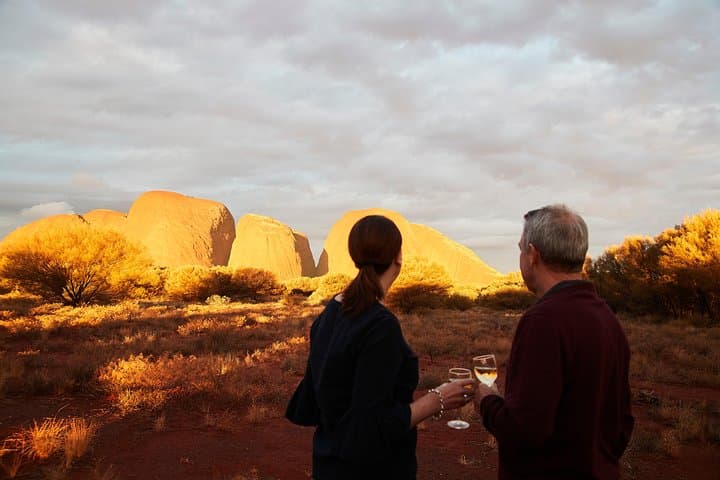
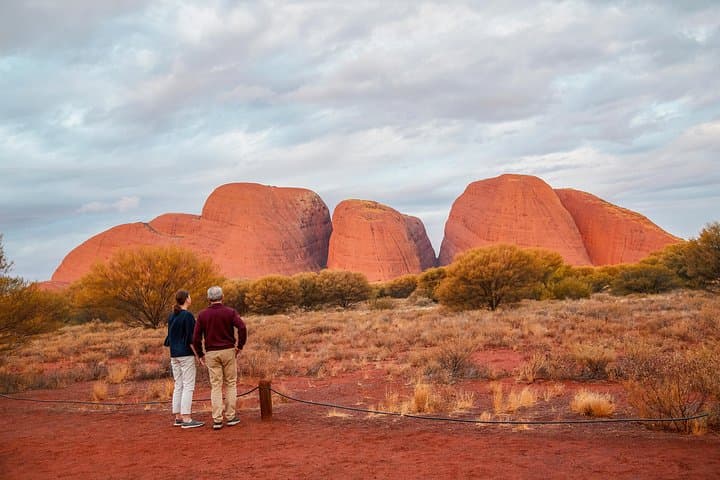
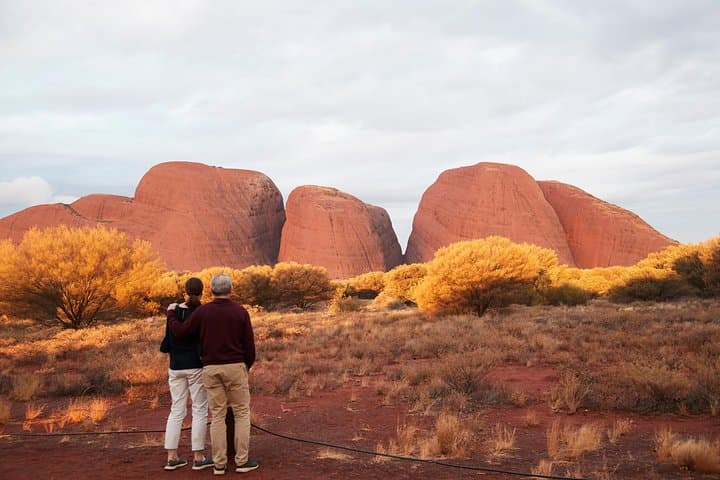
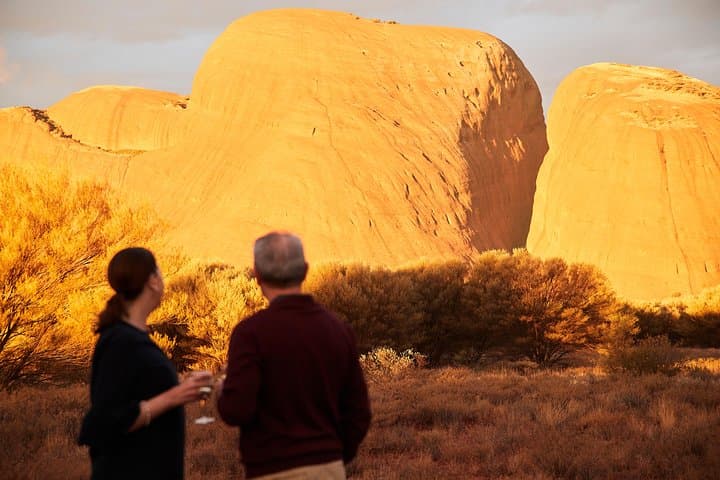
The bus whispers over the red dust and, as the sky thins toward evening, the domes of Kata Tjuta rise like a line of aged ships on the horizon. Sunlight slides across rounded faces of rust and ochre; the rocks take on new hues with each passing minute and the driver-guide’s voice softens, giving space for the landscape to speak. Guests step down—a small, expectant crowd—glasses of sparkling wine ready in hand, and the desert cools around them.
The bus whispers over the red dust and, as the sky thins toward evening, the domes of Kata Tjuta rise like a line of aged ships on the horizon. Sunlight slides across rounded faces of rust and ochre; the rocks take on new hues with each passing minute and the driver-guide’s voice softens, giving space for the landscape to speak. Guests step down—a small, expectant crowd—glasses of sparkling wine ready in hand, and the desert cools around them.
Kata Tjuta (often called The Olgas) sits inside Uluru‑Kata Tjuta National Park, a place shaped by deep time and living culture. Geologically the domes are a hard conglomerate—smashed fragments of older rocks cemented into chunky beds—that were once part of a far larger block. Over millions of years wind and water sculpted the domes from that original mass, carving the steep sides that now catch and bend light at sunset.
This place also belongs to the Anangu people, whose law, stories and care for country are woven through the valleys and gorges. Guides on the trip provide respectful context: which sites are open to public viewing, where access is restricted for cultural reasons, and how to behave as a visitor.
The 2.5‑hour excursion leaves Ayers Rock Resort roughly 90 minutes before sunset to reach a vantage point where the domes unfold across the plain. The program blends commentary on flora and fauna with time to wander short, uneven paths from coach to viewpoints and a small area where sparkling wine and nibbles are served as the sky deepens.
Practical edge: the national park requires an entry ticket (currently A$38 per adult) and the tour runs regardless of varied sunset times—so reconfirm pickup with the operator 24–48 hours ahead. Expect short walks—up to a kilometre—over packed red dirt; enclosed walking shoes are required. In summer bring a flynet and sun protection; cooler months call for warm layers after dusk. The operation is wheelchair and stroller accessible for core viewing points, but some paths are natural and may be bumpy.
This trip is ideal for travelers who want a short, interpretive experience rather than a strenuous hike. It’s especially useful for photographers chasing the slow color shift across layered domes and for those seeking an evening introduction to the park’s landscape and culture without committing to longer treks like Valley of the Winds.
Timing and logistics matter: arrive at pickup ten minutes early, bring your park pass or arrange it prior to boarding, and let the company know any dietary or accessibility needs when booking. When the sun finally dips, the domes don’t so much disappear as fold back—reminding you that this is a living place, and dusk is the hour it chooses to change its face.