THE ADVENTURE COLLECTIVE® · Independent discovery and booking for outdoor travel

A half-day trek from Tenganan through jungle tracks and working rice terraces, ending with lunch at the ornamental Tirta Gangga Water Palace. Ideal for travelers seeking cultural insight and manageable trail challenge in east Bali.
A half-day trek from Tenganan through jungle tracks and working rice terraces, ending with lunch at the ornamental Tirta Gangga Water Palace. Ideal for travelers seeking cultural insight and manageable trail challenge in east Bali.
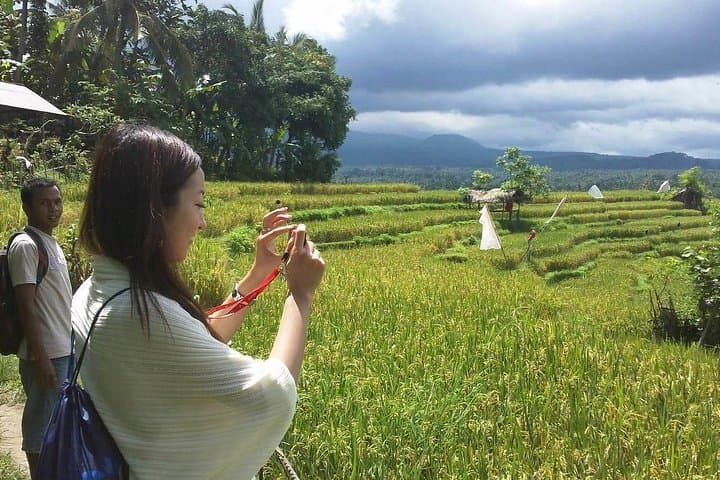
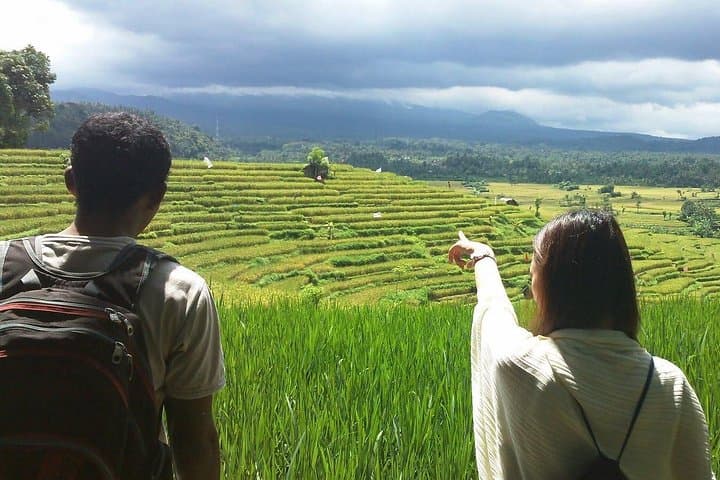
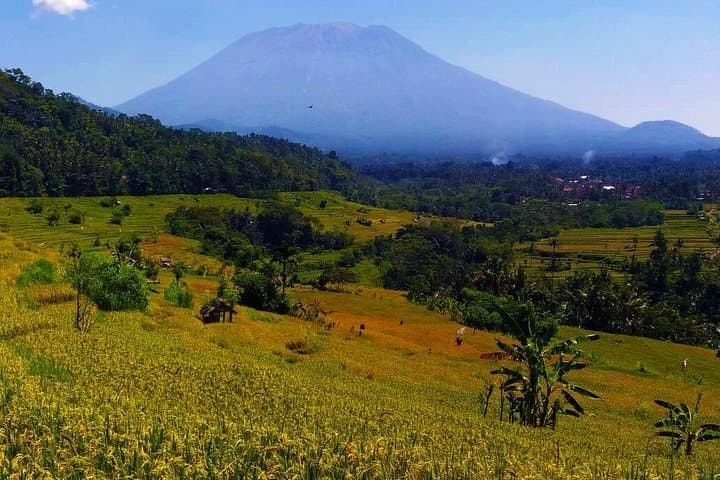
Morning light slips through the rainforest canopy as you step off the village lane in Tenganan and into a path that feels older than the motorbikes that brought you here. The trail narrows, roots and stones underfoot, and the air grows humid; streams nudge your ankles and terraces open out like green shelves below. Mount Agung watches from a distance, a quiet presence above the valley.
Verified experiences and guided adventures in the surrounding area.
Operated by Krisna Bali Transport · Tenganan (near Kastala), Bali
Morning light slips through the rainforest canopy as you step off the village lane in Tenganan and into a path that feels older than the motorbikes that brought you here. The trail narrows, roots and stones underfoot, and the air grows humid; streams nudge your ankles and terraces open out like green shelves below. Mount Agung watches from a distance, a quiet presence above the valley.
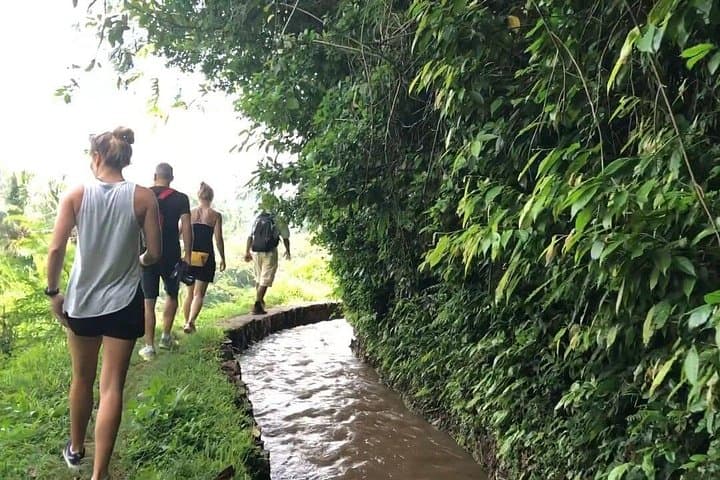
This trek threads living culture and volcanic landscape: Tenganan is one of Bali’s Bali Aga villages where pre-Majapahit customs and double-ikat textiles remain integral to daily life. The route moves between lowland rice terraces shaped by the Subak irrigation system and secondary rainforest that clings to eroded volcanic slopes. You’ll pass working paddies, bamboo footbridges and irrigation channels carved centuries ago, finishing in Kastala village before an easy drive to Tirta Gangga Water Palace — a mid-20th-century royal site of stepped pools and fountains.
Expect roughly 6 km of walking, about 3 hours on trail with 200–350 m cumulative elevation gain on mixed dirt, stone and riverbed terrain. Trails can be slippery after rain and several short, steep sections require stable footing.
Practical tips: start early to avoid midday heat, wear grippy shoes, bring 1–2 liters of water and insect repellent, and carry modest cash for small village purchases. Respect temple spaces and local farming activity — slower footsteps and quiet voices go a long way. With a private guide and transport included, this is a compact day that balances cultural insight and straightforward adventure.
moderate.
3–4 hours walking (full tour 6–8 hours).
Moderate fitness: able to handle uneven paths, short steep sections, and riverbed walking.
The trail is about 3 hours of walking, roughly 6 km total, with varied terrain and several short climbs; the full door-to-door tour is 6–8 hours including transport and lunch.
Children with reasonable stamina can manage the route, but it’s not recommended for those with serious mobility or heart/back issues; consult the operator about ages and fitness.
Yes — the tour includes entrance tickets, a guided trek, bottled water and a lunch at Tirta Gangga as stated in the inclusions.
Carry small change for souvenirs, donations, or snacks in villages; major purchases and entrance fees are covered by the tour.
Tenganan is one of Bali’s earliest Bali Aga communities, preserving pre-Majapahit customs; Tirta Gangga was developed as a royal water garden in the mid-20th century by the Karangasem royal family.
The Subak irrigation system sustains the terraces but is sensitive to runoff and development; stick to designated paths and avoid leaving waste to protect paddies and waterways.
Krisna Bali Transport operates guided outdoor trips and adventures with an emphasis on safety, stewardship, and memorable experiences.
Morning light slips through the rainforest canopy as you step off the village lane in Tenganan and into a path that feels older than the motorbikes that brought you here. The trail narrows, roots and stones underfoot, and the air grows humid; streams nudge your ankles and terraces open out like green shelves below. Mount Agung watches from a distance, a quiet presence above the valley.
Morning light slips through the rainforest canopy as you step off the village lane in Tenganan and into a path that feels older than the motorbikes that brought you here. The trail narrows, roots and stones underfoot, and the air grows humid; streams nudge your ankles and terraces open out like green shelves below. Mount Agung watches from a distance, a quiet presence above the valley.
This trek threads living culture and volcanic landscape: Tenganan is one of Bali’s Bali Aga villages where pre-Majapahit customs and double-ikat textiles remain integral to daily life. The route moves between lowland rice terraces shaped by the Subak irrigation system and secondary rainforest that clings to eroded volcanic slopes. You’ll pass working paddies, bamboo footbridges and irrigation channels carved centuries ago, finishing in Kastala village before an easy drive to Tirta Gangga Water Palace — a mid-20th-century royal site of stepped pools and fountains.
Expect roughly 6 km of walking, about 3 hours on trail with 200–350 m cumulative elevation gain on mixed dirt, stone and riverbed terrain. Trails can be slippery after rain and several short, steep sections require stable footing.
Practical tips: start early to avoid midday heat, wear grippy shoes, bring 1–2 liters of water and insect repellent, and carry modest cash for small village purchases. Respect temple spaces and local farming activity — slower footsteps and quiet voices go a long way. With a private guide and transport included, this is a compact day that balances cultural insight and straightforward adventure.