THE ADVENTURE COLLECTIVE® · Independent discovery and booking for outdoor travel

A 7-day traverse from Sonamarg to Naranag across high passes and blue alpine lakes. Plan for 11–16 km daily, camped nights, and rapidly changing monsoon weather—best for trekkers ready for altitude and wet trails.
A 7-day traverse from Sonamarg to Naranag across high passes and blue alpine lakes. Plan for 11–16 km daily, camped nights, and rapidly changing monsoon weather—best for trekkers ready for altitude and wet trails.
Book with Himalaya Shelter
Book directly with Himalaya Shelter for the best rates and real-time scheduling.
Reserve NowVerified experiences and guided adventures in the surrounding area.
Operated by Himalaya Shelter · Sonamarg, Jammu & Kashmir
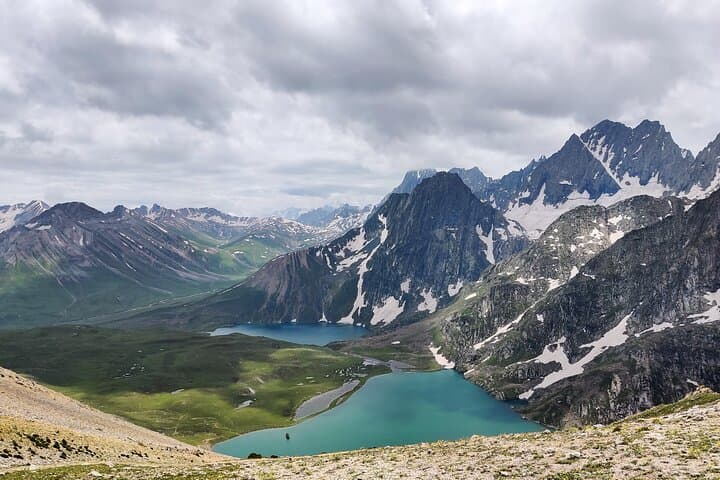
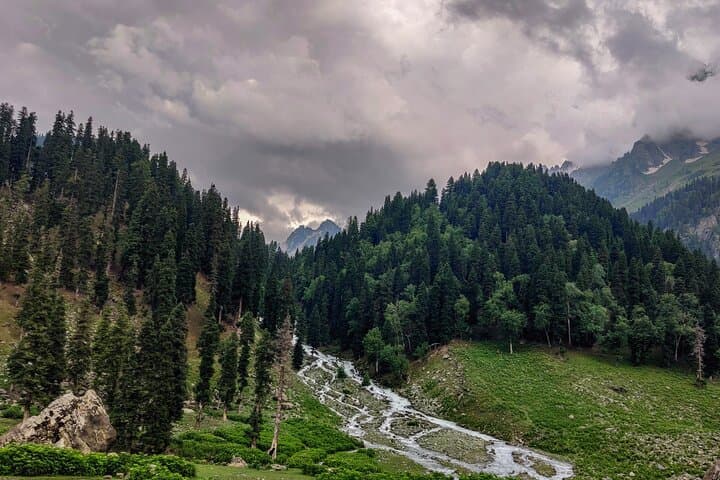
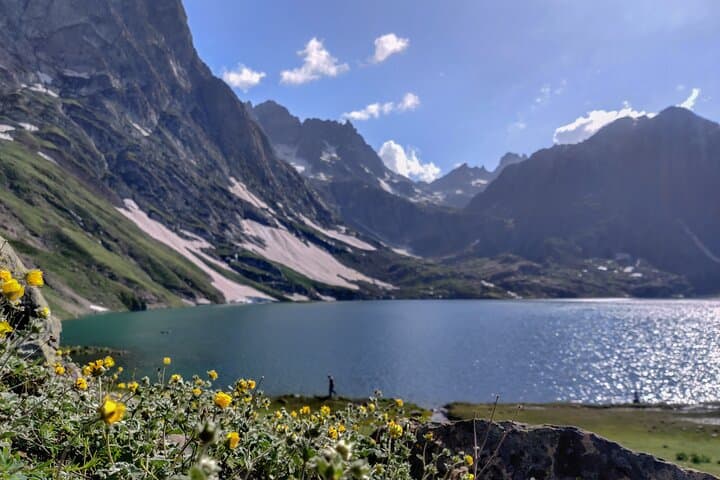
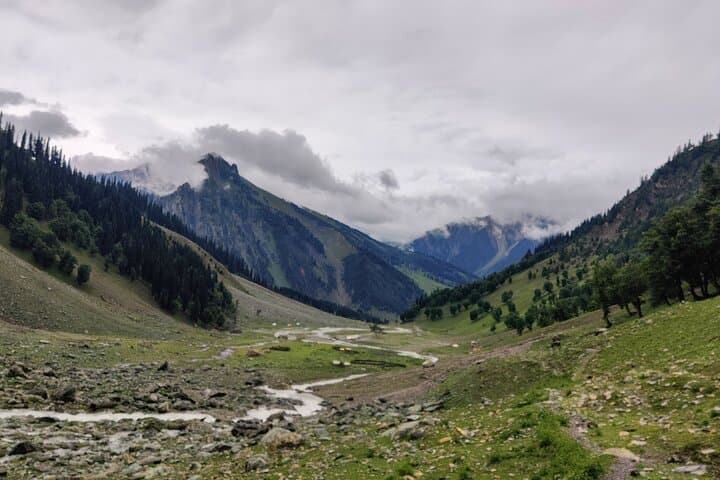
A low cloud slips over the ridge and the first lake flashes like a coin pushed into green grass. You begin at Sonamarg, climbing past maples and silver birch, the Sind River murmuring below. Rain can tilt the light; when it clears the high meadows open and a string of alpine lakes—Vishansar, Kishansar, Gadsar, Tarsar, Satsar, Gangabal—reflect the sky like small, stubborn mirrors.
challenging.
6–8 days.
Good cardiovascular fitness and prior multi-day hiking experience recommended; ability to carry a daypack and walk 5–7 hours daily.
Early July shows lingering snow against blooming meadows; late July to early August is peak floral bloom. The route is usually possible until mid-September before early snow returns.
Prior multi-day trekking experience and basic acclimatization are strongly recommended; the trek reaches passes above 4,000 m but involves no technical climbing.
Typical inclusions are transport from Srinagar, tented accommodation (A-frame), sleeping mats and bags, meals (breakfast, lunch, dinner), and a BMC-certified guide with first aid.
Most groups start from Srinagar and drive ~3–4 hours to Sonamarg by road following the Sind River; public transport and private transfers are available.
The Great Lakes corridor has long been used by Gujjar and Bakarwal pastoralists; Naranag contains early medieval temple ruins indicating historical settlement.
These alpine meadows are fragile—camp on durable surfaces, avoid trampling vegetation, and pack out all waste; water sources are local and should be treated before drinking.
Himalaya Shelter operates guided outdoor trips and adventures with an emphasis on safety, stewardship, and memorable experiences.
Book with Himalaya Shelter
Book directly with Himalaya Shelter for the best rates and real-time scheduling.
Reserve Now