THE ADVENTURE COLLECTIVE® · Independent discovery and booking for outdoor travel

Escape Nairobi’s noise for a guided 2–3 hour walk or 12 km bike loop through Karura Forest. Discover waterfalls, caves, and urban conservation history while following color-coded trails.
Escape Nairobi’s noise for a guided 2–3 hour walk or 12 km bike loop through Karura Forest. Discover waterfalls, caves, and urban conservation history while following color-coded trails.
Morning light filters through tall figs and bamboo as the gate opens onto Karura Forest—an urban upland forest that dares Nairobi’s bustle to keep up. The path hums with birdsong, and a narrow stream pushes you deeper into shade; cyclists and walkers trade nods at color-coded junctions.
Verified experiences and guided adventures in the surrounding area.
Operated by Muringa Kenya Tours & Safaris Ltd · Nairobi, Nairobi County
Morning light filters through tall figs and bamboo as the gate opens onto Karura Forest—an urban upland forest that dares Nairobi’s bustle to keep up. The path hums with birdsong, and a narrow stream pushes you deeper into shade; cyclists and walkers trade nods at color-coded junctions.
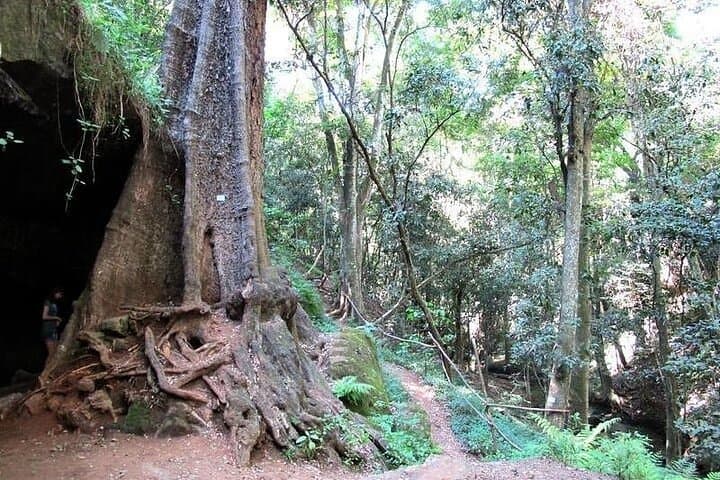
Karura occupies roughly 1,000 hectares of protected green space on Nairobi’s northern flank; its ridges, streams and quarry ponds reflect the city’s volcanic highland geology. The forest carries modern history in concrete: an old Central Bank chimney from currency incineration and caves used by Mau Mau freedom fighters. Grassroots conservation and city philanthropy—championed in the 1990s—helped secure the reserve as a public resource.
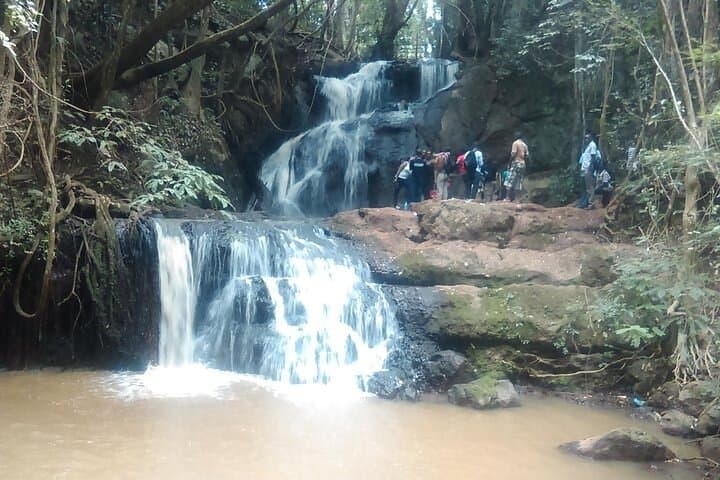
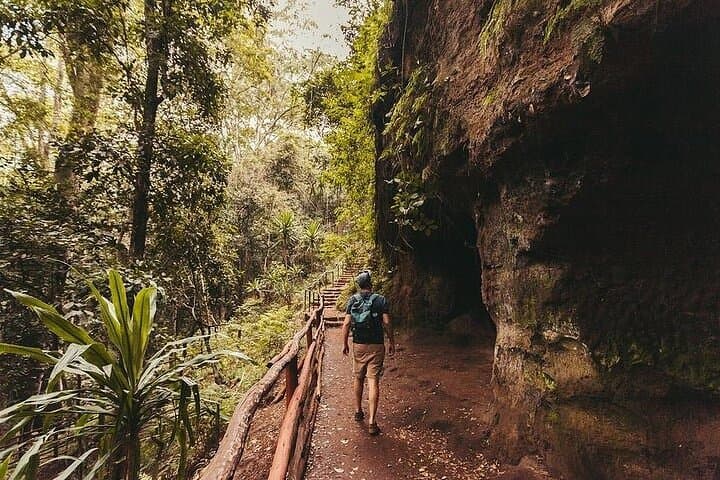
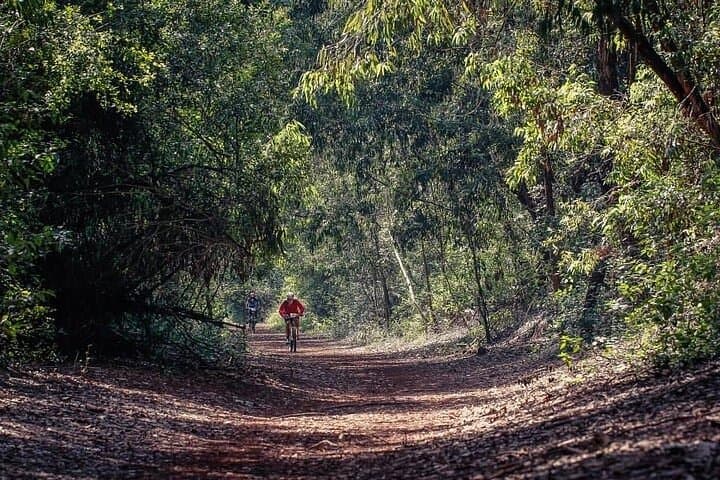
Trails range from about 5–15 km for walkers and a 12 km marked mountain-bike loop. Terrain is mostly compacted dirt with rooted, uneven sections, small stream crossings and short, rolling climbs rather than sustained elevation gain. Expect riparian sections, small waterfalls after rains, and picnic benches by Lily Lake and other clearings.
Practical guidance: allow 2–3 hours for a guided loop that includes points of interest; bring a helmet if you’ll bike, a full water bottle, and sturdy shoes with grip. Start early for cooler air and peak bird activity; during the long rains trails get muddy and some crossings swell. Local guides point out bird species, monkeys and historical sites and can arrange bike hire and city pickups. Respect wayfinding colors, stay on marked paths, and pack out waste—Karura’s protection depends on visitor care.
moderate.
2–3 hours.
Moderate fitness required—comfortable walking and light climbs for several kilometers; basic off-road cycling fitness if riding.
Bike hire is included in the tour inclusions—confirm bike size and helmet availability when booking.
Walking trails are typically color-coded at about 5, 10 and 15 km; the main biking loop is about 12 km.
Yes—children can enjoy shorter loops and picnic areas but require supervision near water and on trails; strollers are not suitable on most paths.
Yes—there are restroom facilities at main entrances and picnic benches inside the reserve, but bring toilet paper and hand sanitizer just in case.
Karura’s caves and hideouts were used by Mau Mau fighters; in the 1990s local activism and philanthropy—including prominent conservationists—helped protect the forest from development.
Today Karura is maintained through a mix of city management and community trusts; stay on trails, carry out trash and avoid feeding wildlife to reduce human impact.
Muringa Kenya Tours & Safaris Ltd operates guided outdoor trips and adventures with an emphasis on safety, stewardship, and memorable experiences.
Morning light filters through tall figs and bamboo as the gate opens onto Karura Forest—an urban upland forest that dares Nairobi’s bustle to keep up. The path hums with birdsong, and a narrow stream pushes you deeper into shade; cyclists and walkers trade nods at color-coded junctions.
Morning light filters through tall figs and bamboo as the gate opens onto Karura Forest—an urban upland forest that dares Nairobi’s bustle to keep up. The path hums with birdsong, and a narrow stream pushes you deeper into shade; cyclists and walkers trade nods at color-coded junctions.
Karura occupies roughly 1,000 hectares of protected green space on Nairobi’s northern flank; its ridges, streams and quarry ponds reflect the city’s volcanic highland geology. The forest carries modern history in concrete: an old Central Bank chimney from currency incineration and caves used by Mau Mau freedom fighters. Grassroots conservation and city philanthropy—championed in the 1990s—helped secure the reserve as a public resource.
Trails range from about 5–15 km for walkers and a 12 km marked mountain-bike loop. Terrain is mostly compacted dirt with rooted, uneven sections, small stream crossings and short, rolling climbs rather than sustained elevation gain. Expect riparian sections, small waterfalls after rains, and picnic benches by Lily Lake and other clearings.
Practical guidance: allow 2–3 hours for a guided loop that includes points of interest; bring a helmet if you’ll bike, a full water bottle, and sturdy shoes with grip. Start early for cooler air and peak bird activity; during the long rains trails get muddy and some crossings swell. Local guides point out bird species, monkeys and historical sites and can arrange bike hire and city pickups. Respect wayfinding colors, stay on marked paths, and pack out waste—Karura’s protection depends on visitor care.