THE ADVENTURE COLLECTIVE® · Independent discovery and booking for outdoor travel

Three days across Vietnam’s northern karst plateau: hairpin passes, H’mong markets and a boat through one of Southeast Asia’s deepest gorges. This 3-day, 2-night tour from Hanoi pairs dramatic geology with local culture and practical logistics for first-time visitors.
Three days across Vietnam’s northern karst plateau: hairpin passes, H’mong markets and a boat through one of Southeast Asia’s deepest gorges. This 3-day, 2-night tour from Hanoi pairs dramatic geology with local culture and practical logistics for first-time visitors.
You arrive before dawn on a sleepless bus, and the mountains take the first light like a promise — jagged limestone ridges cutting the horizon, valleys of rice terraces folding into mist. By day two the road climbs over Quan Ba’s Heaven Gate (above 1,500 m) and threads the Tham Ma slope; by midday you’ll stand at Ma Pi Leng pass, the road clinging to cliffs as the Nho Que river dares you below.
Verified experiences and guided adventures in the surrounding area.
Operated by Vinadu · Dong Van, Ha Giang
You arrive before dawn on a sleepless bus, and the mountains take the first light like a promise — jagged limestone ridges cutting the horizon, valleys of rice terraces folding into mist. By day two the road climbs over Quan Ba’s Heaven Gate (above 1,500 m) and threads the Tham Ma slope; by midday you’ll stand at Ma Pi Leng pass, the road clinging to cliffs as the Nho Que river dares you below.
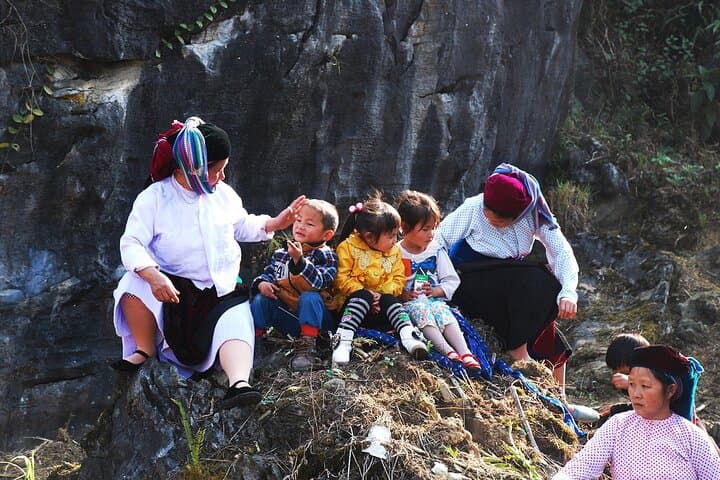
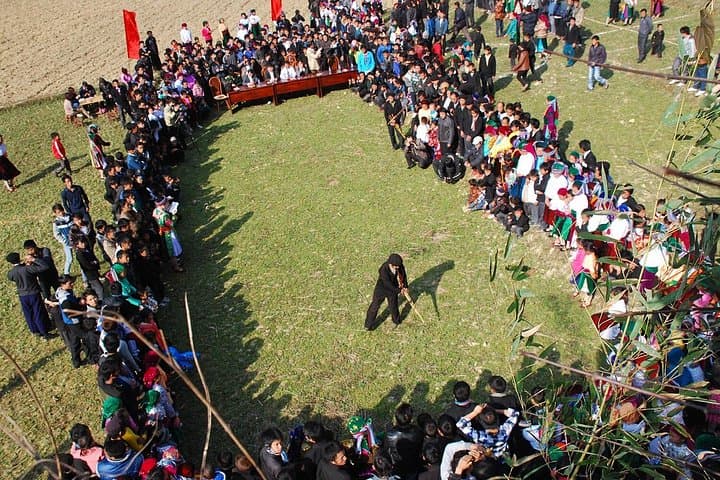
The Dong Van Karst Plateau is a landscape carved by time and upheaval: Devonian limestone folded into steep towers and deep gorges that tell a geological history hundreds of millions of years old. Culturally, this borderland holds Hmong, Tay and Dao communities whose festivals, brocade weaving and market rhythms shape daily life in towns like Dong Van and Meo Vac.
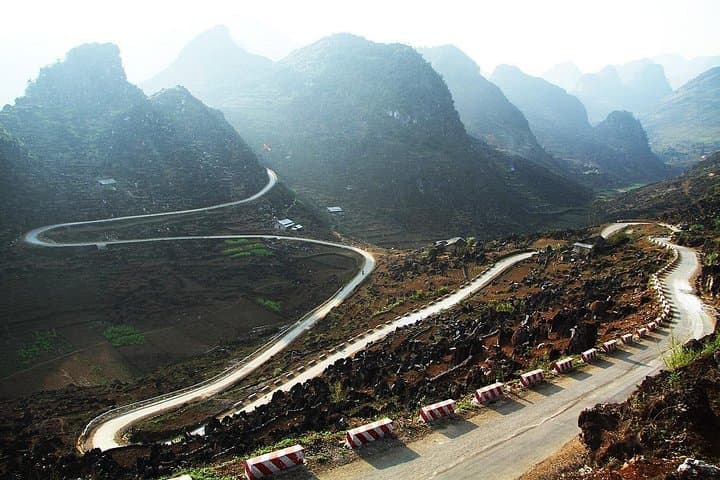
Expect a mix of slow cultural immersion — village visits, Dong Van market, H’mong King Palace — and kinetic geography: a 21 km Ma Pi Leng stretch, boat trips through the Tu San/Nho Que gorge (walls up to 1,500 m high), and winding mountain passes. Roads are steep and frequently curvy; drivers are practiced but bring motion-sickness meds if you’re sensitive.
Practical notes: pack layers (temperature swings are common), waterproof outerwear, and sturdy shoes for village paths. Carry cash for market purchases and tip local guides if you enjoyed homestay or craft demonstrations. Time sunrise for Ma Pi Leng and allow extra minutes for scenic photo stops — the plateau rewards patience.
easy.
48–72 hours.
Suitable for travelers with basic fitness: short walks on uneven village tracks and boardwalks, plus boarding a small river boat.
The tour typically includes overnight bus transport from Hanoi to Ha Giang; check pick-up details and arrive at the designated bus station before departure time.
This tour includes selected meals (breakfast, lunch, dinner as listed) and entrance fees for scheduled attractions; confirm specifics with the operator for any optional activities.
Elevations reach around 1,500 m at passes like Quan Ba; most travelers experience mild effects only — bring layers and stay hydrated if you feel off.
The itinerary involves uneven village paths, stairs (Lung Cu tower) and a riverboat; travelers with limited mobility should consult the operator before booking.
The Dong Van Plateau has long been a cultural frontier where Hmong, Tay and Dao communities traded, farmed terraced slopes and built fortified houses; Lung Cu marks a symbolic northern high point of Vietnam.
Karst systems are fragile: avoid trampling karst pavement, pack out waste, and support homestays and local crafts to direct tourism revenue into communities.
Vinadu operates guided outdoor trips and adventures with an emphasis on safety, stewardship, and memorable experiences.
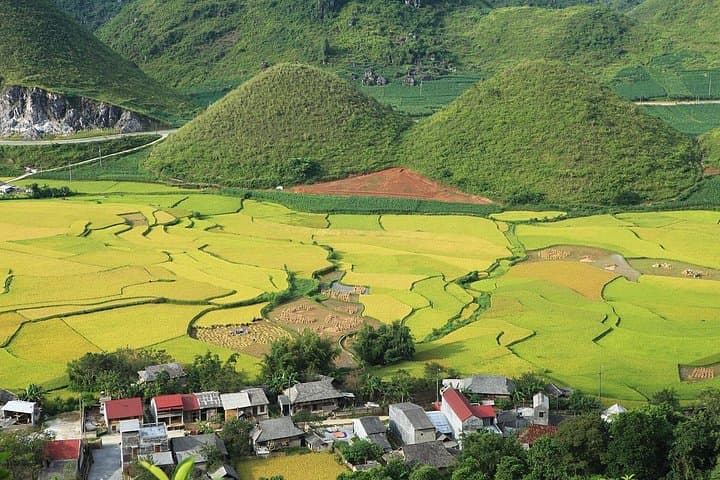
You arrive before dawn on a sleepless bus, and the mountains take the first light like a promise — jagged limestone ridges cutting the horizon, valleys of rice terraces folding into mist. By day two the road climbs over Quan Ba’s Heaven Gate (above 1,500 m) and threads the Tham Ma slope; by midday you’ll stand at Ma Pi Leng pass, the road clinging to cliffs as the Nho Que river dares you below.
You arrive before dawn on a sleepless bus, and the mountains take the first light like a promise — jagged limestone ridges cutting the horizon, valleys of rice terraces folding into mist. By day two the road climbs over Quan Ba’s Heaven Gate (above 1,500 m) and threads the Tham Ma slope; by midday you’ll stand at Ma Pi Leng pass, the road clinging to cliffs as the Nho Que river dares you below.
The Dong Van Karst Plateau is a landscape carved by time and upheaval: Devonian limestone folded into steep towers and deep gorges that tell a geological history hundreds of millions of years old. Culturally, this borderland holds Hmong, Tay and Dao communities whose festivals, brocade weaving and market rhythms shape daily life in towns like Dong Van and Meo Vac.
Expect a mix of slow cultural immersion — village visits, Dong Van market, H’mong King Palace — and kinetic geography: a 21 km Ma Pi Leng stretch, boat trips through the Tu San/Nho Que gorge (walls up to 1,500 m high), and winding mountain passes. Roads are steep and frequently curvy; drivers are practiced but bring motion-sickness meds if you’re sensitive.
Practical notes: pack layers (temperature swings are common), waterproof outerwear, and sturdy shoes for village paths. Carry cash for market purchases and tip local guides if you enjoyed homestay or craft demonstrations. Time sunrise for Ma Pi Leng and allow extra minutes for scenic photo stops — the plateau rewards patience.