THE ADVENTURE COLLECTIVE® · Independent discovery and booking for outdoor travel

Experience Karnak after dark as floodlights and narration revive pharaohs and priests amid towering pylons. This 2–3 hour evening show offers dramatic history, accessible logistics, and practical tips for visiting one of Egypt’s largest temple complexes.
Experience Karnak after dark as floodlights and narration revive pharaohs and priests amid towering pylons. This 2–3 hour evening show offers dramatic history, accessible logistics, and practical tips for visiting one of Egypt’s largest temple complexes.
The air cools and a hush falls over the sandstone pylons as floodlights begin to paint Karnak in color; shadows stretch across hieroglyphs and the avenue of ram-headed sphinxes seems to lean in to listen. Standing on the temple esplanade after dusk, you can feel the weight of thousands of years in a space designed to be seen at ceremonial scale.
Verified experiences and guided adventures in the surrounding area.
Operated by Luxor Taxi - DayTour · Luxor, Luxor Governorate
The air cools and a hush falls over the sandstone pylons as floodlights begin to paint Karnak in color; shadows stretch across hieroglyphs and the avenue of ram-headed sphinxes seems to lean in to listen. Standing on the temple esplanade after dusk, you can feel the weight of thousands of years in a space designed to be seen at ceremonial scale.
Karnak grew over more than a millennium as pharaohs added pylons, obelisks and hypostyle halls; the site is built on Nile silt and its stone blocks record both religious practice and changing politics of ancient Thebes. The Sound and Light production pairs narration of that layered history—Amun-Ra’s cult, royal processions, and the priests’ city—with atmospheric music and angled lighting that emphasizes texture over color.
Culturally, the show is a theatrical retelling rather than an academic lecture: expect dramatized voices and selective storytelling that highlights major monuments. The complex’s scale is the main attraction; geology and building technique become legible when lights reveal relief work and tool marks. Local guides and operators usually include hotel pick-up and a small refreshment after the performance.
Practical guidance: arrive with a light jacket (desert nights can be cool), wear comfortable shoes for walking on uneven stone, and carry your passport or ID for ticket verification. Photography rules vary—use non-flash when asked—and follow guide instructions to stay on designated paths to protect fragile surfaces. The full experience lasts about two to three hours and is accessible to most fitness levels, making it an easy evening option for travelers wanting a dramatic primer on Luxor’s ancient core.
easy.
2–3 hours.
Suitable for most travelers; involves moderate standing and short walks on uneven stone surfaces
Most performances begin after sunset, typically around 7:00–8:00 PM depending on the season; check your booking confirmation for the exact start time.
Yes—families are welcome, but infants may need to sit on laps and many parts require standing; stroller access is often possible for moving between pickup and venue.
Refund policies vary by operator; this particular tour usually allows full refunds if canceled at least 24 hours before the scheduled time—confirm at booking.
Yes—most packages include hotel pickup and drop-off within Luxor city limits; your pickup time will be listed on your confirmation and depends on your hotel location.
Karnak is a palimpsest of temple building spanning roughly 2,000 years, dominated by structures dedicated to Amun-Ra and shaped by successive pharaohs.
Visitor numbers and lighting are managed to protect carved surfaces—stay on marked paths, avoid touching reliefs, and follow guide instructions to minimize wear and light pollution.
Luxor Taxi - DayTour operates guided outdoor trips and adventures with an emphasis on safety, stewardship, and memorable experiences.
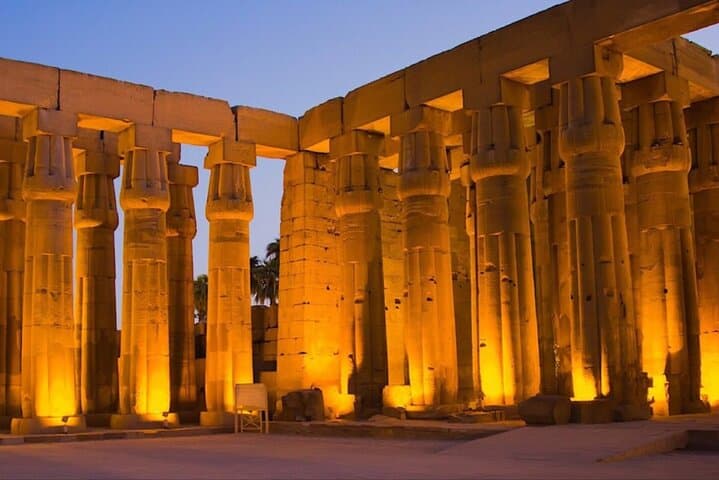
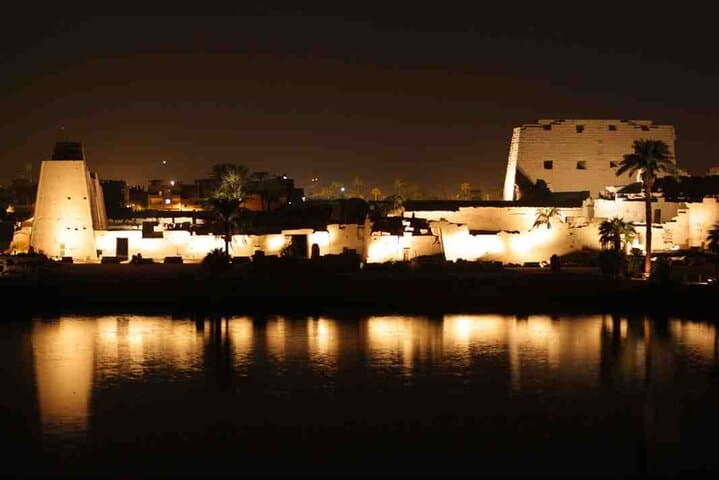
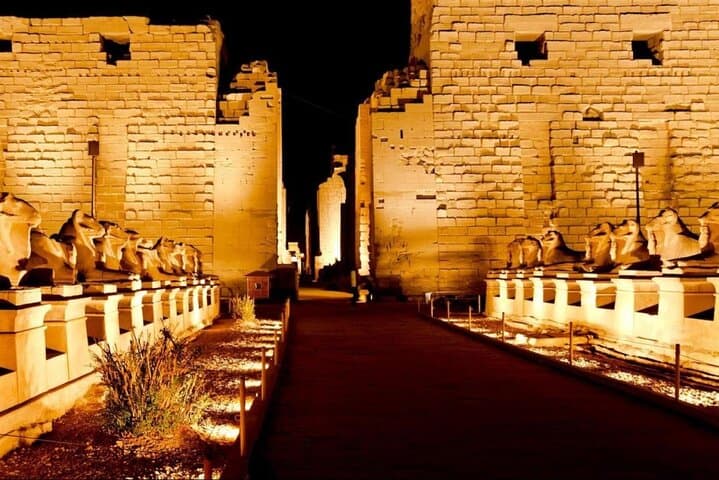
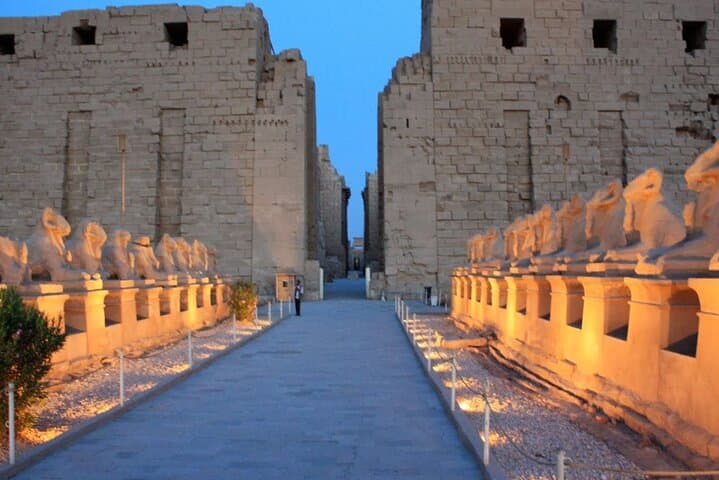
The air cools and a hush falls over the sandstone pylons as floodlights begin to paint Karnak in color; shadows stretch across hieroglyphs and the avenue of ram-headed sphinxes seems to lean in to listen. Standing on the temple esplanade after dusk, you can feel the weight of thousands of years in a space designed to be seen at ceremonial scale.
The air cools and a hush falls over the sandstone pylons as floodlights begin to paint Karnak in color; shadows stretch across hieroglyphs and the avenue of ram-headed sphinxes seems to lean in to listen. Standing on the temple esplanade after dusk, you can feel the weight of thousands of years in a space designed to be seen at ceremonial scale.
Karnak grew over more than a millennium as pharaohs added pylons, obelisks and hypostyle halls; the site is built on Nile silt and its stone blocks record both religious practice and changing politics of ancient Thebes. The Sound and Light production pairs narration of that layered history—Amun-Ra’s cult, royal processions, and the priests’ city—with atmospheric music and angled lighting that emphasizes texture over color.
Culturally, the show is a theatrical retelling rather than an academic lecture: expect dramatized voices and selective storytelling that highlights major monuments. The complex’s scale is the main attraction; geology and building technique become legible when lights reveal relief work and tool marks. Local guides and operators usually include hotel pick-up and a small refreshment after the performance.
Practical guidance: arrive with a light jacket (desert nights can be cool), wear comfortable shoes for walking on uneven stone, and carry your passport or ID for ticket verification. Photography rules vary—use non-flash when asked—and follow guide instructions to stay on designated paths to protect fragile surfaces. The full experience lasts about two to three hours and is accessible to most fitness levels, making it an easy evening option for travelers wanting a dramatic primer on Luxor’s ancient core.