THE ADVENTURE COLLECTIVE® · Independent discovery and booking for outdoor travel

Witness Karnak’s monumental halls come alive after dark—an illuminated narrative that traces Thebes’ rise through light, sound, and stone. This 2½‑hour evening tour includes hotel pickup, the 70‑minute show, and return transfer.
Witness Karnak’s monumental halls come alive after dark—an illuminated narrative that traces Thebes’ rise through light, sound, and stone. This 2½‑hour evening tour includes hotel pickup, the 70‑minute show, and return transfer.
The air on the East Bank of Luxor cools as the Nile's last light slips away; stone pillars rise like ancient columns of shadow and then, slowly, color. When the floodlit hieroglyphs ignite against the night, Karnak stops being a ruin and becomes a stage—voices narrate pharaohs’ deeds while beams chase carved gods across sandstone.
Verified experiences and guided adventures in the surrounding area.
Operated by Luxor Magic Tours · Luxor, Luxor Governorate
The air on the East Bank of Luxor cools as the Nile's last light slips away; stone pillars rise like ancient columns of shadow and then, slowly, color. When the floodlit hieroglyphs ignite against the night, Karnak stops being a ruin and becomes a stage—voices narrate pharaohs’ deeds while beams chase carved gods across sandstone.
Karnak was the religious heart of Thebes for more than a thousand years, built around the cult of Amun‑Ra and expanded across dynasties. The complex sits on the Nile floodplain, its sandstone and granite blocks quarried and set into halls such as the Hypostyle, where forested rows of columns still hold the geometry of power. Local culture here is braided with centuries of ritual; the sound-and-light performance reanimates those stories using modern illumination and recorded narration so visitors can follow the chronology from Middle Kingdom chiefs to New Kingdom pharaohs.
Practical guidance: the full tour is about 150 minutes including hotel transfers, with roughly 70 minutes for the on-site show. Pickup and return by air-conditioned vehicle and a professional guide are typically included. Dress modestly for a religious and public site; evenings can be breezy so bring a light layer. Arrive with a charged camera and accept that flash photography may be restricted during the performance—respect signage and staff directions. The site is wheelchair accessible, but paths are uneven in places; follow the marked routes and avoid touching carved surfaces to help preserve the stonework.
This is an evening for listening and watching—the past made audible and visible, best experienced with sensible footwear, water, and curiosity.
easy.
2–3 hours.
Suitable for all fitness levels; involves walking on uneven temple paths and short standing periods.
Yes. The tour and transportation are listed as wheelchair accessible, with accessible paths in the main visitor areas—notify the operator at booking for assistance.
Total tour time is approximately 150 minutes including transfers; the on‑site performance runs around 70 minutes.
Yes. This tour typically includes entrance fees, round‑trip transfer from your hotel, and a professional guide as listed in the itinerary.
Photography is usually allowed, but flash or close‑range lighting may be restricted to protect the site and the experience—obey posted rules and staff directions.
Karnak grew over more than a millennium around the Temple of Amun‑Ra; pharaohs added pylons, obelisks and the Hypostyle Hall that defines the site today.
Follow marked paths and staff instructions—avoiding touching carvings and limiting flash photography helps reduce wear. Visitor flows and lighting are managed to balance access with preservation.
Luxor Magic Tours operates guided outdoor trips and adventures with an emphasis on safety, stewardship, and memorable experiences.
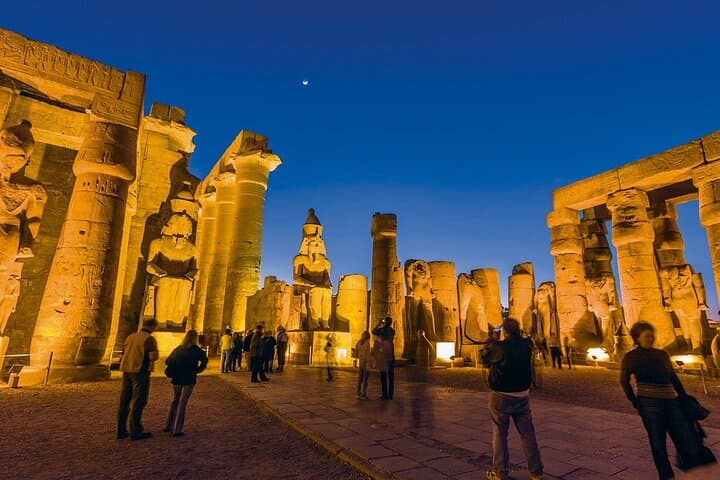
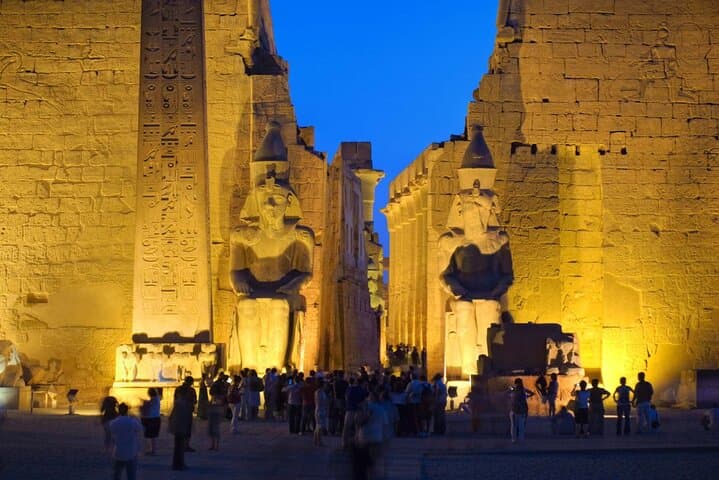
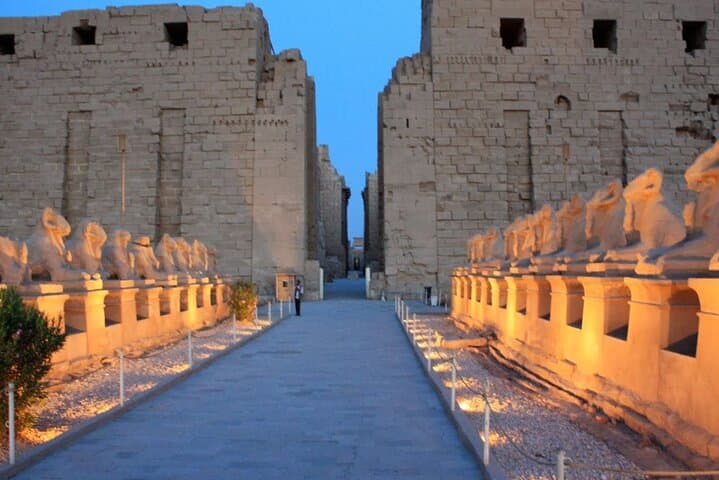
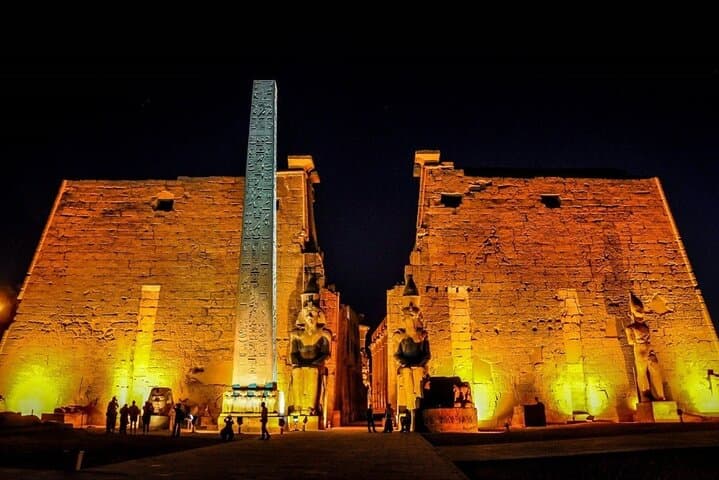
The air on the East Bank of Luxor cools as the Nile's last light slips away; stone pillars rise like ancient columns of shadow and then, slowly, color. When the floodlit hieroglyphs ignite against the night, Karnak stops being a ruin and becomes a stage—voices narrate pharaohs’ deeds while beams chase carved gods across sandstone.
The air on the East Bank of Luxor cools as the Nile's last light slips away; stone pillars rise like ancient columns of shadow and then, slowly, color. When the floodlit hieroglyphs ignite against the night, Karnak stops being a ruin and becomes a stage—voices narrate pharaohs’ deeds while beams chase carved gods across sandstone.
Karnak was the religious heart of Thebes for more than a thousand years, built around the cult of Amun‑Ra and expanded across dynasties. The complex sits on the Nile floodplain, its sandstone and granite blocks quarried and set into halls such as the Hypostyle, where forested rows of columns still hold the geometry of power. Local culture here is braided with centuries of ritual; the sound-and-light performance reanimates those stories using modern illumination and recorded narration so visitors can follow the chronology from Middle Kingdom chiefs to New Kingdom pharaohs.
Practical guidance: the full tour is about 150 minutes including hotel transfers, with roughly 70 minutes for the on-site show. Pickup and return by air-conditioned vehicle and a professional guide are typically included. Dress modestly for a religious and public site; evenings can be breezy so bring a light layer. Arrive with a charged camera and accept that flash photography may be restricted during the performance—respect signage and staff directions. The site is wheelchair accessible, but paths are uneven in places; follow the marked routes and avoid touching carved surfaces to help preserve the stonework.
This is an evening for listening and watching—the past made audible and visible, best experienced with sensible footwear, water, and curiosity.