THE ADVENTURE COLLECTIVE® · Independent discovery and booking for outdoor travel

Experience Karnak after dark with private transfers and included entry. This guided evening show uses light and narration to bring Luxor’s temple complex to life while minimizing logistics and maximizing frame-worthy moments.
Experience Karnak after dark with private transfers and included entry. This guided evening show uses light and narration to bring Luxor’s temple complex to life while minimizing logistics and maximizing frame-worthy moments.
The first light of the projector cuts across sandstone pylons and the shadowed mouths of sphinxes; the night breathes a different Karnak. You arrive after a short private transfer from your hotel, stepping from cool air-conditioning into the warm, lamp-lit courtyard where columns rise like a forest of carved stories.
Verified experiences and guided adventures in the surrounding area.
Operated by Eyes of Egypt · Luxor, Luxor Governorate
The first light of the projector cuts across sandstone pylons and the shadowed mouths of sphinxes; the night breathes a different Karnak. You arrive after a short private transfer from your hotel, stepping from cool air-conditioning into the warm, lamp-lit courtyard where columns rise like a forest of carved stories.
Karnak grew over a millennium as the religious heart of Thebes (modern Luxor), dominated by the precinct of Amun‑Re. The complex is a palimpsest of pharaohs: massive pylons, obelisks, and the Hypostyle Hall’s 134 columns tell a history of political power, architectural ambition, and ritual life along the Nile.
Geologically, the stone is local Nubian sandstone—soft in places, richly striated—weathered by millennia of sun and occasional Nile humidity. Culturally, the sound-and-light narration stitches myth to monument, guiding travelers through gods, kings, and festivals once hosted here.
Practical side: the show lasts about an hour; allow 90–120 minutes including transfers. The site is flat but uneven underfoot—expect low lighting, stone steps, and dust. Wear closed, grippy shoes and bring a light jacket for desert nights. Photography is permitted but flash can disrupt the show and other guests; use a steady hand or a small tripod for low-light shots. Accessibility is generally good—paths and transport are wheelchair friendly—but check pickup location logistics when booking.
Timing your visit after twilight optimizes contrast for photos and keeps daytime heat at bay. The private transfer simplifies arrival and departure so you can focus on the illuminated stones and the stories they still tell.
easy.
1.5–2 hours.
Suitable for most fitness levels; involves short periods of standing and walking on uneven ground.
Yes—private air-conditioned transfer from Luxor hotels is included; specify your pickup point when booking.
Yes—entrance tickets to the Karnak sound-and-light show are included in the group price to streamline entry.
The operator notes wheelchair accessibility for transport and site surfaces, but confirm specific needs in advance so they can assist at pickup and entry.
Narration is typically in English; many shows provide multiple-language options or printed translations—ask the operator if you need another language.
Karnak developed between the Middle Kingdom and Ptolemaic periods as the major cult center for Amun‑Re; many pharaohs added monuments here over centuries.
The site is actively managed to limit wear: visitors should avoid touching reliefs, stay on designated paths, and follow lighting/noise guidelines to protect ancient stone and nocturnal wildlife.
Eyes of Egypt operates guided outdoor trips and adventures with an emphasis on safety, stewardship, and memorable experiences.
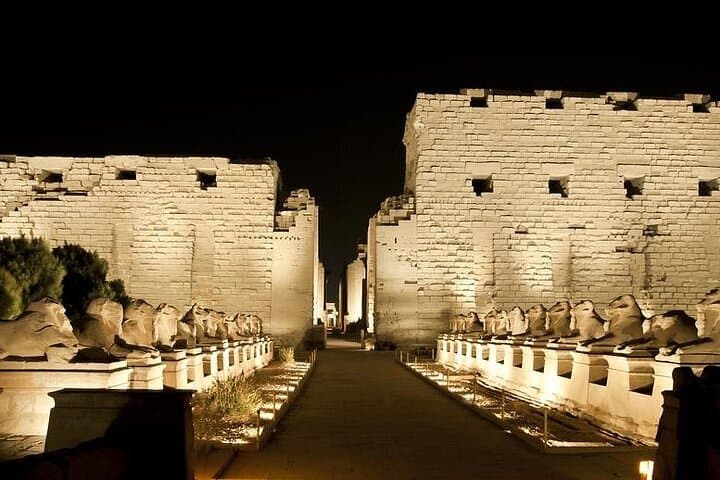
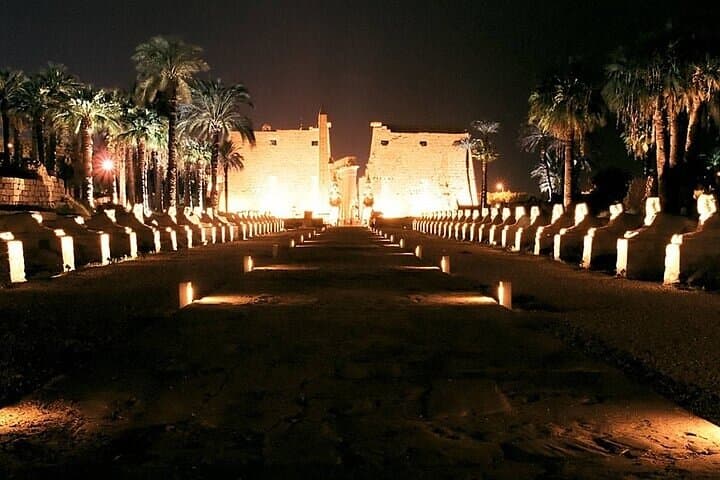
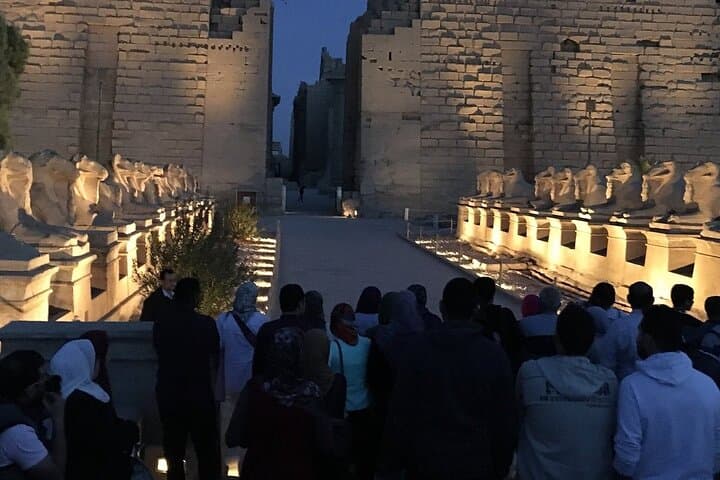
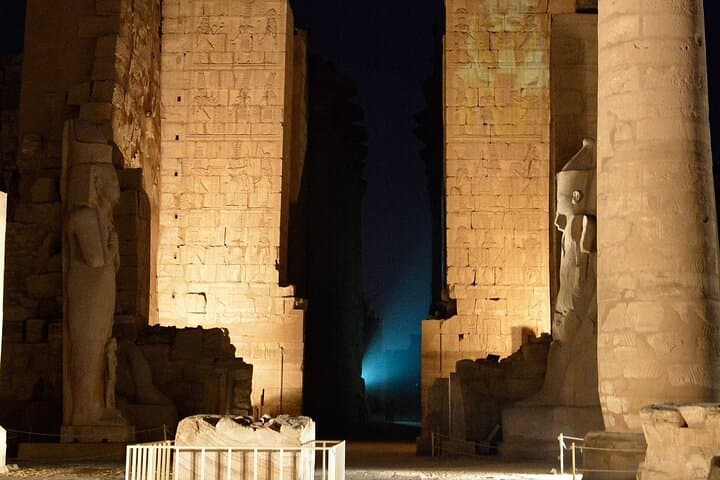
The first light of the projector cuts across sandstone pylons and the shadowed mouths of sphinxes; the night breathes a different Karnak. You arrive after a short private transfer from your hotel, stepping from cool air-conditioning into the warm, lamp-lit courtyard where columns rise like a forest of carved stories.
The first light of the projector cuts across sandstone pylons and the shadowed mouths of sphinxes; the night breathes a different Karnak. You arrive after a short private transfer from your hotel, stepping from cool air-conditioning into the warm, lamp-lit courtyard where columns rise like a forest of carved stories.
Karnak grew over a millennium as the religious heart of Thebes (modern Luxor), dominated by the precinct of Amun‑Re. The complex is a palimpsest of pharaohs: massive pylons, obelisks, and the Hypostyle Hall’s 134 columns tell a history of political power, architectural ambition, and ritual life along the Nile.
Geologically, the stone is local Nubian sandstone—soft in places, richly striated—weathered by millennia of sun and occasional Nile humidity. Culturally, the sound-and-light narration stitches myth to monument, guiding travelers through gods, kings, and festivals once hosted here.
Practical side: the show lasts about an hour; allow 90–120 minutes including transfers. The site is flat but uneven underfoot—expect low lighting, stone steps, and dust. Wear closed, grippy shoes and bring a light jacket for desert nights. Photography is permitted but flash can disrupt the show and other guests; use a steady hand or a small tripod for low-light shots. Accessibility is generally good—paths and transport are wheelchair friendly—but check pickup location logistics when booking.
Timing your visit after twilight optimizes contrast for photos and keeps daytime heat at bay. The private transfer simplifies arrival and departure so you can focus on the illuminated stones and the stories they still tell.