THE ADVENTURE COLLECTIVE® · Independent discovery and booking for outdoor travel

Walk among colonnades taller than modern cathedrals and trace pharaohs’ names across sandstone walls. This guided 2–3 hour tour of Karnak lays out history, architecture and practical tips for visiting Luxor’s largest temple complex.
Walk among colonnades taller than modern cathedrals and trace pharaohs’ names across sandstone walls. This guided 2–3 hour tour of Karnak lays out history, architecture and practical tips for visiting Luxor’s largest temple complex.
Dust lifts underfoot as the guide leads you through a field of colossal stone columns and sun-baked avenues—Karnak's scale hits first, then detail. The Hypostyle Hall looms: 134 giant columns carved with hieroglyphs that catch the light like pages of a weathered book. Beyond, the Sacred Lake glints, and the avenue of ram-headed sphinxes marches toward the Nile, daring you to measure human ambition against desert time.
Verified experiences and guided adventures in the surrounding area.
Operated by NORTH AFRICAN SHIPPING AND TOURISM COMPANY (NASCO TOURS) · Luxor, Luxor Governorate
Dust lifts underfoot as the guide leads you through a field of colossal stone columns and sun-baked avenues—Karnak's scale hits first, then detail. The Hypostyle Hall looms: 134 giant columns carved with hieroglyphs that catch the light like pages of a weathered book. Beyond, the Sacred Lake glints, and the avenue of ram-headed sphinxes marches toward the Nile, daring you to measure human ambition against desert time.
Karnak grew over 2,000 years as successive pharaohs added pylons, obelisks, and chapels to honor Amun, Mut and Khonsu. Geologically simple—sandstone and quarried limestone—the complex nonetheless records political shifts, artistic evolution and ritual practice of New Kingdom Egypt. Nearby Luxor town grew as the modern service center for pilgrims and archaeologists; the site remains active with ongoing conservation work by Egyptian antiquities authorities.
Expect a 2–3 hour guided walk across uneven stone, with stretches in open sun and pockets of shade under colonnades. Wear sturdy shoes with good tread; bring water and sunscreen. Photography is permitted in most areas but avoid flash on delicate reliefs. Guides typically explain the significance of the Hypostyle Hall, sacred lakes, and relocated obelisks, and point out inscriptions that date rulers and campaigns.
Practical rhythm: arrive early to avoid mid-day heat, move at a steady pace through main sights, and leave time to sit by the Sacred Lake and imagine the processions that once crossed this ground. Respect roped areas and fragile carvings—preservation depends on steady, small choices by each visitor.
easy.
2–3 hours.
Suitable for most fitness levels; involves walking on uneven stone and short stair sections.
Yes—this private guided tour includes admission to the Karnak complex as part of the booking.
Photography is generally allowed without flash; follow your guide's instructions in sensitive areas.
Some main areas have ramps or level approaches, but much of the site has uneven stone and steps—check accessibility needs with the operator in advance.
Plan 2–3 hours for the guided visit plus additional time if you want to linger at the Sacred Lake or visit nearby Luxor Temple.
Karnak functioned as the principal cult complex for Amun-Re and accumulated monuments from many pharaohs, especially during the New Kingdom (c. 1550–1070 BCE).
Ongoing conservation balances tourism and preservation—stay on paths, avoid touching carved surfaces, and comply with site signage to help protect the stone and inscriptions.
NORTH AFRICAN SHIPPING AND TOURISM COMPANY (NASCO TOURS) operates guided outdoor trips and adventures with an emphasis on safety, stewardship, and memorable experiences.
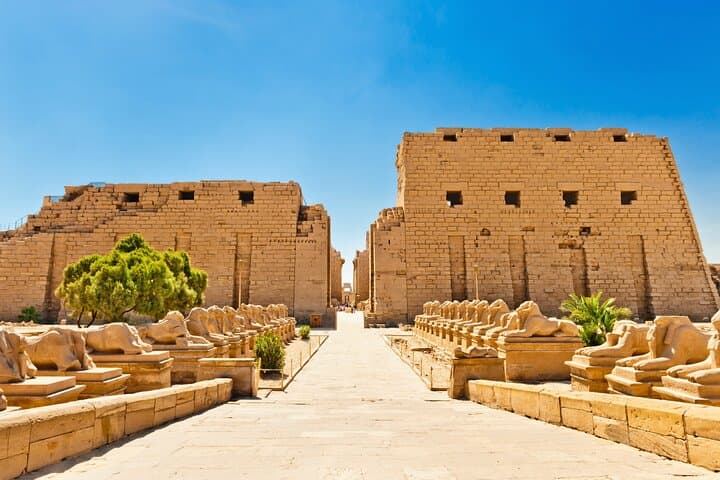
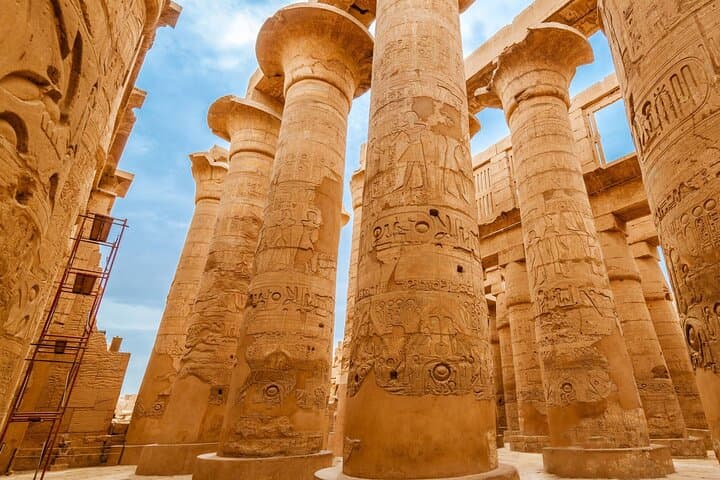
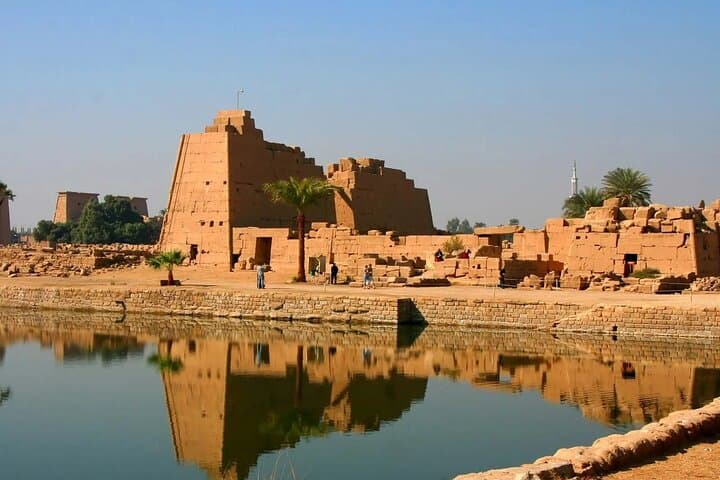
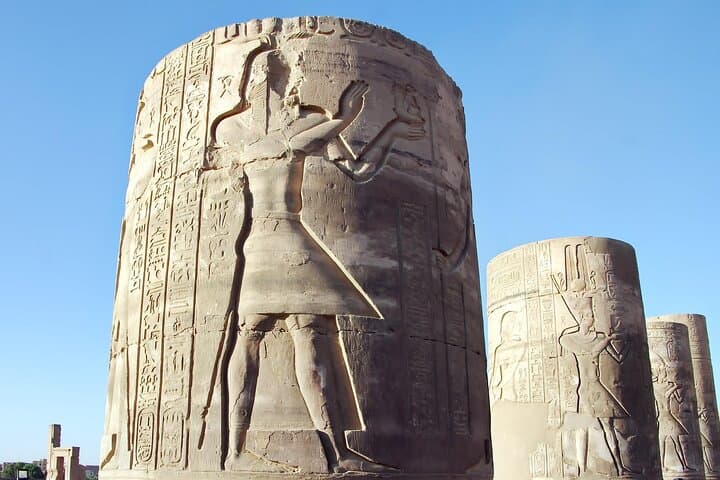
Dust lifts underfoot as the guide leads you through a field of colossal stone columns and sun-baked avenues—Karnak's scale hits first, then detail. The Hypostyle Hall looms: 134 giant columns carved with hieroglyphs that catch the light like pages of a weathered book. Beyond, the Sacred Lake glints, and the avenue of ram-headed sphinxes marches toward the Nile, daring you to measure human ambition against desert time.
Dust lifts underfoot as the guide leads you through a field of colossal stone columns and sun-baked avenues—Karnak's scale hits first, then detail. The Hypostyle Hall looms: 134 giant columns carved with hieroglyphs that catch the light like pages of a weathered book. Beyond, the Sacred Lake glints, and the avenue of ram-headed sphinxes marches toward the Nile, daring you to measure human ambition against desert time.
Karnak grew over 2,000 years as successive pharaohs added pylons, obelisks, and chapels to honor Amun, Mut and Khonsu. Geologically simple—sandstone and quarried limestone—the complex nonetheless records political shifts, artistic evolution and ritual practice of New Kingdom Egypt. Nearby Luxor town grew as the modern service center for pilgrims and archaeologists; the site remains active with ongoing conservation work by Egyptian antiquities authorities.
Expect a 2–3 hour guided walk across uneven stone, with stretches in open sun and pockets of shade under colonnades. Wear sturdy shoes with good tread; bring water and sunscreen. Photography is permitted in most areas but avoid flash on delicate reliefs. Guides typically explain the significance of the Hypostyle Hall, sacred lakes, and relocated obelisks, and point out inscriptions that date rulers and campaigns.
Practical rhythm: arrive early to avoid mid-day heat, move at a steady pace through main sights, and leave time to sit by the Sacred Lake and imagine the processions that once crossed this ground. Respect roped areas and fragile carvings—preservation depends on steady, small choices by each visitor.