THE ADVENTURE COLLECTIVE® · Independent discovery and booking for outdoor travel

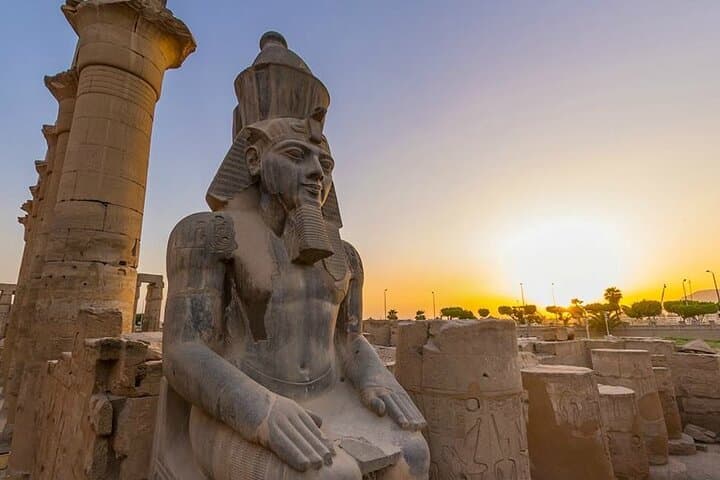
Walk the towering colonnades of Karnak, stand beneath Ramses’ statues at Luxor Temple, then unwind on a one-hour felucca as the Nile eases you away from the city. This half-day private tour blends archaeology, expert narration, and a classic river cruise.
Walk the towering colonnades of Karnak, stand beneath Ramses’ statues at Luxor Temple, then unwind on a one-hour felucca as the Nile eases you away from the city. This half-day private tour blends archaeology, expert narration, and a classic river cruise.
Sunlight pours between ancient columns as you step off the shaded pavement into the open heart of Karnak — the air tastes faintly of dust and river breeze. The avenue of ram-headed sphinxes guides you toward a Hypostyle Hall whose stone pillars still hold the voices of ritual processions; later, a felucca drifts you along the Nile, the city’s palms sliding past like pages in a slow book.
Verified experiences and guided adventures in the surrounding area.
Operated by Saray El-Nile · Luxor, Luxor Governorate
Sunlight pours between ancient columns as you step off the shaded pavement into the open heart of Karnak — the air tastes faintly of dust and river breeze. The avenue of ram-headed sphinxes guides you toward a Hypostyle Hall whose stone pillars still hold the voices of ritual processions; later, a felucca drifts you along the Nile, the city’s palms sliding past like pages in a slow book.
These sites occupy a landscape shaped by the Nile’s annual gifts. Karnak grew over centuries into the largest religious complex in Egypt, its obelisks and reliefs recording pharaohs’ campaigns. Luxor Temple, closer to the modern city, functioned as the stage for opulent festivals and royal rituals. The day ties archaeology and living culture: local boatmen, modern hotels, and craftsmen all trace livelihoods to the same river that supported pharaonic power.
Expect about five hours on this half-day, with roughly two hours at Karnak and an hour at Luxor Temple, plus a one-hour felucca unwind. Surfaces are a mix of flagstone, compacted sand, and narrow stairways; modest dress is required inside temples and sunscreen is essential in the open.
Practical tips: start early to beat heat and crowds, carry a refillable water bottle, and allow time for photos and guided explanations — the Egyptologist guide provides context you won’t get wandering alone. The felucca section offers a quiet counterpoint to the stone grandeur: sit back, feel the current nudge the boat, and watch the city slow to the pace of the river.
easy.
5 hours.
Suitable for most fitness levels; requires walking on uneven ground and short staircases.
Yes — admissions for the listed sites are included in this private tour's arrangement.
The felucca segment is about one hour; as part of the private tour it’s arranged for your group, though multiple small boats may be nearby on the river.
The itinerary is family-friendly; infants should sit on laps and parents should manage stairways and sun exposure.
Yes — round-trip pickup from hotels or Nile cruise boats in Luxor is included with private, air-conditioned transfers.
Karnak and Luxor were central to Thebes, the religious and ceremonial heart of ancient Egypt; successive pharaohs added monuments that layered centuries of ritual architecture.
High visitor numbers stress ancient stone and pigments — avoid touching reliefs, follow designated paths, and support licensed local guides to ensure revenue stays in the community.
Saray El-Nile operates guided outdoor trips and adventures with an emphasis on safety, stewardship, and memorable experiences.
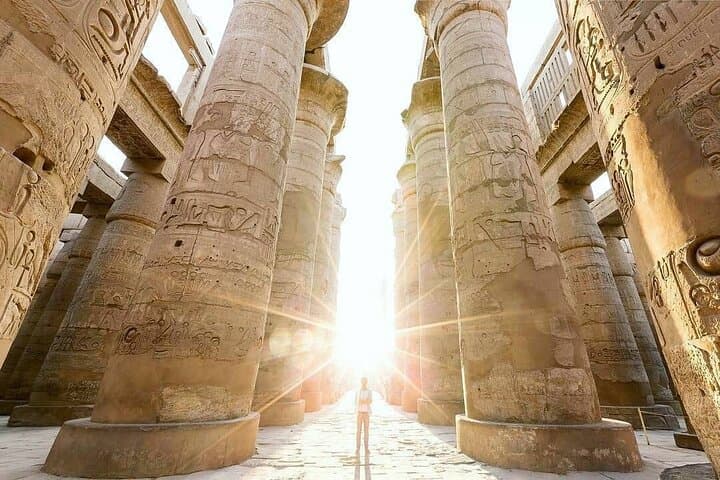
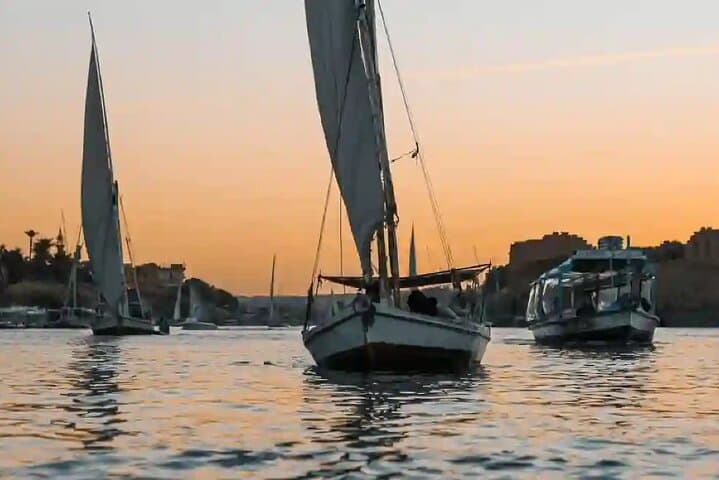
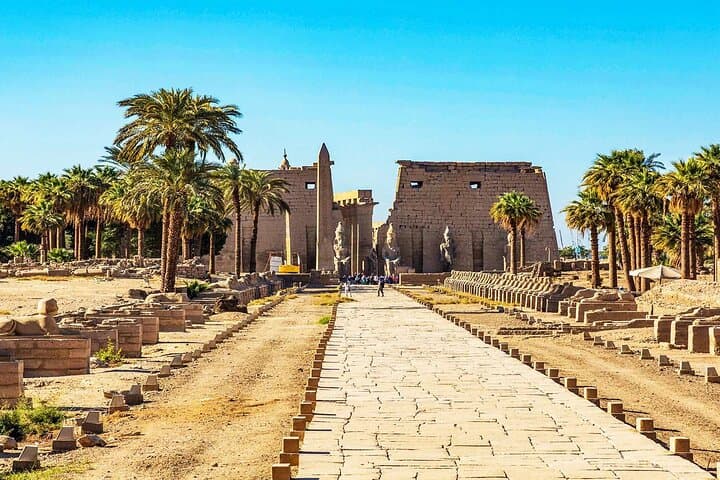
Sunlight pours between ancient columns as you step off the shaded pavement into the open heart of Karnak — the air tastes faintly of dust and river breeze. The avenue of ram-headed sphinxes guides you toward a Hypostyle Hall whose stone pillars still hold the voices of ritual processions; later, a felucca drifts you along the Nile, the city’s palms sliding past like pages in a slow book.
Sunlight pours between ancient columns as you step off the shaded pavement into the open heart of Karnak — the air tastes faintly of dust and river breeze. The avenue of ram-headed sphinxes guides you toward a Hypostyle Hall whose stone pillars still hold the voices of ritual processions; later, a felucca drifts you along the Nile, the city’s palms sliding past like pages in a slow book.
These sites occupy a landscape shaped by the Nile’s annual gifts. Karnak grew over centuries into the largest religious complex in Egypt, its obelisks and reliefs recording pharaohs’ campaigns. Luxor Temple, closer to the modern city, functioned as the stage for opulent festivals and royal rituals. The day ties archaeology and living culture: local boatmen, modern hotels, and craftsmen all trace livelihoods to the same river that supported pharaonic power.
Expect about five hours on this half-day, with roughly two hours at Karnak and an hour at Luxor Temple, plus a one-hour felucca unwind. Surfaces are a mix of flagstone, compacted sand, and narrow stairways; modest dress is required inside temples and sunscreen is essential in the open.
Practical tips: start early to beat heat and crowds, carry a refillable water bottle, and allow time for photos and guided explanations — the Egyptologist guide provides context you won’t get wandering alone. The felucca section offers a quiet counterpoint to the stone grandeur: sit back, feel the current nudge the boat, and watch the city slow to the pace of the river.