THE ADVENTURE COLLECTIVE® · Independent discovery and booking for outdoor travel

Travel back through pharaonic Egypt in a horse‑drawn carriage from Luxor Museum to Karnak and Luxor Temples. This four‑hour Egyptologist‑led tour blends close‑up archaeology, local color, and easy pacing for travelers of all fitness levels.
Travel back through pharaonic Egypt in a horse‑drawn carriage from Luxor Museum to Karnak and Luxor Temples. This four‑hour Egyptologist‑led tour blends close‑up archaeology, local color, and easy pacing for travelers of all fitness levels.
You step out of the shade of the Luxor Museum into heat that presses gently against the city, the Nile murmuring in the distance as a carriage clops onto sun-baked stone. The horse carriage is more than transport here; it sets pace—measured, old-world—between two of ancient Egypt’s greatest sites.
Verified experiences and guided adventures in the surrounding area.
Operated by Egypt Best Day Tours · Luxor, Luxor Governorate
You step out of the shade of the Luxor Museum into heat that presses gently against the city, the Nile murmuring in the distance as a carriage clops onto sun-baked stone. The horse carriage is more than transport here; it sets pace—measured, old-world—between two of ancient Egypt’s greatest sites.
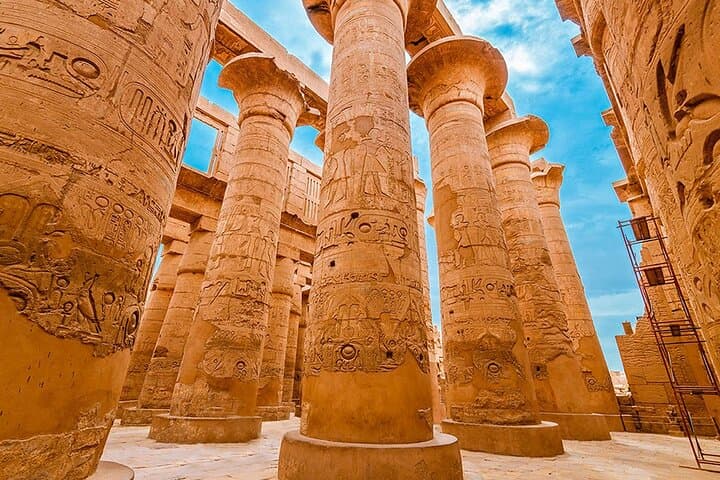
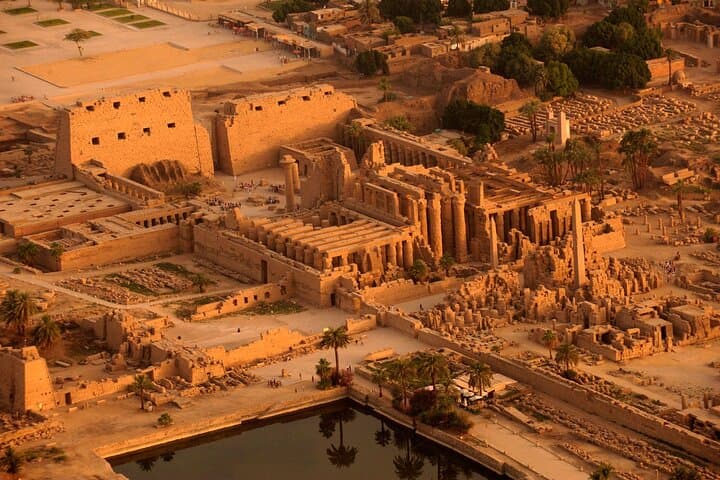
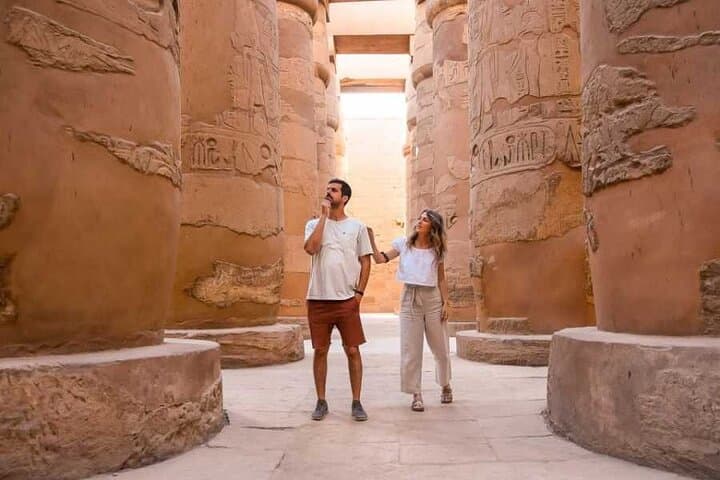
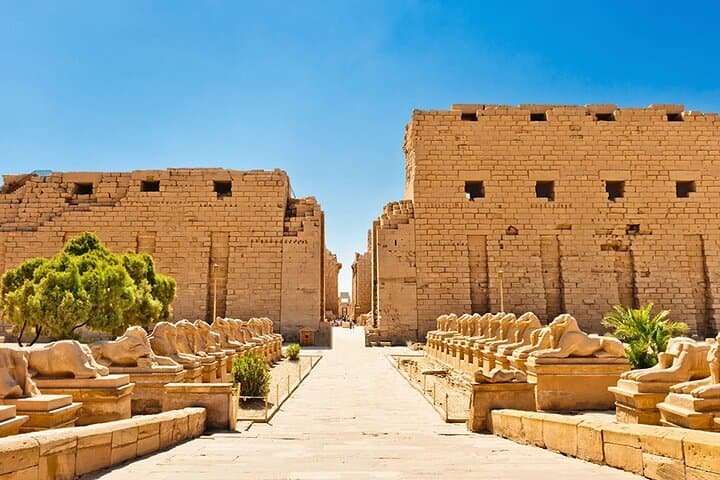
Begin on the East Bank where Karnak stretches across the horizon: a multi-millennia complex focused on Amun‑Ra with its Hypostyle Hall of forested columns and monumental pylons. Stones bear the chisel marks of New Kingdom pharaohs and ongoing digs that still yield fragments of rite and life. A short ride brings you to Luxor Temple, the ceremonial heart where Amenhotep III and Ramses II staged rites that linked crown to cosmos—its Great Colonnade still directing the eye along axial lines once used in coronation processions.
Geology here is simple and telling: Nile‑deposited sands overlying limestone and sandstone built the raw material of temples and the soft weathering that creates the crisp reliefs you’ll study up close. Culturally, expect a conversational, Egyptologist‑led narrative that ties stones to ceremony and local life—street vendors, modern shrines, and excavation updates thread past the ruins.
Practicalities: meet at Luxor Museum, plan for roughly 4 hours, and know that entrance fees are typically not included. Wear sturdy shoes for uneven temple pavements, sun protection for long exposures, and bring at least 1 liter of water; the carriage reduces walking but not sun time. Carry small change for site staff and a camera with extra battery—light shifts dramatically at different angles. This is an accessible, low‑impact way to move through Egypt’s living past while leaving room to notice both monumental architecture and the small discoveries between them.
easy.
4 hours.
Suitable for most fitness levels; mostly seated carriage time with short walks on uneven surfaces.
Admission is typically not included on this tour; plan to buy tickets on arrival or confirm with the operator beforehand.
Yes—physical demands are low. Infants must sit on an adult’s lap; bring sun protection and snacks for young children.
Photography for personal use is generally allowed, though flash and tripod rules vary—ask on site and respect any restricted zones.
The full experience is about 4 hours including carriage transfers and roughly two hours at each major temple for guided exploration.
Luxor and Karnak formed the ritual and political core of Thebes, the New Kingdom capital where pharaohs built and expanded temples over centuries to reinforce divine kingship.
Archaeological activity continues; visitors are asked to avoid touching reliefs, use marked paths, and support local conservation efforts by following guide instructions.
Egypt Best Day Tours operates guided outdoor trips and adventures with an emphasis on safety, stewardship, and memorable experiences.
You step out of the shade of the Luxor Museum into heat that presses gently against the city, the Nile murmuring in the distance as a carriage clops onto sun-baked stone. The horse carriage is more than transport here; it sets pace—measured, old-world—between two of ancient Egypt’s greatest sites.
You step out of the shade of the Luxor Museum into heat that presses gently against the city, the Nile murmuring in the distance as a carriage clops onto sun-baked stone. The horse carriage is more than transport here; it sets pace—measured, old-world—between two of ancient Egypt’s greatest sites.
Begin on the East Bank where Karnak stretches across the horizon: a multi-millennia complex focused on Amun‑Ra with its Hypostyle Hall of forested columns and monumental pylons. Stones bear the chisel marks of New Kingdom pharaohs and ongoing digs that still yield fragments of rite and life. A short ride brings you to Luxor Temple, the ceremonial heart where Amenhotep III and Ramses II staged rites that linked crown to cosmos—its Great Colonnade still directing the eye along axial lines once used in coronation processions.
Geology here is simple and telling: Nile‑deposited sands overlying limestone and sandstone built the raw material of temples and the soft weathering that creates the crisp reliefs you’ll study up close. Culturally, expect a conversational, Egyptologist‑led narrative that ties stones to ceremony and local life—street vendors, modern shrines, and excavation updates thread past the ruins.
Practicalities: meet at Luxor Museum, plan for roughly 4 hours, and know that entrance fees are typically not included. Wear sturdy shoes for uneven temple pavements, sun protection for long exposures, and bring at least 1 liter of water; the carriage reduces walking but not sun time. Carry small change for site staff and a camera with extra battery—light shifts dramatically at different angles. This is an accessible, low‑impact way to move through Egypt’s living past while leaving room to notice both monumental architecture and the small discoveries between them.