THE ADVENTURE COLLECTIVE® · Independent discovery and booking for outdoor travel

Walk among colossal columns and processional avenues on a private day tour of Karnak and Luxor Temples. This guided East Bank visit blends archaeology, local lore, and practical tips for beating the heat and crowds.
Walk among colossal columns and processional avenues on a private day tour of Karnak and Luxor Temples. This guided East Bank visit blends archaeology, local lore, and practical tips for beating the heat and crowds.
You step from an air‑conditioned car onto sun‑baked stone and the air seems to hold the weight of millennia. Columns loom like a forest of carved pillars; a faint wind pushes dust along the Avenue of Sphinxes and the Nile beyond glints, daring you to look further.
Verified experiences and guided adventures in the surrounding area.
Operated by Egyptian Daily Tours · Luxor, Luxor Governorate
You step from an air‑conditioned car onto sun‑baked stone and the air seems to hold the weight of millennia. Columns loom like a forest of carved pillars; a faint wind pushes dust along the Avenue of Sphinxes and the Nile beyond glints, daring you to look further.
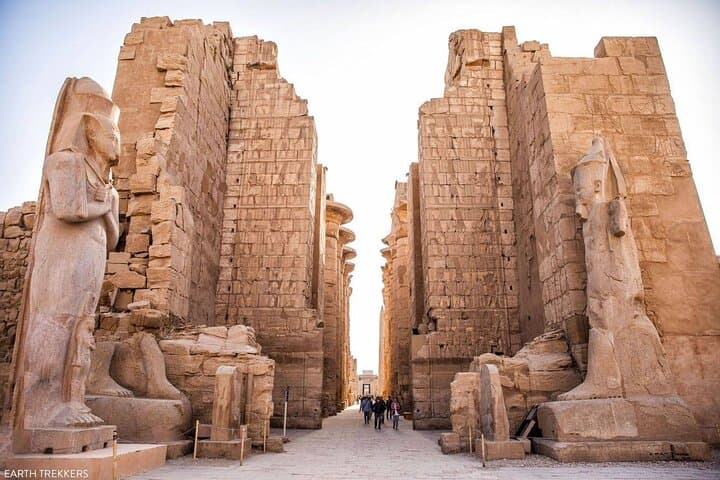
Karnak and Luxor temples occupy the eastern bank of the Nile where Thebes once rose as Egypt’s political heart. Karnak is not a single building but an accretion of sanctuaries, pylons, and halls added by pharaohs from the Middle Kingdom through the Ptolemies. Geologically, the soft limestone and sandstone blocks have eroded into crisp reliefs that preserve both religious scenes and graffiti of later travelers. Luxor Temple sits closer to the river and was a ritual center tied to the Opet Festival—walkways and colonnades align with ancient processional routes.
Local guides often point out reused blocks and later Roman or Coptic inscriptions—layers of culture written in stone. Expect crowds near major monuments but quieter alcoves behind the main hypostyle hall.
Practical guidance: wear sturdy walking shoes for uneven flagstones, bring sun protection and at least 1 liter of water per person, and plan visits in the cooler morning or late afternoon to avoid peak heat. Photography is allowed but check current rules for tripods and commercial use. Since admission isn’t included, buy tickets onsite or arrange entry in advance to skip lines. A private guide will streamline logistics and deepen context, turning carved reliefs into stories rather than ruins.
easy.
4 hours.
Light walking ability; suitable for most adults able to navigate short distances and stairs.
This private tour lists admission as not included—bring cash or buy tickets at the site or secure entry in advance.
Yes—infant seats are noted as available; the tour is rated physically easy but supervise children on uneven surfaces.
Typical itinerary allocates roughly two hours at Karnak and two hours at Luxor Temple within a four‑hour tour.
Sites have uneven ground and some steps; the tour is generally suitable for those without severe mobility issues but not recommended for spinal or serious cardiovascular conditions.
The Karnak complex grew over 1,500 years as successive pharaohs added pylons, chapels, and the hypostyle hall; Luxor Temple functioned as a coronation and festival center linked to Thebes’ civic rituals.
Ongoing conservation focuses on stone stabilization, controlling groundwater influence, and managing visitor impact; stick to marked paths to protect fragile reliefs.
Egyptian Daily Tours operates guided outdoor trips and adventures with an emphasis on safety, stewardship, and memorable experiences.
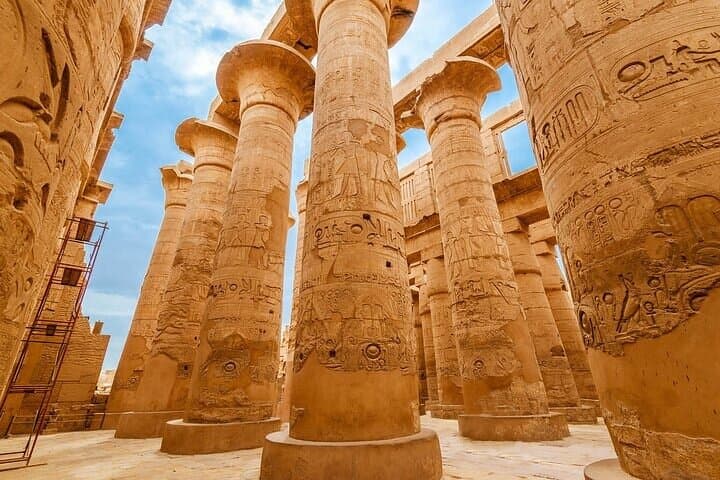

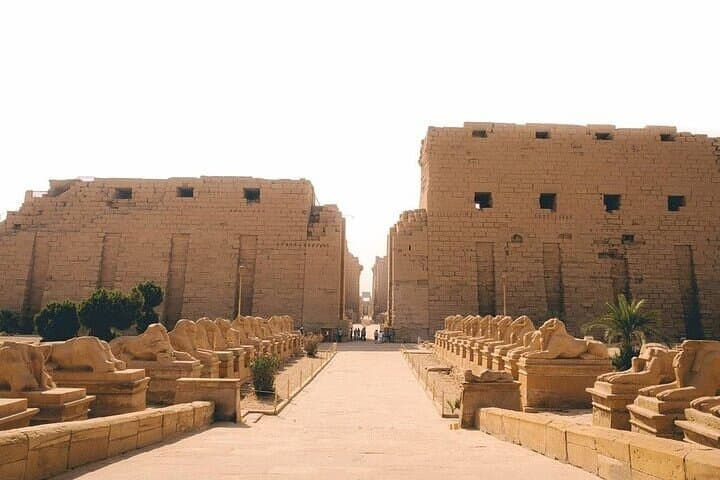
You step from an air‑conditioned car onto sun‑baked stone and the air seems to hold the weight of millennia. Columns loom like a forest of carved pillars; a faint wind pushes dust along the Avenue of Sphinxes and the Nile beyond glints, daring you to look further.
You step from an air‑conditioned car onto sun‑baked stone and the air seems to hold the weight of millennia. Columns loom like a forest of carved pillars; a faint wind pushes dust along the Avenue of Sphinxes and the Nile beyond glints, daring you to look further.
Karnak and Luxor temples occupy the eastern bank of the Nile where Thebes once rose as Egypt’s political heart. Karnak is not a single building but an accretion of sanctuaries, pylons, and halls added by pharaohs from the Middle Kingdom through the Ptolemies. Geologically, the soft limestone and sandstone blocks have eroded into crisp reliefs that preserve both religious scenes and graffiti of later travelers. Luxor Temple sits closer to the river and was a ritual center tied to the Opet Festival—walkways and colonnades align with ancient processional routes.
Local guides often point out reused blocks and later Roman or Coptic inscriptions—layers of culture written in stone. Expect crowds near major monuments but quieter alcoves behind the main hypostyle hall.
Practical guidance: wear sturdy walking shoes for uneven flagstones, bring sun protection and at least 1 liter of water per person, and plan visits in the cooler morning or late afternoon to avoid peak heat. Photography is allowed but check current rules for tripods and commercial use. Since admission isn’t included, buy tickets onsite or arrange entry in advance to skip lines. A private guide will streamline logistics and deepen context, turning carved reliefs into stories rather than ruins.