THE ADVENTURE COLLECTIVE® · Independent discovery and booking for outdoor travel

A private, five‑hour exploration of Luxor’s East Bank that pairs the sprawling Karnak complex with the intimate Luxor Temple. Plan for sun, stone, and separate entry fees—this guide covers what to expect and how to prepare.
A private, five‑hour exploration of Luxor’s East Bank that pairs the sprawling Karnak complex with the intimate Luxor Temple. Plan for sun, stone, and separate entry fees—this guide covers what to expect and how to prepare.
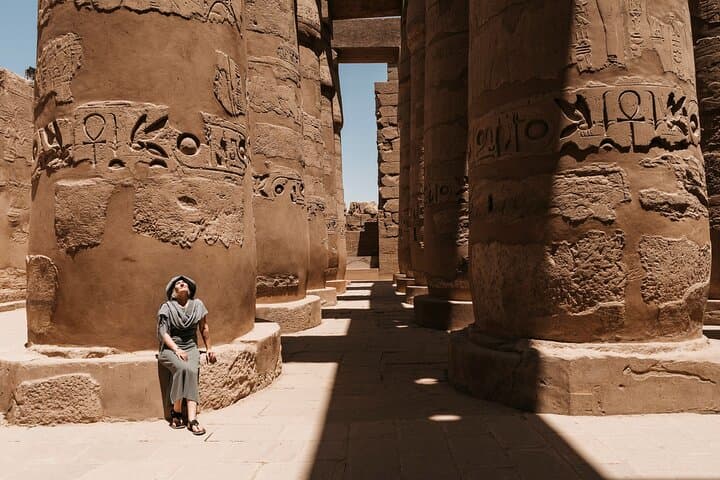
You step from an air‑conditioned vehicle onto sun-warmed stone; the Nile watches the city slide by as columns the height of trees throw shadow like time itself. This private East Bank tour pairs Karnak’s monumental avenue with Luxor Temple’s intimate courtyards, a five‑hour window into pharaonic ambition and living city life.
Verified experiences and guided adventures in the surrounding area.
Operated by Far and Beyond Travel · Luxor, Luxor Governorate
You step from an air‑conditioned vehicle onto sun-warmed stone; the Nile watches the city slide by as columns the height of trees throw shadow like time itself. This private East Bank tour pairs Karnak’s monumental avenue with Luxor Temple’s intimate courtyards, a five‑hour window into pharaonic ambition and living city life.
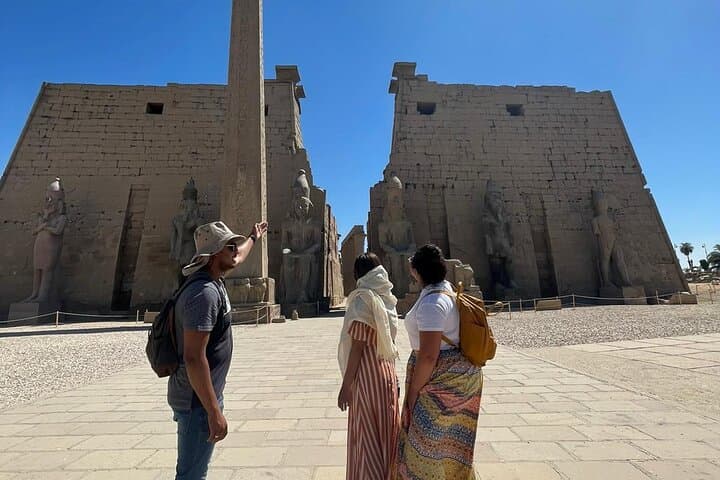
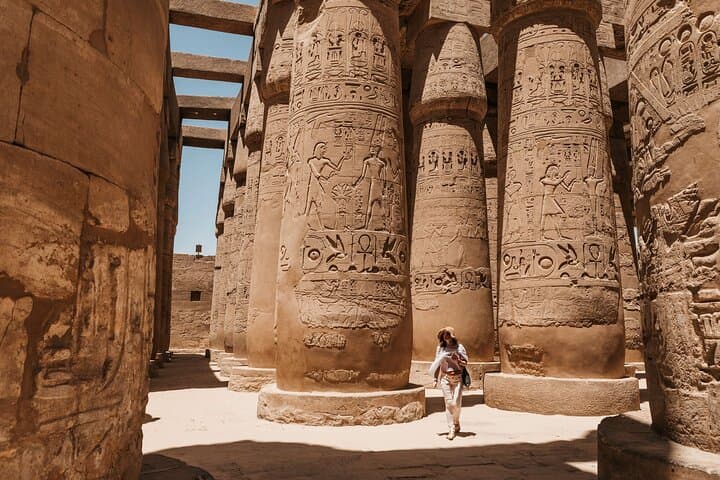
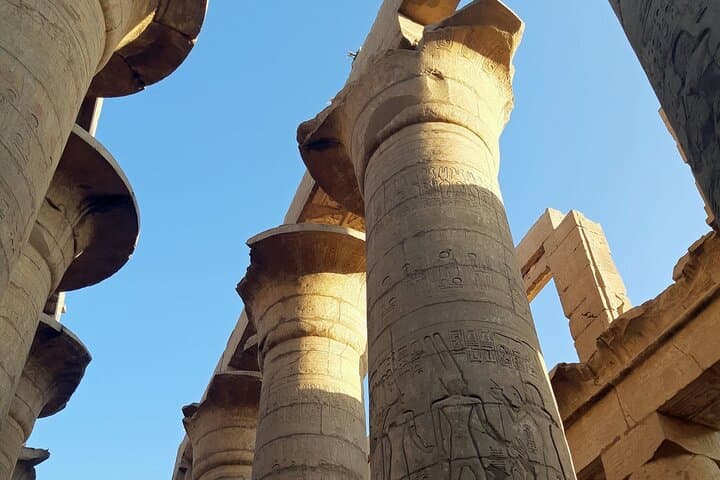
Karnak began in the Middle Kingdom and swelled through the New Kingdom as thirty pharaohs added pylons, hypostyle halls and obelisks. The geology is sandstone and Nile silt—blocks quarried and ferried upriver—so you’ll notice weathered reliefs and tool marks that read like construction notes. Luxor Temple sits closer to the Nile, rebuilt and reused across Roman and Islamic periods; its precinct became part of urban ritual rather than a remote necropolis.
Expect wide paved avenues, uneven stone thresholds and long sightlines framed by colossal statues. The guide will unpack iconography, ritual use and later historical layers; photography is common but check local signage for restrictions. Admission is not included in the listed tour price, and both sites are busiest mid‑day, so mornings or late afternoons feel cooler and quieter.
Practical guide: bring at least 1–2 liters of water, sun protection and low‑profile, grippy walking shoes for worn stone. Modest clothing—shoulders and knees covered—is respectful and often expected inside temple precincts. The tour is wheelchair accessible in parts, but some reliefs and inner zones involve steps or irregular surfaces. Confirm pickup details when you book and carry local currency for site tickets, tips and museum stops.
easy.
5 hours.
Suitable for most fitness levels; involves several hours of walking on flat but uneven stone surfaces.
No, admission is not included—bring local currency to buy tickets at the sites or arrange tickets in advance.
Private transportation and an air‑conditioned vehicle are included; confirm pickup point and timing when you book.
Parts of both temple complexes are wheelchair accessible, but some inner areas have steps or uneven ground—check accessibility details with your operator.
Photography is generally allowed in outdoor and many indoor areas, but follow on‑site signage and your guide’s instructions about restricted zones or flash use.
Karnak grew over 1,000 years with contributions from about 30 pharaohs, while Luxor Temple served as a center for the Opet Festival connecting temple, pharaoh and Nile rituals.
High visitor traffic stresses fragile stone and pigments; follow marked paths, avoid touching reliefs, and support local guides who promote site preservation.
Far and Beyond Travel operates guided outdoor trips and adventures with an emphasis on safety, stewardship, and memorable experiences.
You step from an air‑conditioned vehicle onto sun-warmed stone; the Nile watches the city slide by as columns the height of trees throw shadow like time itself. This private East Bank tour pairs Karnak’s monumental avenue with Luxor Temple’s intimate courtyards, a five‑hour window into pharaonic ambition and living city life.
You step from an air‑conditioned vehicle onto sun-warmed stone; the Nile watches the city slide by as columns the height of trees throw shadow like time itself. This private East Bank tour pairs Karnak’s monumental avenue with Luxor Temple’s intimate courtyards, a five‑hour window into pharaonic ambition and living city life.
Karnak began in the Middle Kingdom and swelled through the New Kingdom as thirty pharaohs added pylons, hypostyle halls and obelisks. The geology is sandstone and Nile silt—blocks quarried and ferried upriver—so you’ll notice weathered reliefs and tool marks that read like construction notes. Luxor Temple sits closer to the Nile, rebuilt and reused across Roman and Islamic periods; its precinct became part of urban ritual rather than a remote necropolis.
Expect wide paved avenues, uneven stone thresholds and long sightlines framed by colossal statues. The guide will unpack iconography, ritual use and later historical layers; photography is common but check local signage for restrictions. Admission is not included in the listed tour price, and both sites are busiest mid‑day, so mornings or late afternoons feel cooler and quieter.
Practical guide: bring at least 1–2 liters of water, sun protection and low‑profile, grippy walking shoes for worn stone. Modest clothing—shoulders and knees covered—is respectful and often expected inside temple precincts. The tour is wheelchair accessible in parts, but some reliefs and inner zones involve steps or irregular surfaces. Confirm pickup details when you book and carry local currency for site tickets, tips and museum stops.