THE ADVENTURE COLLECTIVE® · Independent discovery and booking for outdoor travel

A full-day outing from Prague into the West Bohemian valley of Karlovy Vary: drink from thermal springs, tour Moser glassworks and stroll the historic colonnades. This guide covers what to expect, practical tips and seasonal advice for the trip.
A full-day outing from Prague into the West Bohemian valley of Karlovy Vary: drink from thermal springs, tour Moser glassworks and stroll the historic colonnades. This guide covers what to expect, practical tips and seasonal advice for the trip.
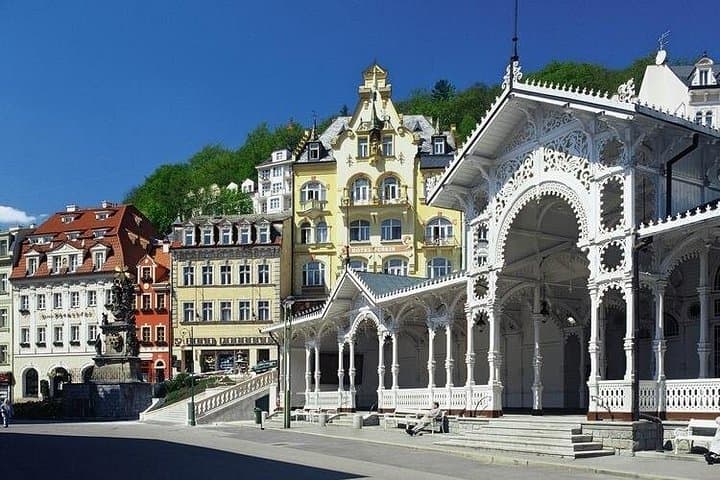
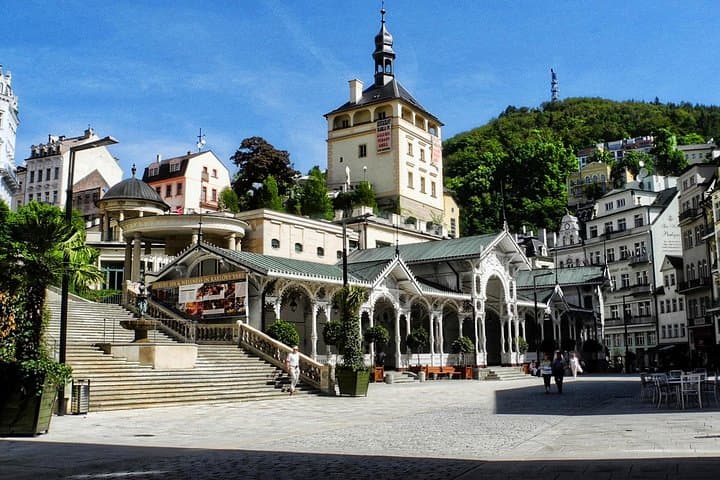
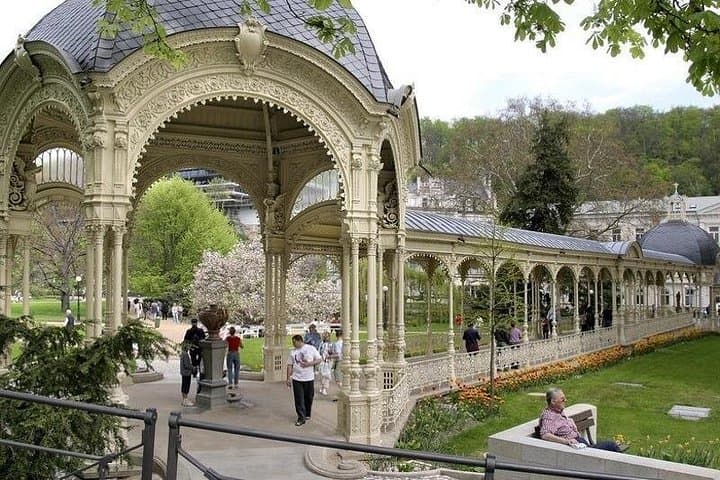
You arrive in a valley where steam lifts off stone fountains and the Teplá River threads through town, urging you toward the old colonnades. The first sip of mineral water—drawn from a cast-iron spout—catches the tongue with a sharp, slightly metallic tang. Light filters through the arcade roofs, and glassworks glint where artisans still shape crystal the old way.
Verified experiences and guided adventures in the surrounding area.
Operated by Cedok · Karlovy Vary, Karlovy Vary Region
You arrive in a valley where steam lifts off stone fountains and the Teplá River threads through town, urging you toward the old colonnades. The first sip of mineral water—drawn from a cast-iron spout—catches the tongue with a sharp, slightly metallic tang. Light filters through the arcade roofs, and glassworks glint where artisans still shape crystal the old way.
Karlovy Vary (Carlsbad) grew around thermal springs discovered in the 14th century by Emperor Charles IV. The town’s layered geology—fractured metamorphic rock heated by deep aquifers—feeds roughly a dozen public springs. In the 19th century it evolved into an international spa destination; names like Goethe and Chopin are part of its cultural ledger. Today you move between Moser glass exhibits, ornate colonnades, and cafés serving Becherovka and thin spa wafers.
Expect paved promenades, stepped viewpoints above the river, and brief museum stops with guided commentary. The route is gentle: mostly level town walking with occasional staircases to higher viewpoints. Weather can shift quickly in the valley—thermal steam and rain both arrive without much fanfare.
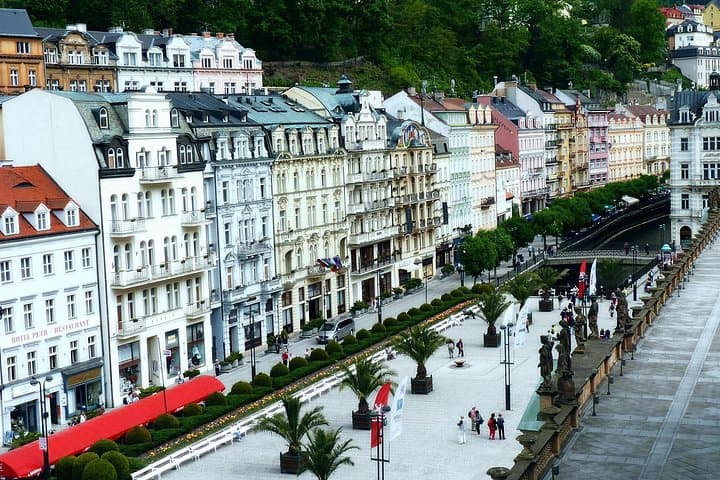
Practical guidance: bring comfortable walking shoes and a refillable bottle for tastings; carry a lightweight rain layer and ID for museum entry. Aim for mid-week or early morning to avoid coach crowds. If you want quieter moments, climb the viewpoint behind the Mill Colonnade for a sweeping, less-visited perspective over the roofs and the wooded slopes that frame the spa town.
easy.
10 hours.
Suitable for most fitness levels; involves several hours of on-foot sightseeing and short stair climbs
This is a full-day excursion of about 10 hours round trip, including travel time from Prague and guided time in Karlovy Vary.
Yes—lunch is included as part of the tour’s listed inclusions.
Yes—several public springs allow tasting; the water is often hot and mineral-rich so sip carefully and follow local signage.
Central colonnades are largely paved and accessible, but there are steps and some uneven surfaces; contact the operator for specifics and assistance needs.
Founded after springs were noted by Charles IV in the 14th century, Karlovy Vary matured into a prominent 19th-century spa frequented by European cultural figures and nobility.
The spa economy relies on preserving spring flow and water quality; visitors are asked to avoid contaminating fountains and to use marked trails to protect surrounding woodland.
Cedok operates guided outdoor trips and adventures with an emphasis on safety, stewardship, and memorable experiences.
You arrive in a valley where steam lifts off stone fountains and the Teplá River threads through town, urging you toward the old colonnades. The first sip of mineral water—drawn from a cast-iron spout—catches the tongue with a sharp, slightly metallic tang. Light filters through the arcade roofs, and glassworks glint where artisans still shape crystal the old way.
You arrive in a valley where steam lifts off stone fountains and the Teplá River threads through town, urging you toward the old colonnades. The first sip of mineral water—drawn from a cast-iron spout—catches the tongue with a sharp, slightly metallic tang. Light filters through the arcade roofs, and glassworks glint where artisans still shape crystal the old way.
Karlovy Vary (Carlsbad) grew around thermal springs discovered in the 14th century by Emperor Charles IV. The town’s layered geology—fractured metamorphic rock heated by deep aquifers—feeds roughly a dozen public springs. In the 19th century it evolved into an international spa destination; names like Goethe and Chopin are part of its cultural ledger. Today you move between Moser glass exhibits, ornate colonnades, and cafés serving Becherovka and thin spa wafers.
Expect paved promenades, stepped viewpoints above the river, and brief museum stops with guided commentary. The route is gentle: mostly level town walking with occasional staircases to higher viewpoints. Weather can shift quickly in the valley—thermal steam and rain both arrive without much fanfare.
Practical guidance: bring comfortable walking shoes and a refillable bottle for tastings; carry a lightweight rain layer and ID for museum entry. Aim for mid-week or early morning to avoid coach crowds. If you want quieter moments, climb the viewpoint behind the Mill Colonnade for a sweeping, less-visited perspective over the roofs and the wooded slopes that frame the spa town.