THE ADVENTURE COLLECTIVE® · Independent discovery and booking for outdoor travel

Drive out of Mumbai into the Western Ghats for a full‑day exploration of Karla, Bhaja and Bedsa — ancient rock‑cut caves that predate much of the region’s modern towns. This guided excursion pairs short hikes, carved chaityas and roadside views with practical tips for a safe, satisfying visit.
Drive out of Mumbai into the Western Ghats for a full‑day exploration of Karla, Bhaja and Bedsa — ancient rock‑cut caves that predate much of the region’s modern towns. This guided excursion pairs short hikes, carved chaityas and roadside views with practical tips for a safe, satisfying visit.
You arrive at the railings in front of the Gateway of India before dawn, the tide of Mumbai thinning as the van sets off toward the Western Ghats. The road rolls past industrial edges and then climbs into green — a change in tempo as the air cools and the hills begin to push into view. In about 2–3 hours you cross into Lonavala country; the caves sit like carved chapters along ridgelines, their stone faces worn smooth by centuries of monsoon and foot traffic.
Verified experiences and guided adventures in the surrounding area.
Operated by RAGINI DOSHI · Lonavala, Maharashtra
You arrive at the railings in front of the Gateway of India before dawn, the tide of Mumbai thinning as the van sets off toward the Western Ghats. The road rolls past industrial edges and then climbs into green — a change in tempo as the air cools and the hills begin to push into view. In about 2–3 hours you cross into Lonavala country; the caves sit like carved chapters along ridgelines, their stone faces worn smooth by centuries of monsoon and foot traffic.
Karla, Bhaja and Bedsa are early Buddhist rock‑cut sites dating from the 2nd century BCE to the early Common Era, cut from basalt laid down by ancient volcanic flows. Expect chaitya halls with horseshoe arches, votive stupas, pillared verandas, and narrow staircases cleaved into rock. The caves sit at modest elevations above the valley floor — short walks and steep steps rather than long alpine climbs — but uneven stone and carved steps demand steady footing.
Locally, these sites served as roadside monasteries and rest stops on trade routes between the Konkan coast and the Deccan plateau; seasonal pilgrims and monsoon travelers shaped their upkeep for millennia. Today, the area feels both lived in and archaeological: farmers and small temples nearby, souvenir stalls at the approaches.
Practical guidance: travel time from Mumbai ~2–3 hours each way (110 km), allow a full day (7–9 hours) for pickup, transit and three short site visits. Tickets are purchased at cave ticket windows; wear closed shoes, sun protection and carry water. Avoid monsoon hours on steep stretches; plan early to beat afternoon crowds and heat.
moderate.
7–9 hours.
Moderate fitness for short uphill walks and many stairs; able to walk 1–2 km over uneven terrain multiple times.
No—this tour lists guiding fees as included but cave entry tickets must be purchased at the ticket window on arrival.
Expect roughly 2–3 hours each way (about 110 km) depending on traffic; the full tour lasts 7–9 hours including transit and site time.
The caves feature uneven carved steps and narrow passages; they are not recommended for travelers with spinal injuries or severe mobility restrictions.
Early mornings and the dry season (November–February) are best for cooler temperatures and safer footing; avoid heavy monsoon downpours for safety.
The Karla, Bhaja and Bedsa caves are rock‑cut Buddhist monasteries and chaitya halls dating from roughly the 2nd century BCE to the early Common Era, located along ancient trade and pilgrimage routes through the Western Ghats.
These sites are vulnerable to erosion and visitor wear; stick to marked paths, avoid touching carvings where signed, and carry out trash to reduce impact.
RAGINI DOSHI operates guided outdoor trips and adventures with an emphasis on safety, stewardship, and memorable experiences.
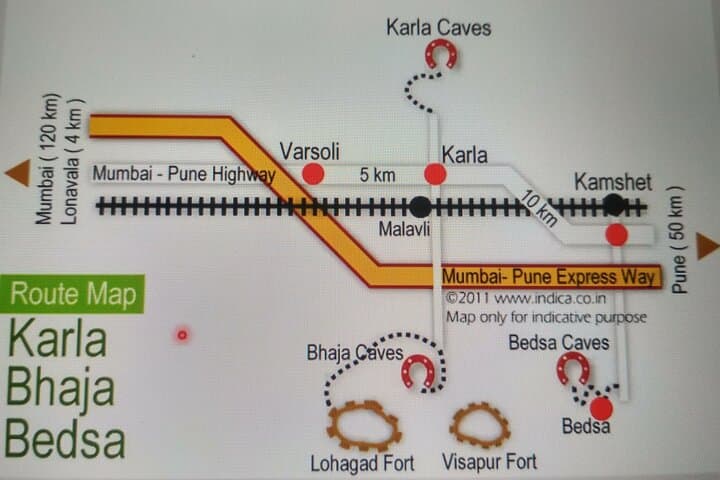

You arrive at the railings in front of the Gateway of India before dawn, the tide of Mumbai thinning as the van sets off toward the Western Ghats. The road rolls past industrial edges and then climbs into green — a change in tempo as the air cools and the hills begin to push into view. In about 2–3 hours you cross into Lonavala country; the caves sit like carved chapters along ridgelines, their stone faces worn smooth by centuries of monsoon and foot traffic.
You arrive at the railings in front of the Gateway of India before dawn, the tide of Mumbai thinning as the van sets off toward the Western Ghats. The road rolls past industrial edges and then climbs into green — a change in tempo as the air cools and the hills begin to push into view. In about 2–3 hours you cross into Lonavala country; the caves sit like carved chapters along ridgelines, their stone faces worn smooth by centuries of monsoon and foot traffic.
Karla, Bhaja and Bedsa are early Buddhist rock‑cut sites dating from the 2nd century BCE to the early Common Era, cut from basalt laid down by ancient volcanic flows. Expect chaitya halls with horseshoe arches, votive stupas, pillared verandas, and narrow staircases cleaved into rock. The caves sit at modest elevations above the valley floor — short walks and steep steps rather than long alpine climbs — but uneven stone and carved steps demand steady footing.
Locally, these sites served as roadside monasteries and rest stops on trade routes between the Konkan coast and the Deccan plateau; seasonal pilgrims and monsoon travelers shaped their upkeep for millennia. Today, the area feels both lived in and archaeological: farmers and small temples nearby, souvenir stalls at the approaches.
Practical guidance: travel time from Mumbai ~2–3 hours each way (110 km), allow a full day (7–9 hours) for pickup, transit and three short site visits. Tickets are purchased at cave ticket windows; wear closed shoes, sun protection and carry water. Avoid monsoon hours on steep stretches; plan early to beat afternoon crowds and heat.