THE ADVENTURE COLLECTIVE® · Independent discovery and booking for outdoor travel

Scale pale limestone walls above the Messinian Gulf on a guided half-day climb from Kardamili. Ideal for beginners and experienced climbers alike, the routes offer clean holds, sweeping sea views, and local cultural color.
Scale pale limestone walls above the Messinian Gulf on a guided half-day climb from Kardamili. Ideal for beginners and experienced climbers alike, the routes offer clean holds, sweeping sea views, and local cultural color.
The cliff waits like an invitation: pale limestone faces rising from olive groves, salt wind threading through pockets and edges. You clip in, feel the harness settle, and look out—an open sweep of the Messinian Gulf, blue broken by fishing boats and the white wash of surf along a distant headland. For three focused hours the vertical world reduces to holds and breath, and a guide’s voice cuts cool and clear over the sea breeze.
Verified experiences and guided adventures in the surrounding area.
Operated by Climb Up · Kardamili, Peloponnese
The cliff waits like an invitation: pale limestone faces rising from olive groves, salt wind threading through pockets and edges. You clip in, feel the harness settle, and look out—an open sweep of the Messinian Gulf, blue broken by fishing boats and the white wash of surf along a distant headland. For three focused hours the vertical world reduces to holds and breath, and a guide’s voice cuts cool and clear over the sea breeze.
Kardamili sits on the eastern edge of the Mani peninsula, an area shaped by tectonic uplift and centuries of human grit. The cliffs here are late Mesozoic limestone—compact, pocketed, and grippy—carved into clean, single-pitch faces that make for excellent sport and top-rope routes. The stone remembers a deep marine past; today it remembers local history too: stone tower houses built by Maniot clans, Byzantine chapels clinging to the slope, and a culture that learned to read and respect the land’s angles.
Climbing in Kardamili is as much about place as moves. Routes range from beginner-friendly slabs to sustained verticals for stronger climbers; all are threaded by narrow tracks through olive terraces and thyme-scented scrub. Guides often point out the old towers in the village, the seasonal fishing practices below, and the way the coastline’s geology dictates the harbor locations. Dolphins are regular on the water and raptors patrol the thermals—nature with personality, watching and sometimes daring you to look down.
Practically, expect a compact, well-run half-day: roughly three hours on-site including safety briefing, warm-up climbs, and a few longer pitches. Groups are small (up to 10) and kids 8+ can participate with an adult; guides supply instruction and typically provide helmets and harnesses—confirm on booking. The approach is short—a 5–20 minute walk depending on the sector—with some scrambling on uneven trails. Routes are bolted; bring sticky shoes if you have them, or rent locally.
Timing matters. Summer sun can bake the rock; early morning or late afternoon sessions give better friction and gentler temps. Hydrate well, layer for wind off the gulf, and wear shoes suited for a mix of approach and technical standing. Respect nesting birds and local landowners—leave no chalk traces on the stone beyond your climbs.
Whether you’re clipping your first quickdraw or chasing a clean send on limestone, Kardamili delivers a compact, scenic dose of big-water exposure and rock that rewards technical footwork. It’s a short, sharp connection to the Peloponnese coast: efficient, instructive, and unmistakably Greek.
moderate.
3 hours.
Moderate fitness—comfortable walking and ability to follow instruction while clipped into the rope system. Suitable for beginners who can manage short approaches and basic climbs.
No—this half-day is designed for first-time climbers as well as experienced participants; guides teach belaying basics and route techniques.
Minimum age is 8 years; children must be accompanied by an adult and assessed by the guide for suitability.
Guides commonly provide helmets, harnesses, ropes, and belay devices—confirm whether climbing shoes are included or available to rent.
Most sectors have short approaches between 5–20 minutes on uneven trails; wear shoes you can scramble in.
Tours may be canceled for bad weather; you’ll receive a full refund if you cancel at least 24 hours in advance or if the operator cancels due to conditions.
Hotel pickup and drop-off are offered if selected—confirm your pickup point when booking.
Mani’s history of independent clans and stone tower houses is visible everywhere—many local chapels and towers date to the Byzantine and Ottoman eras.
Climbers are asked to stick to bolted routes, avoid excessive chalking, and follow guide directions to protect nesting birds and fragile vegetation.
Climb Up operates guided outdoor trips and adventures with an emphasis on safety, stewardship, and memorable experiences.
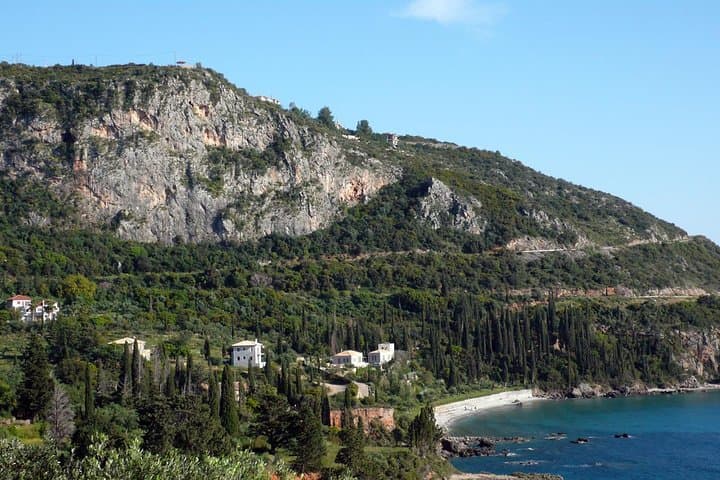
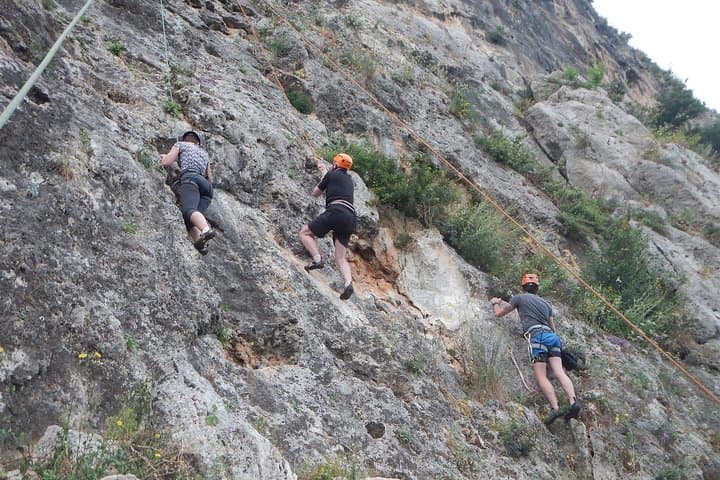
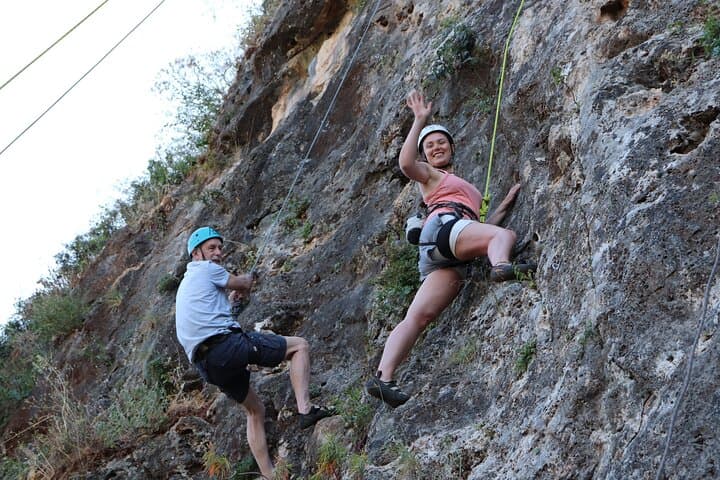
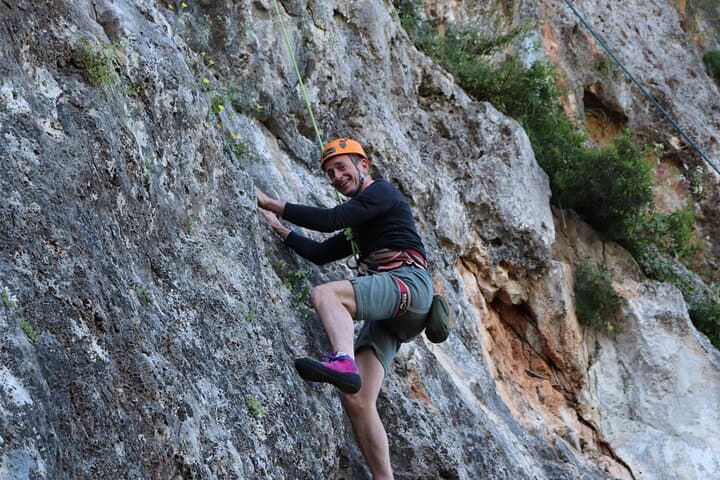
The cliff waits like an invitation: pale limestone faces rising from olive groves, salt wind threading through pockets and edges. You clip in, feel the harness settle, and look out—an open sweep of the Messinian Gulf, blue broken by fishing boats and the white wash of surf along a distant headland. For three focused hours the vertical world reduces to holds and breath, and a guide’s voice cuts cool and clear over the sea breeze.
The cliff waits like an invitation: pale limestone faces rising from olive groves, salt wind threading through pockets and edges. You clip in, feel the harness settle, and look out—an open sweep of the Messinian Gulf, blue broken by fishing boats and the white wash of surf along a distant headland. For three focused hours the vertical world reduces to holds and breath, and a guide’s voice cuts cool and clear over the sea breeze.
Kardamili sits on the eastern edge of the Mani peninsula, an area shaped by tectonic uplift and centuries of human grit. The cliffs here are late Mesozoic limestone—compact, pocketed, and grippy—carved into clean, single-pitch faces that make for excellent sport and top-rope routes. The stone remembers a deep marine past; today it remembers local history too: stone tower houses built by Maniot clans, Byzantine chapels clinging to the slope, and a culture that learned to read and respect the land’s angles.
Climbing in Kardamili is as much about place as moves. Routes range from beginner-friendly slabs to sustained verticals for stronger climbers; all are threaded by narrow tracks through olive terraces and thyme-scented scrub. Guides often point out the old towers in the village, the seasonal fishing practices below, and the way the coastline’s geology dictates the harbor locations. Dolphins are regular on the water and raptors patrol the thermals—nature with personality, watching and sometimes daring you to look down.
Practically, expect a compact, well-run half-day: roughly three hours on-site including safety briefing, warm-up climbs, and a few longer pitches. Groups are small (up to 10) and kids 8+ can participate with an adult; guides supply instruction and typically provide helmets and harnesses—confirm on booking. The approach is short—a 5–20 minute walk depending on the sector—with some scrambling on uneven trails. Routes are bolted; bring sticky shoes if you have them, or rent locally.
Timing matters. Summer sun can bake the rock; early morning or late afternoon sessions give better friction and gentler temps. Hydrate well, layer for wind off the gulf, and wear shoes suited for a mix of approach and technical standing. Respect nesting birds and local landowners—leave no chalk traces on the stone beyond your climbs.
Whether you’re clipping your first quickdraw or chasing a clean send on limestone, Kardamili delivers a compact, scenic dose of big-water exposure and rock that rewards technical footwork. It’s a short, sharp connection to the Peloponnese coast: efficient, instructive, and unmistakably Greek.