THE ADVENTURE COLLECTIVE® · Independent discovery and booking for outdoor travel

Train for an hour in a compact Tokyo dojo and take home an original karate uniform. This beginner-friendly class in Asakusa blends practical instruction with a glimpse into Japan’s martial traditions.
Train for an hour in a compact Tokyo dojo and take home an original karate uniform. This beginner-friendly class in Asakusa blends practical instruction with a glimpse into Japan’s martial traditions.
You step through a sliding door into a compact dojo where polished wood and the faint scent of liniment set a focused tone.
Light from narrow windows slants across tatami and mats as an instructor demonstrates a slow kata; you feel the rhythm of precise movement more than you hear it.
Verified experiences and guided adventures in the surrounding area.
You step through a sliding door into a compact dojo where polished wood and the faint scent of liniment set a focused tone.
Light from narrow windows slants across tatami and mats as an instructor demonstrates a slow kata; you feel the rhythm of precise movement more than you hear it.
Asakusa's streets still carry echoes of Edo-period Tokyo—merchant alleys, temple bells and the rowdy energy of festival days—and this class channels that urban history into a concentrated hour of practice.
Karate itself has roots in Okinawa and was formalized in mainland Japan in the 20th century; what you experience in this studio is a modern, tourist-friendly distillation of striking, stance work and basic etiquette.
Expect clear, repeatable drills: warm-up stretches, basic punches and kicks, simple pad work or partnered practice depending on the day, and a short bowing ritual that reinforces respect for instructors and space.
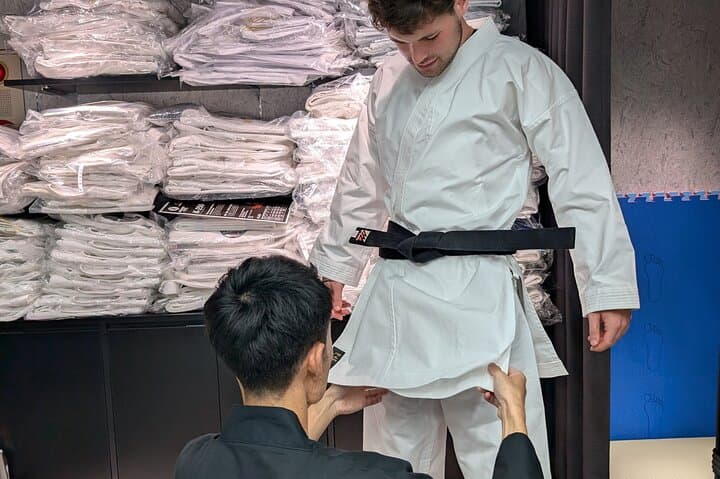
Instruction accommodates complete beginners; staff will fit you in a supplied karate-gi (uniform) you keep as part of the experience.
Practical notes: arrive 10–15 minutes early to change and store belongings, wear comfortable underlayers, and be prepared to train barefoot on mats.
Classes are short and intentionally guided—good for travelers who want a cultural snapshot rather than a full training immersion.
Respect the dojo rules, keep phones stowed, and treat the uniform and space with the same care the instructors show you—this keeps the experience authentic and sustainable for local practice.
easy.
1 hour.
Suitable for people in general good health; light cardio and flexibility help but are not required
No—classes are structured for beginners with step-by-step instruction and safety guidance.
Yes—participants receive an original karate-gi as part of the experience and can keep it afterwards.
Most tourist-focused sessions include English-speaking staff or translation and use simple demonstrations for clarity.
Younger participants are often welcome but age limits or parental supervision policies may apply—check with the operator before booking.
Asakusa developed as a lively entertainment and merchant district during the Edo period; martial arts schools in Tokyo evolved alongside modernizing Japan in the late 19th and 20th centuries.
Respect dojo traditions and local sites by disposing of waste, using public transit, and avoiding disruptive behavior around temples and residential streets.
You step through a sliding door into a compact dojo where polished wood and the faint scent of liniment set a focused tone.
Light from narrow windows slants across tatami and mats as an instructor demonstrates a slow kata; you feel the rhythm of precise movement more than you hear it.
You step through a sliding door into a compact dojo where polished wood and the faint scent of liniment set a focused tone.
Light from narrow windows slants across tatami and mats as an instructor demonstrates a slow kata; you feel the rhythm of precise movement more than you hear it.
Asakusa's streets still carry echoes of Edo-period Tokyo—merchant alleys, temple bells and the rowdy energy of festival days—and this class channels that urban history into a concentrated hour of practice.
Karate itself has roots in Okinawa and was formalized in mainland Japan in the 20th century; what you experience in this studio is a modern, tourist-friendly distillation of striking, stance work and basic etiquette.
Expect clear, repeatable drills: warm-up stretches, basic punches and kicks, simple pad work or partnered practice depending on the day, and a short bowing ritual that reinforces respect for instructors and space.
Instruction accommodates complete beginners; staff will fit you in a supplied karate-gi (uniform) you keep as part of the experience.
Practical notes: arrive 10–15 minutes early to change and store belongings, wear comfortable underlayers, and be prepared to train barefoot on mats.
Classes are short and intentionally guided—good for travelers who want a cultural snapshot rather than a full training immersion.
Respect the dojo rules, keep phones stowed, and treat the uniform and space with the same care the instructors show you—this keeps the experience authentic and sustainable for local practice.