THE ADVENTURE COLLECTIVE® · Independent discovery and booking for outdoor travel

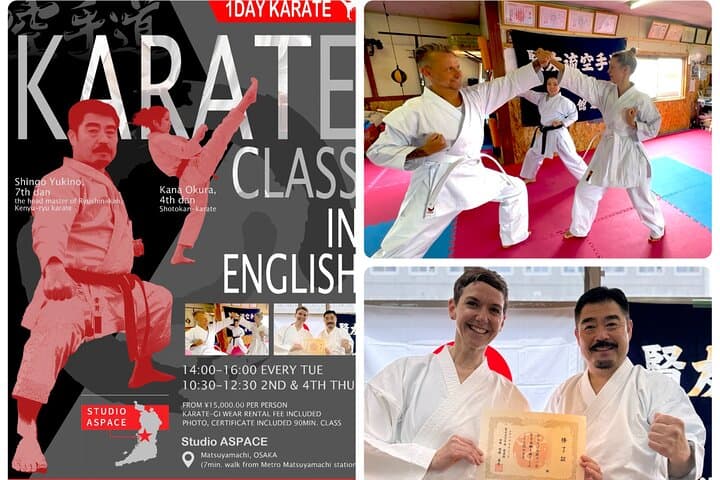
Train under real karate masters in a compact Osaka dojo, wear a provided karategi, and leave with a certificate printed in Japanese. This two-hour beginner session pairs hands-on technique with local etiquette and photo opportunities.
Train under real karate masters in a compact Osaka dojo, wear a provided karategi, and leave with a certificate printed in Japanese. This two-hour beginner session pairs hands-on technique with local etiquette and photo opportunities.
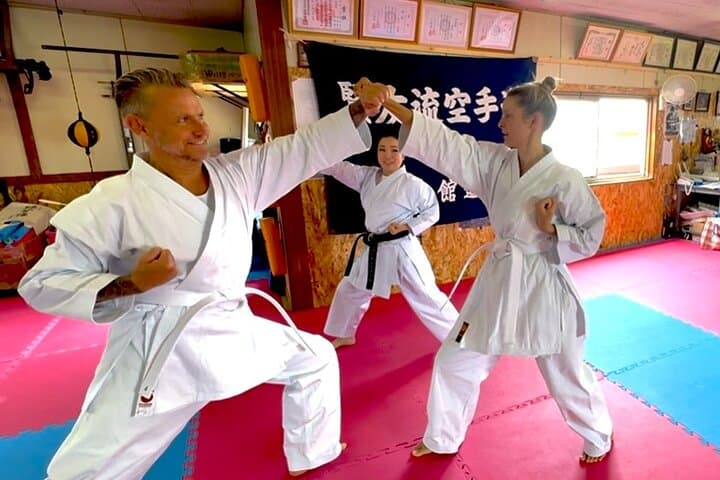
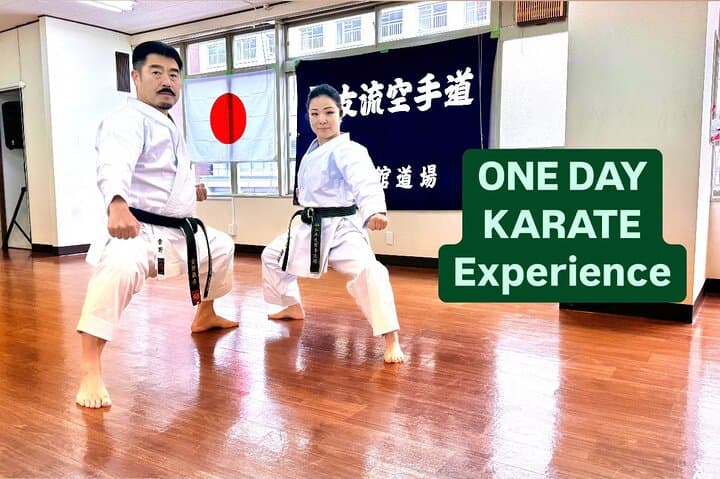
The room smells faintly of tatami and chalk as you step into a compact dojo just off a busy Osaka side street. Fluorescent lights hum; a small group stretches slowly while an instructor—calm, precise—calls the class to attention. For two hours you move through reversals, simple kihon (basics), and call-and-response drills that push posture and timing rather than brute force.
Verified experiences and guided adventures in the surrounding area.
Operated by Karate Eperience in Osaka · Osaka, Osaka
The room smells faintly of tatami and chalk as you step into a compact dojo just off a busy Osaka side street. Fluorescent lights hum; a small group stretches slowly while an instructor—calm, precise—calls the class to attention. For two hours you move through reversals, simple kihon (basics), and call-and-response drills that push posture and timing rather than brute force.
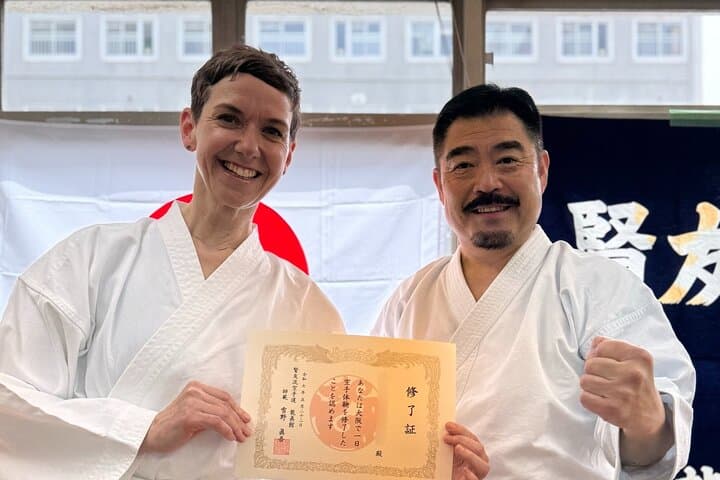
Karate’s roots lie in the Ryukyu Islands (modern Okinawa) where native fighting arts met Chinese influences; what you’ll learn in Osaka is part of that lineage adapted into modern Japanese practice. The city itself sits on the flat Osaka Plain next to the Yodo River—an urban backdrop that contrasts with the quiet focus of dojo culture. Expect practical etiquette: remove shoes, bow, and accept correction with humility. Photographs after class and a personalized certificate in Japanese bridge the lesson to local custom and souvenir culture.
This is a beginner-friendly, hands-on experience suitable for travelers with basic mobility. The session emphasizes form, balance, and safety—no sparring to the point of contact. Bring a water bottle, a small towel, and wear athletic layers; a traditional karategi is provided. Arrive 10–15 minutes early for check-in and warm-up. If you have back, heart, or pregnancy concerns, skip the class per provider guidance.
Beyond the lesson, carve out time to explore nearby alleyways—temple lanterns, street-food stalls, and a neighborhood dojo scene that reveals how martial arts thread through everyday Osaka life.
easy.
2 hours.
Suitable for most travelers with basic mobility; expect light-to-moderate physical effort focused on balance and coordination.
No—this class is designed for beginners and focuses on basic kihon, stance work, and simple sequences.
Yes, a traditional karategi (uniform) is included; arrive in comfortable clothes to change into it.
The provider advises against participation for guests with spinal injuries, pregnancy, or serious heart conditions due to twists and moderate exertion.
Live instruction in English is included, but instructors may also use Japanese terms common to karate training.
Karate originated in Okinawa and was systematized in mainland Japan during the 20th century; modern dojos in Osaka teach techniques that reflect that blended heritage.
Respect dojo spaces by keeping sneakers outside and disposing of waste; choosing public transit to reach the class reduces the city’s footprint.
Karate Eperience in Osaka operates guided outdoor trips and adventures with an emphasis on safety, stewardship, and memorable experiences.
The room smells faintly of tatami and chalk as you step into a compact dojo just off a busy Osaka side street. Fluorescent lights hum; a small group stretches slowly while an instructor—calm, precise—calls the class to attention. For two hours you move through reversals, simple kihon (basics), and call-and-response drills that push posture and timing rather than brute force.
The room smells faintly of tatami and chalk as you step into a compact dojo just off a busy Osaka side street. Fluorescent lights hum; a small group stretches slowly while an instructor—calm, precise—calls the class to attention. For two hours you move through reversals, simple kihon (basics), and call-and-response drills that push posture and timing rather than brute force.
Karate’s roots lie in the Ryukyu Islands (modern Okinawa) where native fighting arts met Chinese influences; what you’ll learn in Osaka is part of that lineage adapted into modern Japanese practice. The city itself sits on the flat Osaka Plain next to the Yodo River—an urban backdrop that contrasts with the quiet focus of dojo culture. Expect practical etiquette: remove shoes, bow, and accept correction with humility. Photographs after class and a personalized certificate in Japanese bridge the lesson to local custom and souvenir culture.
This is a beginner-friendly, hands-on experience suitable for travelers with basic mobility. The session emphasizes form, balance, and safety—no sparring to the point of contact. Bring a water bottle, a small towel, and wear athletic layers; a traditional karategi is provided. Arrive 10–15 minutes early for check-in and warm-up. If you have back, heart, or pregnancy concerns, skip the class per provider guidance.
Beyond the lesson, carve out time to explore nearby alleyways—temple lanterns, street-food stalls, and a neighborhood dojo scene that reveals how martial arts thread through everyday Osaka life.