THE ADVENTURE COLLECTIVE® · Independent discovery and booking for outdoor travel

Step off Thika Road into a working Kenyan coffee estate where you’ll walk the fields, watch processing, roast beans and cup fresh brews. This four-hour private tour at Karunguru demystifies single-origin coffee with hands-on demos and direct farm access.
Step off Thika Road into a working Kenyan coffee estate where you’ll walk the fields, watch processing, roast beans and cup fresh brews. This four-hour private tour at Karunguru demystifies single-origin coffee with hands-on demos and direct farm access.
Morning light breaks over the ridges east of Nairobi as a small van threads off the Thika Superhighway and onto a dirt lane lined with coffee trees. The air changes — tannic, green, faintly citrus — and the rows of Coffea arabica stand like cultivated waves across the hillside. On this private tour at Karunguru Coffee Farm you step slowly through every stage of coffee’s life: flowering branches, hand-harvested cherries, pulping, drying beds and a hands-on roasting demo where you take home a sample you’ve helped roast.
Verified experiences and guided adventures in the surrounding area.
Operated by MOSHEL TOURS AND TRAVEL · Nairobi, Nairobi County
Morning light breaks over the ridges east of Nairobi as a small van threads off the Thika Superhighway and onto a dirt lane lined with coffee trees. The air changes — tannic, green, faintly citrus — and the rows of Coffea arabica stand like cultivated waves across the hillside. On this private tour at Karunguru Coffee Farm you step slowly through every stage of coffee’s life: flowering branches, hand-harvested cherries, pulping, drying beds and a hands-on roasting demo where you take home a sample you’ve helped roast.
Coffee in Kenya carries colonial and cooperative histories: plantations introduced in the early 20th century evolved into smallholder and estate systems that built today’s reputation for bright, wine-like Arabica. Geology here — volcanic soils derived from the Ngong and central highlands — gives beans their acidity and clarity, while the 1,500–1,900 m elevation favors slow development and concentrated flavors.
Expect clear, practical interpretation from guides, a tasting session that illustrates processing effects on flavor, and light snacks after the cupping. The farm is wheelchair accessible and family-friendly; pick-up and drop-off from Nairobi are typically included and tours run about four hours with an early start.
Practical tips: wear closed-toe shoes for uneven ground, bring sun protection and a small daypack for purchases. If you care about origin, this tour gives direct contact with producers and the chance to buy single-origin bags straight from the farm—an efficient crash course in what makes Kenyan coffee distinct.
easy.
4 hours.
Suitable for all fitness levels; requires short, mostly flat walking over farm tracks and occasional steps
Yes — pick up and drop off in Nairobi are listed as included; confirm your pickup point at booking and expect an early morning departure.
Yes — the farm is stroller-accessible and suitable for families; activities are low-impact but keep children supervised around processing equipment.
Yes — Karunguru offers single-origin beans and small-batch roasts for purchase, often including the sample you roasted during the tour.
According to the tour information, accessibility adaptations are in place for wheelchair users; notify the operator when booking to arrange transfers and assistance.
Coffee in central Kenya expanded under colonial-era plantations and later into estate and cooperative models that shaped today’s single-origin reputation.
Many Kenyan estates emphasize shade-grown practices and responsible water use for processing; ask about the farm's composting and waste-water handling to support sustainable choices.
MOSHEL TOURS AND TRAVEL operates guided outdoor trips and adventures with an emphasis on safety, stewardship, and memorable experiences.
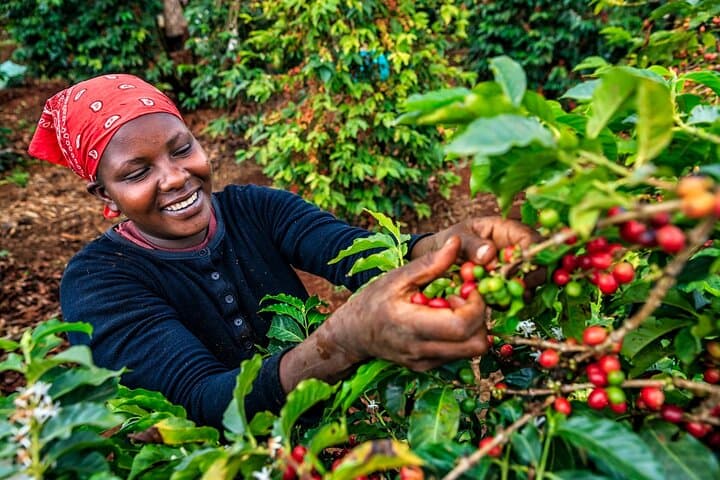
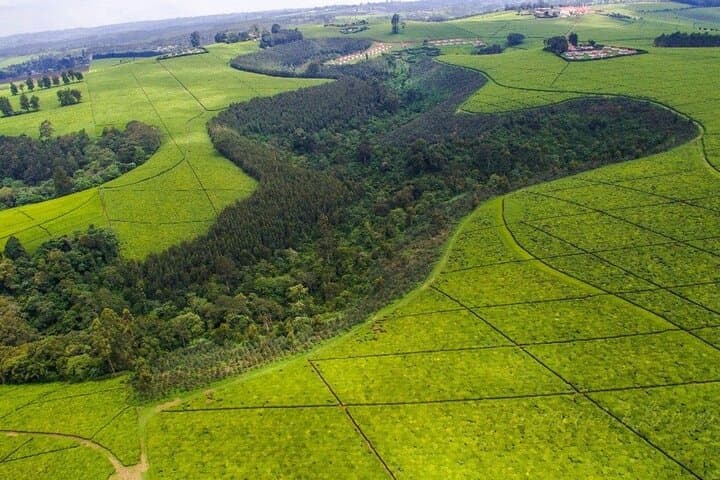
Morning light breaks over the ridges east of Nairobi as a small van threads off the Thika Superhighway and onto a dirt lane lined with coffee trees. The air changes — tannic, green, faintly citrus — and the rows of Coffea arabica stand like cultivated waves across the hillside. On this private tour at Karunguru Coffee Farm you step slowly through every stage of coffee’s life: flowering branches, hand-harvested cherries, pulping, drying beds and a hands-on roasting demo where you take home a sample you’ve helped roast.
Morning light breaks over the ridges east of Nairobi as a small van threads off the Thika Superhighway and onto a dirt lane lined with coffee trees. The air changes — tannic, green, faintly citrus — and the rows of Coffea arabica stand like cultivated waves across the hillside. On this private tour at Karunguru Coffee Farm you step slowly through every stage of coffee’s life: flowering branches, hand-harvested cherries, pulping, drying beds and a hands-on roasting demo where you take home a sample you’ve helped roast.
Coffee in Kenya carries colonial and cooperative histories: plantations introduced in the early 20th century evolved into smallholder and estate systems that built today’s reputation for bright, wine-like Arabica. Geology here — volcanic soils derived from the Ngong and central highlands — gives beans their acidity and clarity, while the 1,500–1,900 m elevation favors slow development and concentrated flavors.
Expect clear, practical interpretation from guides, a tasting session that illustrates processing effects on flavor, and light snacks after the cupping. The farm is wheelchair accessible and family-friendly; pick-up and drop-off from Nairobi are typically included and tours run about four hours with an early start.
Practical tips: wear closed-toe shoes for uneven ground, bring sun protection and a small daypack for purchases. If you care about origin, this tour gives direct contact with producers and the chance to buy single-origin bags straight from the farm—an efficient crash course in what makes Kenyan coffee distinct.