THE ADVENTURE COLLECTIVE® · Independent discovery and booking for outdoor travel

Drive the backroads from Ulaanbaatar to Karakorum and the Orkhon Valley on this private 8-day tour. Experience ger-camp nights, Erdene Zuu monastery, Ulaan Tsutgalan waterfall and local nomadic life with guided transfers and included meals.
Drive the backroads from Ulaanbaatar to Karakorum and the Orkhon Valley on this private 8-day tour. Experience ger-camp nights, Erdene Zuu monastery, Ulaan Tsutgalan waterfall and local nomadic life with guided transfers and included meals.
A wind-swept steppe unfolds as you leave Ulaanbaatar, the city shrinking into a ribbon of dust and memory. By the time your 4WD bumps into Karakorum’s low stone ruins, the air tastes of dry grass and riverbed; the Orkhon runs like an old guide, nudging you toward waterfalls and ger camps.
Verified experiences and guided adventures in the surrounding area.
Operated by Juulchin Tours Mongolia · Kharkhorin, Övörkhangai
A wind-swept steppe unfolds as you leave Ulaanbaatar, the city shrinking into a ribbon of dust and memory. By the time your 4WD bumps into Karakorum’s low stone ruins, the air tastes of dry grass and riverbed; the Orkhon runs like an old guide, nudging you toward waterfalls and ger camps.
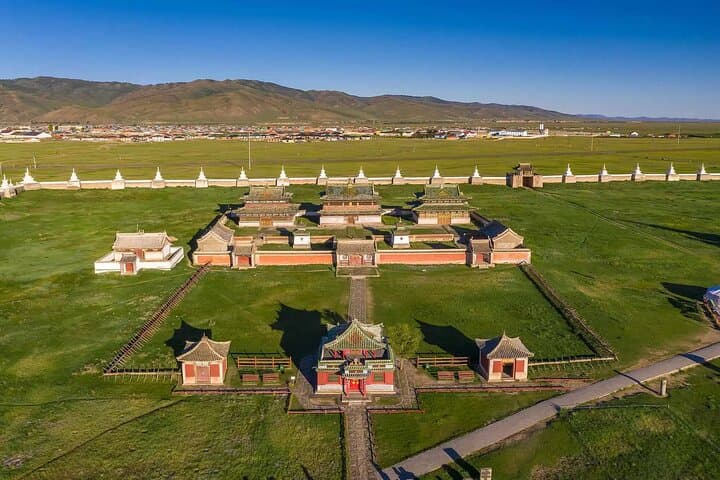
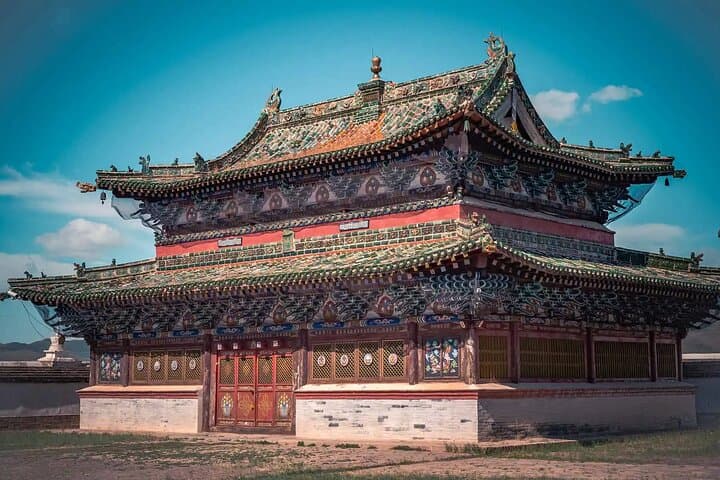
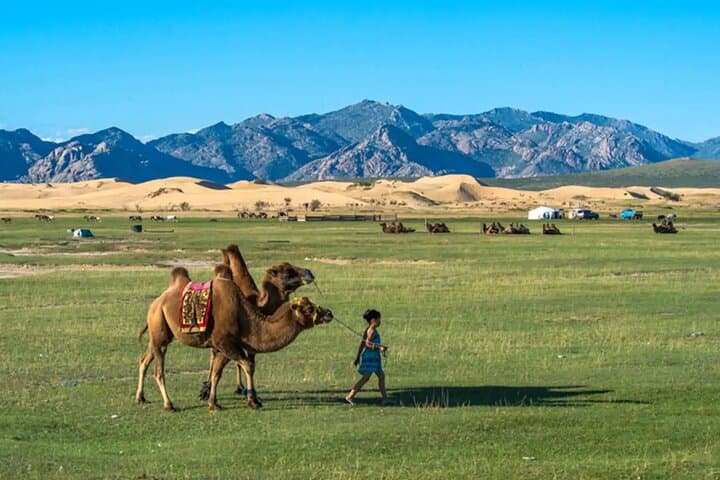
Karakorum rose in the 13th century as the Mongol Empire’s heart; Erdene Zuu monastery later reshaped the site with Buddhist stupa walls built from the stones of the old capital. Geologically the region sits at the transition from broad steppe to volcanic outcrops and river-cut valleys—Orkhon Waterfall drops through basalt shelves, while Elsen Tasarkhai’s dunes are a local wind-driven feature rather than a Saharan expanse.
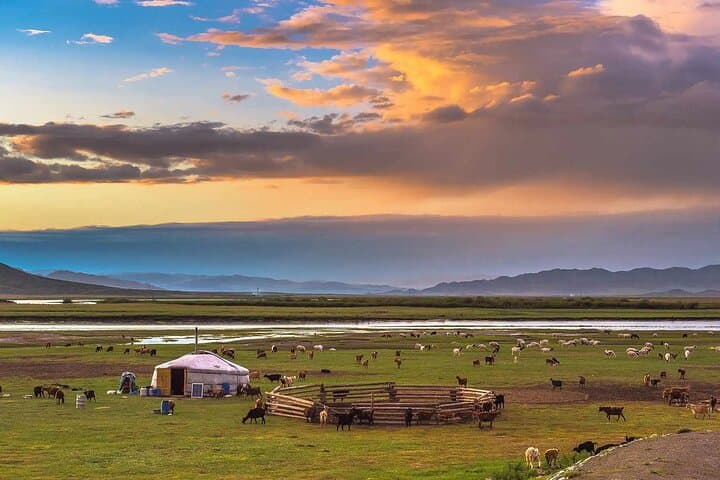
Culturally you’ll meet nomadic families in gers, hear horse-hoof rhythms and learn how pastoral life maps to seasons. Museums in Kharkhorin display Turkic stelae and Mongol-era artifacts dating back to the VII–XIII centuries, connecting the landscape to millennia of movement.
Practical guide: this private 8-day itinerary mixes long drives with short walks, ger-camp nights and a single hotel stay in Ulaanbaatar. Expect basic facilities in the countryside, provided meals, and one liter of water daily. Pack layered clothing for temperature swings, solid walking shoes for uneven trails near waterfalls, and a small daypack for camera, rain shell and snacks. Respect private family camps, ask before photographing, and arrive with flexible timing—the steppe sets the pace here.
moderate.
8 days.
Suitable for travelers in average physical condition; requires ability to manage transfers and short hikes up to 1–2 hours.
No; this is a cultural and scenic tour with short, easy walks rather than technical trekking.
Nights are spent in traditional ger camps with basic facilities; one night in a Ulaanbaatar hotel is included.
Yes; chauffeur-driven 4WD transport and an English-speaking guide are provided throughout the tour.
Yes; the itinerary is suitable for most ages, but check road comfort for very young children or those sensitive to long drives.
Karakorum was founded by Ögedei Khan in the 13th century and later became a religious center when Erdene Zuu monastery reused stones from the imperial capital.
The Orkhon Valley is a UNESCO World Heritage site; visitors should minimize disturbance, pack out waste, and avoid off-road driving on fragile grasslands.
Juulchin Tours Mongolia operates guided outdoor trips and adventures with an emphasis on safety, stewardship, and memorable experiences.
A wind-swept steppe unfolds as you leave Ulaanbaatar, the city shrinking into a ribbon of dust and memory. By the time your 4WD bumps into Karakorum’s low stone ruins, the air tastes of dry grass and riverbed; the Orkhon runs like an old guide, nudging you toward waterfalls and ger camps.
A wind-swept steppe unfolds as you leave Ulaanbaatar, the city shrinking into a ribbon of dust and memory. By the time your 4WD bumps into Karakorum’s low stone ruins, the air tastes of dry grass and riverbed; the Orkhon runs like an old guide, nudging you toward waterfalls and ger camps.
Karakorum rose in the 13th century as the Mongol Empire’s heart; Erdene Zuu monastery later reshaped the site with Buddhist stupa walls built from the stones of the old capital. Geologically the region sits at the transition from broad steppe to volcanic outcrops and river-cut valleys—Orkhon Waterfall drops through basalt shelves, while Elsen Tasarkhai’s dunes are a local wind-driven feature rather than a Saharan expanse.
Culturally you’ll meet nomadic families in gers, hear horse-hoof rhythms and learn how pastoral life maps to seasons. Museums in Kharkhorin display Turkic stelae and Mongol-era artifacts dating back to the VII–XIII centuries, connecting the landscape to millennia of movement.
Practical guide: this private 8-day itinerary mixes long drives with short walks, ger-camp nights and a single hotel stay in Ulaanbaatar. Expect basic facilities in the countryside, provided meals, and one liter of water daily. Pack layered clothing for temperature swings, solid walking shoes for uneven trails near waterfalls, and a small daypack for camera, rain shell and snacks. Respect private family camps, ask before photographing, and arrive with flexible timing—the steppe sets the pace here.