THE ADVENTURE COLLECTIVE® · Independent discovery and booking for outdoor travel

Visit the cliffside Karajia sarcophagi and explore the multi‑room Quiocta Caverns on a guided day trip from Chachapoyas. This full‑day tour mixes archaeology, geology and light caving with accessible hiking and local cultural insights.
Visit the cliffside Karajia sarcophagi and explore the multi‑room Quiocta Caverns on a guided day trip from Chachapoyas. This full‑day tour mixes archaeology, geology and light caving with accessible hiking and local cultural insights.
Start the day on a narrow mountain road where cloud forest climbs away from Chachapoyas and the air sharpens; the bus winds toward Cruz Pata and a cliff where human-shaped sarcophagi stand, staring out over a deep valley. Up close the Karajia figures—stone, wood and clay—read like a human-scale message from the Chachapoyas culture: monumental, guarded, and built where only the surefooted could place them.
Verified experiences and guided adventures in the surrounding area.
Operated by VIPAC Travel · Chachapoyas, Amazonas
Start the day on a narrow mountain road where cloud forest climbs away from Chachapoyas and the air sharpens; the bus winds toward Cruz Pata and a cliff where human-shaped sarcophagi stand, staring out over a deep valley. Up close the Karajia figures—stone, wood and clay—read like a human-scale message from the Chachapoyas culture: monumental, guarded, and built where only the surefooted could place them.
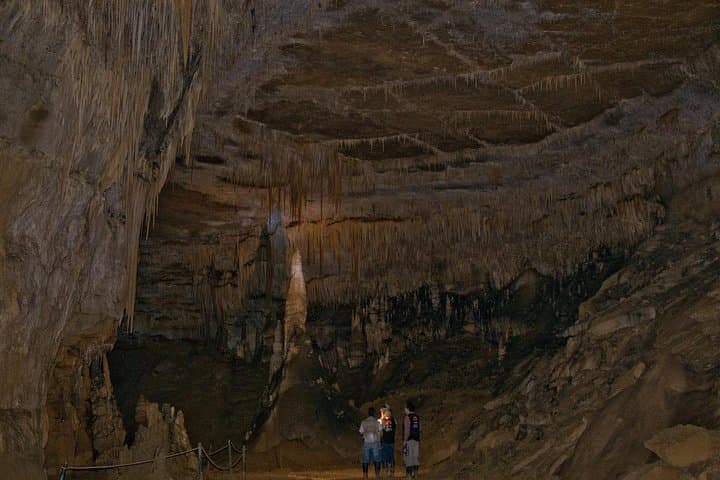
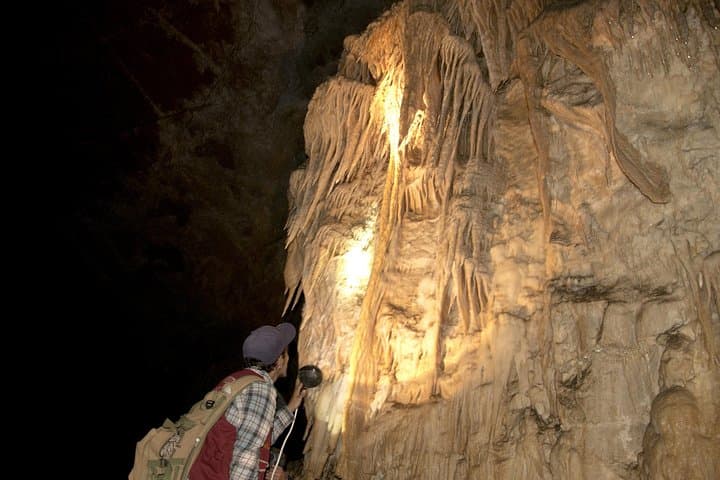
The Chachapoyas people carved tombs into limestone escarpments and positioned them on nearly vertical faces as both rite and protection. Geologically, the region is a mix of folded Andean limestone and softer volcanic-derived soils, which gives rise to caves like Quiocta a short drive away. Quiocta’s rooms hold stalactites and stalagmites formed over millennia; each chamber has shapes locals named after animals and tools.
Culturally, visits pass through small farming towns—Luya and Lamud—where modern life threads through pre-Inca ruins. Guides typically explain funerary practice, cliff-access techniques and cave formation while pointing out local flora such as Andean orchids and tree ferns.
Practical guidance: expect roughly 6 hours, a 30-minute uphill walk from Cruz Pata to Karajia on uneven trails, then cave exploration requiring rubber boots and a flashlight. Wear light hiking boots, bring 2+ liters of water, sun protection, and a rain layer in the wet season (Nov–Mar). The cave can feel tight; those with claustrophobia should consider skipping that portion. Cameras with spare batteries are useful—the views and cave formations reward patience and steady footing.
moderate.
6 hours.
Should be comfortable on uneven trails, short uphill sections, and able to walk 1–2 miles with stops.
The on‑foot approach from Cruz Pata is about 30 minutes on uneven trail with some short uphill sections.
Quiocta includes narrow passages and low ceilings; anyone with claustrophobia may find parts uncomfortable and should consider skipping the cave section.
This tour typically includes entry tickets and lunch as part of the full‑day package.
Children can join but must be supervised on cliffside viewpoints and in the cave; infants are usually required to sit on an adult’s lap during transportation.
The Karajia sarcophagi are a product of the pre‑Inca Chachapoyas culture; their cliffside placement served both ritual and protective functions.
Sites are fragile—stay on designated paths and avoid touching cave formations; local guides promote low‑impact visitation to preserve both cultural artifacts and speleothems.
VIPAC Travel operates guided outdoor trips and adventures with an emphasis on safety, stewardship, and memorable experiences.
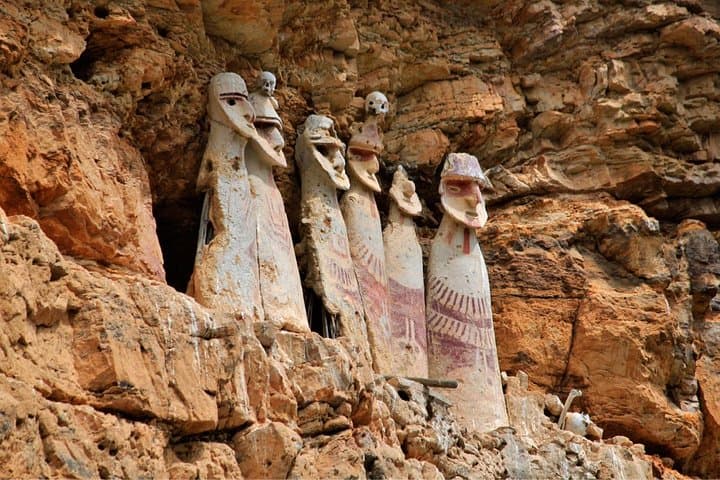
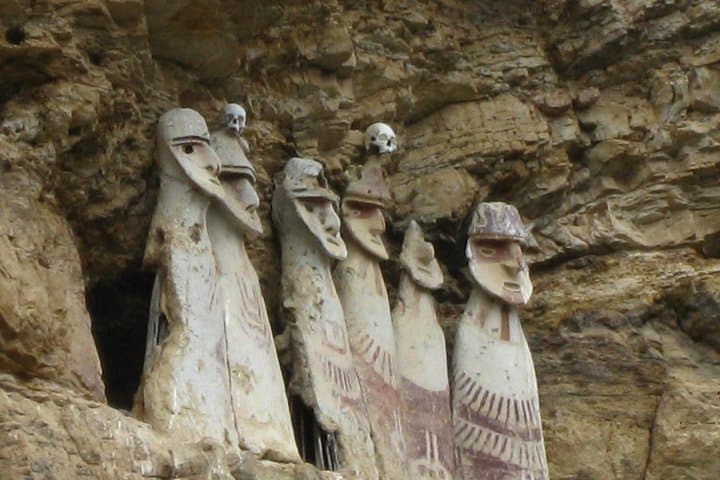
Start the day on a narrow mountain road where cloud forest climbs away from Chachapoyas and the air sharpens; the bus winds toward Cruz Pata and a cliff where human-shaped sarcophagi stand, staring out over a deep valley. Up close the Karajia figures—stone, wood and clay—read like a human-scale message from the Chachapoyas culture: monumental, guarded, and built where only the surefooted could place them.
Start the day on a narrow mountain road where cloud forest climbs away from Chachapoyas and the air sharpens; the bus winds toward Cruz Pata and a cliff where human-shaped sarcophagi stand, staring out over a deep valley. Up close the Karajia figures—stone, wood and clay—read like a human-scale message from the Chachapoyas culture: monumental, guarded, and built where only the surefooted could place them.
The Chachapoyas people carved tombs into limestone escarpments and positioned them on nearly vertical faces as both rite and protection. Geologically, the region is a mix of folded Andean limestone and softer volcanic-derived soils, which gives rise to caves like Quiocta a short drive away. Quiocta’s rooms hold stalactites and stalagmites formed over millennia; each chamber has shapes locals named after animals and tools.
Culturally, visits pass through small farming towns—Luya and Lamud—where modern life threads through pre-Inca ruins. Guides typically explain funerary practice, cliff-access techniques and cave formation while pointing out local flora such as Andean orchids and tree ferns.
Practical guidance: expect roughly 6 hours, a 30-minute uphill walk from Cruz Pata to Karajia on uneven trails, then cave exploration requiring rubber boots and a flashlight. Wear light hiking boots, bring 2+ liters of water, sun protection, and a rain layer in the wet season (Nov–Mar). The cave can feel tight; those with claustrophobia should consider skipping that portion. Cameras with spare batteries are useful—the views and cave formations reward patience and steady footing.