THE ADVENTURE COLLECTIVE® · Independent discovery and booking for outdoor travel

Explore Karahunge’s ancient stone circle, cross the Vorotan Gorge to Devil’s Bridge and walk the cliff houses of Khndzoresk on a single, immersive day trip. Expect rugged geology, layered history and a long but rewarding day of walking and views.
Explore Karahunge’s ancient stone circle, cross the Vorotan Gorge to Devil’s Bridge and walk the cliff houses of Khndzoresk on a single, immersive day trip. Expect rugged geology, layered history and a long but rewarding day of walking and views.
You step out of a Mercedes onto thin highland air at about 1,800 meters; stones rise around you like an old congregation. The Karahunge ring — 223 standing rocks with drilled apertures — holds the light differently than the fields below, and the wind along the Syunik ridge seems to point you toward the next waypoint: the Vorotan Gorge.
Verified experiences and guided adventures in the surrounding area.
Operated by Amazing Armenia · Goris, Syunik
You step out of a Mercedes onto thin highland air at about 1,800 meters; stones rise around you like an old congregation. The Karahunge ring — 223 standing rocks with drilled apertures — holds the light differently than the fields below, and the wind along the Syunik ridge seems to point you toward the next waypoint: the Vorotan Gorge.
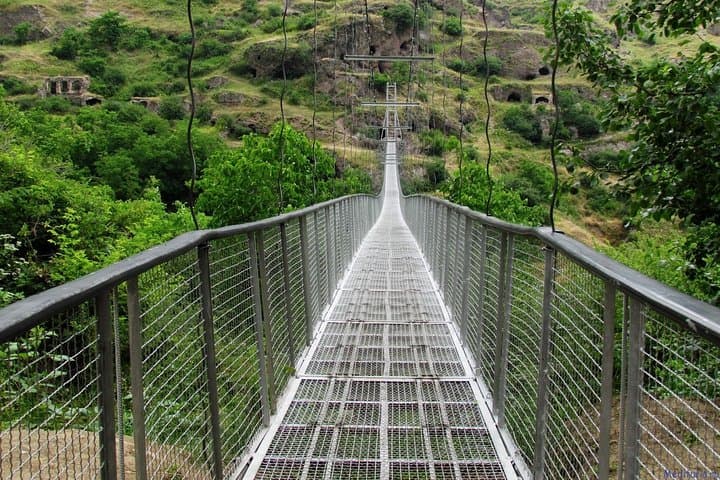
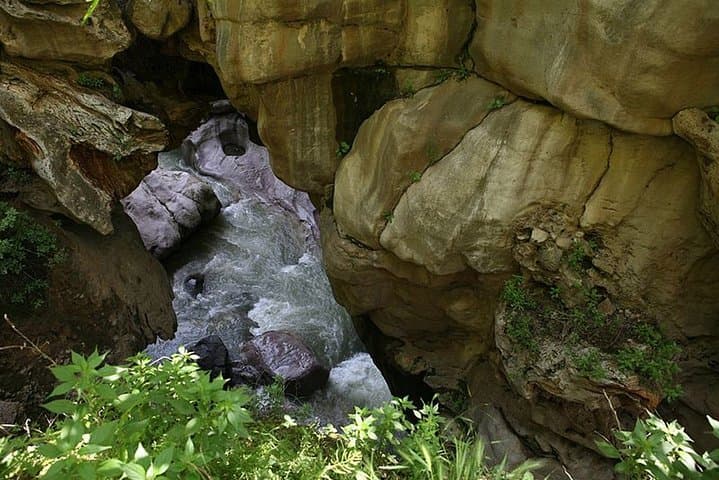
The road down to Devil’s Bridge narrows, and the river dares you from the lip of the gorge as it has carved the Vorotan’s calcium-rich cliffs for millennia. The natural 30-meter arch leads to a network of caves: limestone chambers that have sheltered people and myths and now demand ropes and helmets for serious exploration. Higher and later, Khndzoresk’s cliff-cut dwellings unfold — houses carved into the tuff where families, a school and a church once shared the same living rock. A swinging footbridge above the ravine frames the panorama and the old, strategic value of the site becomes plain.
Geology here is blunt and honest: volcanic tuff and river-sculpted limestone, uplifted and scoured. Culturally, these places reflect Armenia’s layered history — prehistoric sky-watching, medieval fortress thinking and resilient village life.
Practically: this is a long, full-day trip (expect 13–14 hours if departing Yerevan). Trails are uneven and steep in places; cave access often requires gear and a guide. Dress in layers, bring sturdy footwear, sun protection and at least 2 liters of water. The tour’s private transport, onboard Wi‑Fi and bottled water ease logistics, but plan for short walks at altitude, photo stops and narrow paths. Respect fragile archaeological stones and local customs when visiting villages.
moderate.
13–14 hours.
Moderate fitness; able to manage several short hikes, stairs and uneven ground over a long day
The full-day private tour runs about 13–14 hours and typically departs from Yerevan; pickup locations can be arranged.
General viewpoints are included, but descending into substantial caves usually requires specialized equipment and a guided caving visit, which may not be part of the standard itinerary.
Children can enjoy the viewpoints and village walks, but steep trails, swinging bridges and cave areas may be unsuitable for very young children or anyone with mobility limits; infant seats are available in the vehicle.
Yes, the tour is designed for visitors with moderate fitness — most walking is short but uneven; tell your operator about mobility concerns when booking.
Karahunge dates back several thousand years and is interpreted as an ancient astronomical site; Khndzoresk’s cave homes served as strategic, naturally fortified settlements for centuries.
These fragile archaeological and geological sites are vulnerable to erosion and visitor impact—stay on paths, avoid touching carved stone apertures and pack out all trash.
Amazing Armenia operates guided outdoor trips and adventures with an emphasis on safety, stewardship, and memorable experiences.
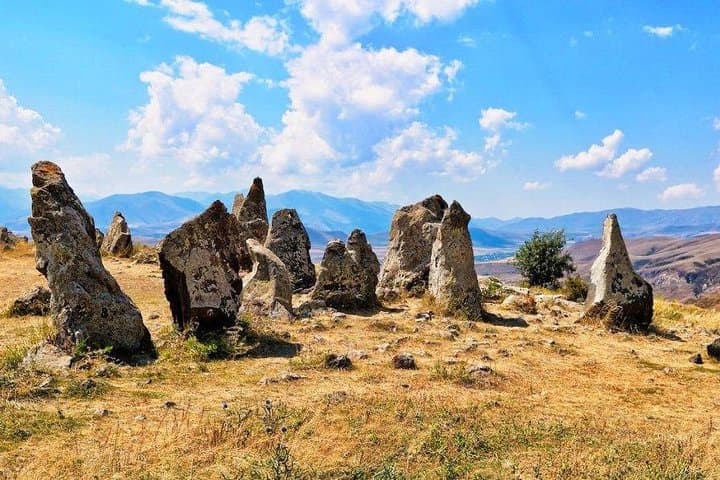
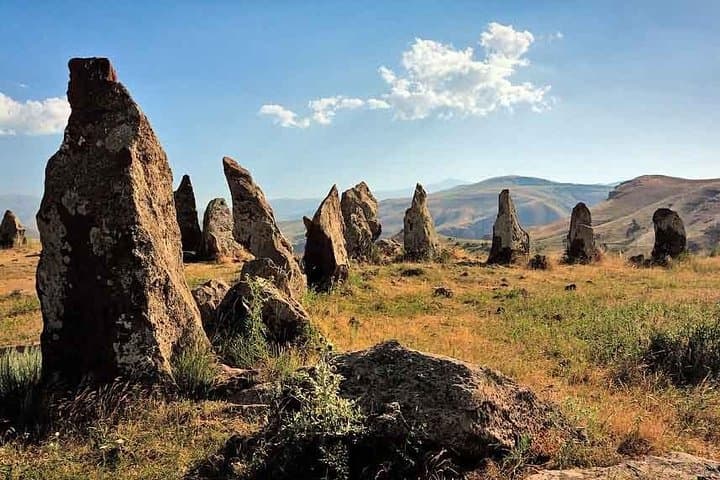
You step out of a Mercedes onto thin highland air at about 1,800 meters; stones rise around you like an old congregation. The Karahunge ring — 223 standing rocks with drilled apertures — holds the light differently than the fields below, and the wind along the Syunik ridge seems to point you toward the next waypoint: the Vorotan Gorge.
You step out of a Mercedes onto thin highland air at about 1,800 meters; stones rise around you like an old congregation. The Karahunge ring — 223 standing rocks with drilled apertures — holds the light differently than the fields below, and the wind along the Syunik ridge seems to point you toward the next waypoint: the Vorotan Gorge.
The road down to Devil’s Bridge narrows, and the river dares you from the lip of the gorge as it has carved the Vorotan’s calcium-rich cliffs for millennia. The natural 30-meter arch leads to a network of caves: limestone chambers that have sheltered people and myths and now demand ropes and helmets for serious exploration. Higher and later, Khndzoresk’s cliff-cut dwellings unfold — houses carved into the tuff where families, a school and a church once shared the same living rock. A swinging footbridge above the ravine frames the panorama and the old, strategic value of the site becomes plain.
Geology here is blunt and honest: volcanic tuff and river-sculpted limestone, uplifted and scoured. Culturally, these places reflect Armenia’s layered history — prehistoric sky-watching, medieval fortress thinking and resilient village life.
Practically: this is a long, full-day trip (expect 13–14 hours if departing Yerevan). Trails are uneven and steep in places; cave access often requires gear and a guide. Dress in layers, bring sturdy footwear, sun protection and at least 2 liters of water. The tour’s private transport, onboard Wi‑Fi and bottled water ease logistics, but plan for short walks at altitude, photo stops and narrow paths. Respect fragile archaeological stones and local customs when visiting villages.