THE ADVENTURE COLLECTIVE® · Independent discovery and booking for outdoor travel

See three of Kansai’s top attractions in one full day: friendly deer and Todai-ji in Nara, the endless red torii at Fushimi Inari, and Arashiyama’s bamboo groves and riverside charm. This accessible, 9–10 hour loop blends cultural sites with scenic walking and easy transport.
See three of Kansai’s top attractions in one full day: friendly deer and Todai-ji in Nara, the endless red torii at Fushimi Inari, and Arashiyama’s bamboo groves and riverside charm. This accessible, 9–10 hour loop blends cultural sites with scenic walking and easy transport.
Morning light slices between city blocks as the minibus eases out of Osaka and into the gentle Kansai countryside. By midday you’re wandering a broad lawn in Nara Park, the deer approaching with curious calm and tiny crackers in hand; later the corridor of vermilion torii at Fushimi Inari frames each step uphill like a living corridor leading into the mountain. The day closes beneath the swaying bamboo of Arashiyama and the low arc of Togetsukyō Bridge, where the Katsura River pushes the scene forward with steady motion.
Verified experiences and guided adventures in the surrounding area.
Operated by Trevopedia Wonders · Osaka, Osaka Prefecture
Morning light slices between city blocks as the minibus eases out of Osaka and into the gentle Kansai countryside. By midday you’re wandering a broad lawn in Nara Park, the deer approaching with curious calm and tiny crackers in hand; later the corridor of vermilion torii at Fushimi Inari frames each step uphill like a living corridor leading into the mountain. The day closes beneath the swaying bamboo of Arashiyama and the low arc of Togetsukyō Bridge, where the Katsura River pushes the scene forward with steady motion.
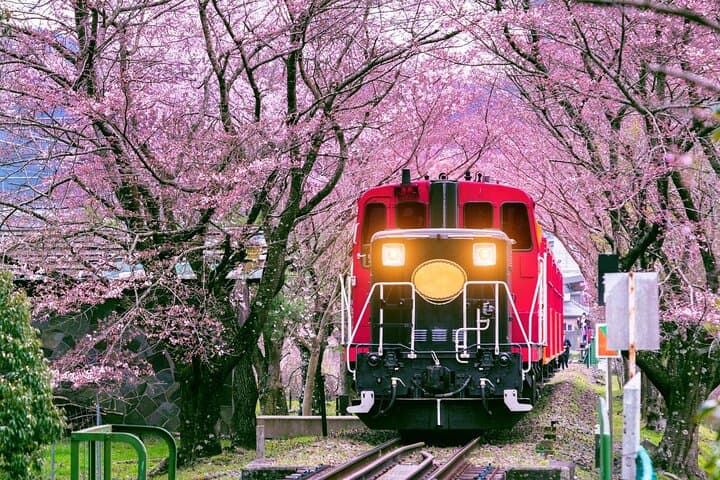
These sites span centuries: Nara’s Todai-ji holds a colossal bronze Buddha from the 8th century, Fushimi Inari’s gates are part of a Shinto tradition tied to rice cultivation and prosperity, and Arashiyama’s rivers and hills have long inspired poets and local craftsmen. Geologically, the Hozu and Katsura rivers carved the valleys you’ll glimpse from the Sagano train; culturally, each stop layers Shinto, Buddhist and Edo-period influences.
Practical guidance: expect a full 9–10 hour day with several short walks—watch for uneven stone paths and steps at shrines. Early or late in the day gives the best light and fewer crowds at the Bamboo Grove and torii tunnels. Carry water, a compact rain layer, and enough battery for photos; vendors and trains are available but can be busy during peak season. Respect the deer: feed only official shika senbei and keep fingers clear of their mouths. With straightforward logistics and accessible walking, this loop makes a compact, varied snapshot of Kansai’s nature, history, and ritual rhythm.
easy.
9–10 hours.
Suitable for most fitness levels; requires standing and short uphill walks (steps and uneven paths) throughout the day
The itinerary runs about 9–10 hours (540–600 minutes) including transfers and time at each stop.
Yes—transport and many sites are stroller-accessible, though some shrine areas have steps and narrow paths.
Yes; buy shika senbei sold near the park—only feed those crackers and avoid hand-feeding beyond that.
Typical group tours include transportation and guiding but not all temple or train admission fees—check the specific booking details.
Nara was Japan’s first permanent capital in the 8th century, and Fushimi Inari’s torii tradition grew from local merchant donations tied to prosperity rituals over centuries.
Visitors are encouraged to stick to paths, avoid feeding wildlife anything but approved food, and dispose of waste properly; local parks employ measures to protect deer health and river ecosystems.
Trevopedia Wonders operates guided outdoor trips and adventures with an emphasis on safety, stewardship, and memorable experiences.
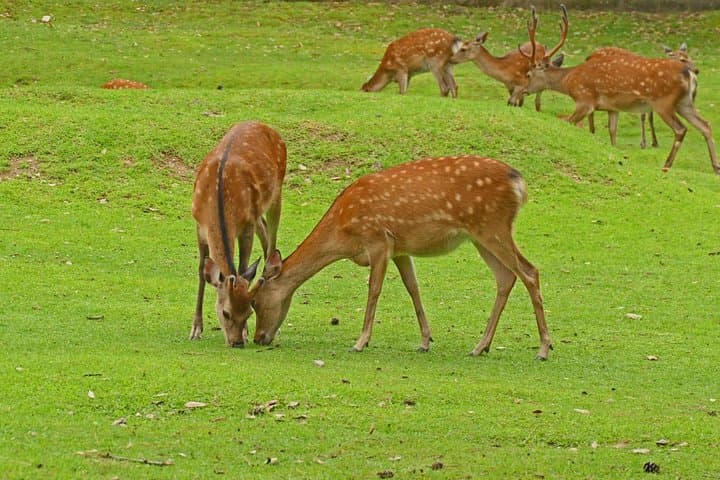
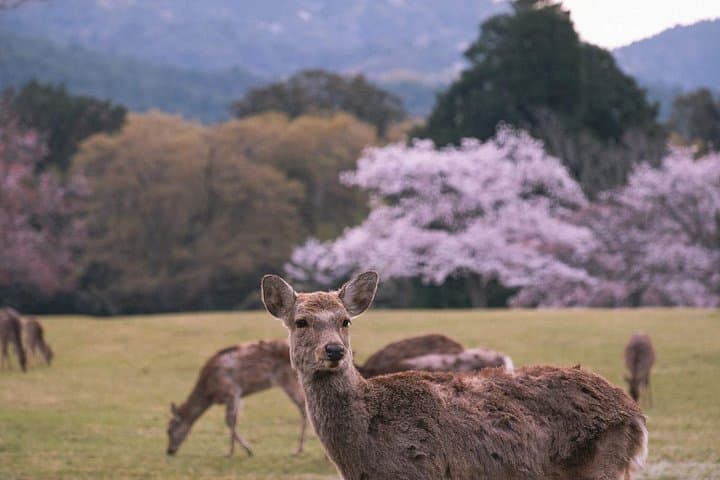
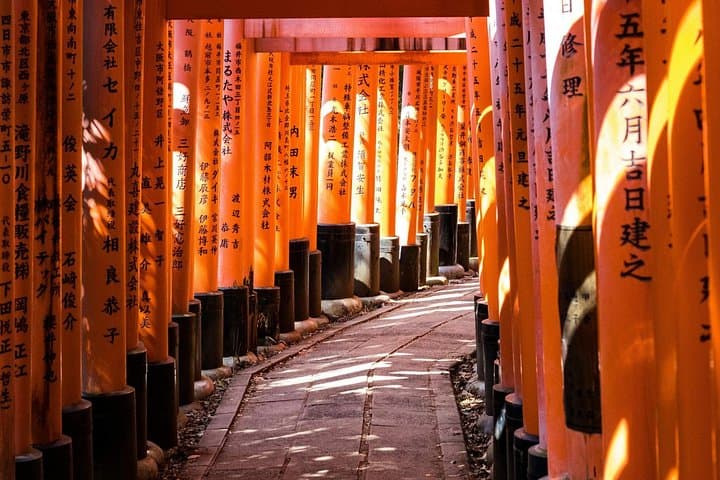
Morning light slices between city blocks as the minibus eases out of Osaka and into the gentle Kansai countryside. By midday you’re wandering a broad lawn in Nara Park, the deer approaching with curious calm and tiny crackers in hand; later the corridor of vermilion torii at Fushimi Inari frames each step uphill like a living corridor leading into the mountain. The day closes beneath the swaying bamboo of Arashiyama and the low arc of Togetsukyō Bridge, where the Katsura River pushes the scene forward with steady motion.
Morning light slices between city blocks as the minibus eases out of Osaka and into the gentle Kansai countryside. By midday you’re wandering a broad lawn in Nara Park, the deer approaching with curious calm and tiny crackers in hand; later the corridor of vermilion torii at Fushimi Inari frames each step uphill like a living corridor leading into the mountain. The day closes beneath the swaying bamboo of Arashiyama and the low arc of Togetsukyō Bridge, where the Katsura River pushes the scene forward with steady motion.
These sites span centuries: Nara’s Todai-ji holds a colossal bronze Buddha from the 8th century, Fushimi Inari’s gates are part of a Shinto tradition tied to rice cultivation and prosperity, and Arashiyama’s rivers and hills have long inspired poets and local craftsmen. Geologically, the Hozu and Katsura rivers carved the valleys you’ll glimpse from the Sagano train; culturally, each stop layers Shinto, Buddhist and Edo-period influences.
Practical guidance: expect a full 9–10 hour day with several short walks—watch for uneven stone paths and steps at shrines. Early or late in the day gives the best light and fewer crowds at the Bamboo Grove and torii tunnels. Carry water, a compact rain layer, and enough battery for photos; vendors and trains are available but can be busy during peak season. Respect the deer: feed only official shika senbei and keep fingers clear of their mouths. With straightforward logistics and accessible walking, this loop makes a compact, varied snapshot of Kansai’s nature, history, and ritual rhythm.