THE ADVENTURE COLLECTIVE® · Independent discovery and booking for outdoor travel

A private full-day tour from Kandy that pairs the climbable majesty of Sigiriya with the painted caves of Dambulla, plus spice-garden visits and a Matale temple stop. Expect history, steep stone steps, and vivid local flavor—ideal for travelers who want a compact, guided immersion in Central Sri Lanka.
A private full-day tour from Kandy that pairs the climbable majesty of Sigiriya with the painted caves of Dambulla, plus spice-garden visits and a Matale temple stop. Expect history, steep stone steps, and vivid local flavor—ideal for travelers who want a compact, guided immersion in Central Sri Lanka.
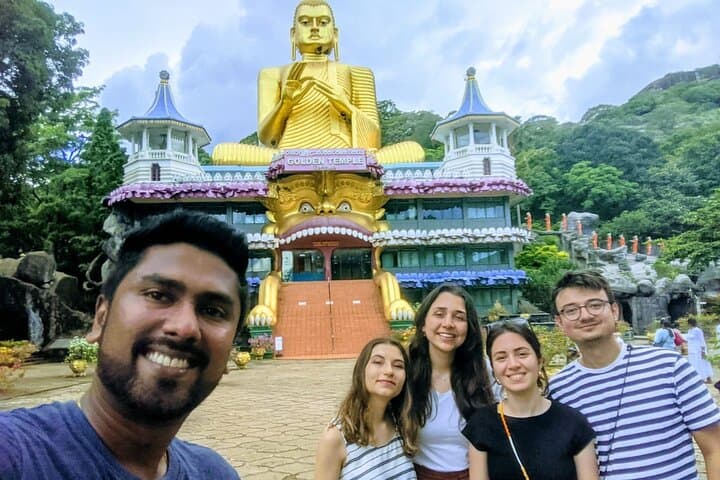
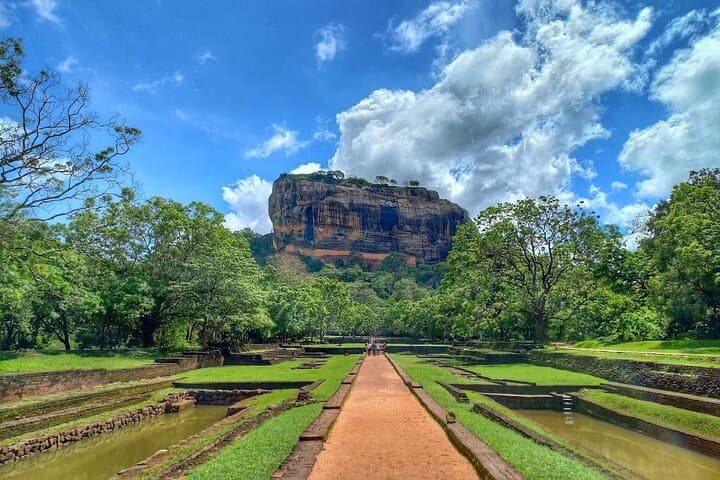
The morning begins before the heat—tea-scented air from Kandy’s hills clings to the windows as your private driver eases onto the A9. By the time the road opens into flat rice country, the silhouette of Sigiriya’s monolith appears like an island of stone in a sea of emerald paddy fields. This day tour stitches together two UNESCO sites and local stops: the Dambulla Cave Temple, Sigiriya Rock fortress, a spice garden in Matale and a Hindu kovil, all with a guide who reads the landscape as well as history.
Verified experiences and guided adventures in the surrounding area.
Operated by Travel Sri Lanka Vibes · Sigiriya, Central Province
The morning begins before the heat—tea-scented air from Kandy’s hills clings to the windows as your private driver eases onto the A9. By the time the road opens into flat rice country, the silhouette of Sigiriya’s monolith appears like an island of stone in a sea of emerald paddy fields. This day tour stitches together two UNESCO sites and local stops: the Dambulla Cave Temple, Sigiriya Rock fortress, a spice garden in Matale and a Hindu kovil, all with a guide who reads the landscape as well as history.
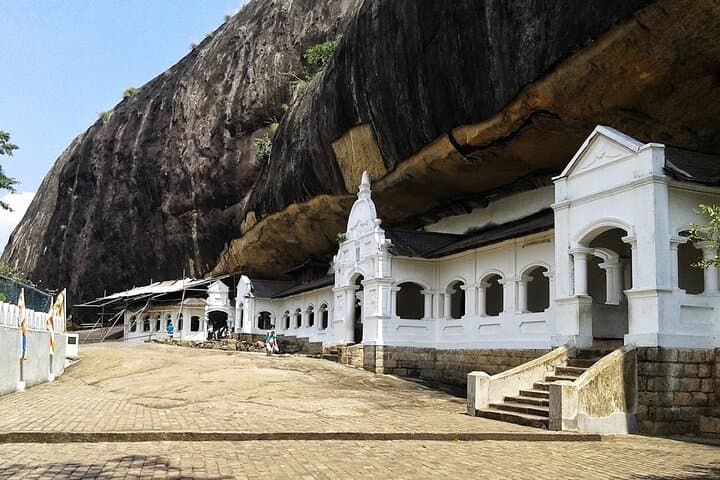
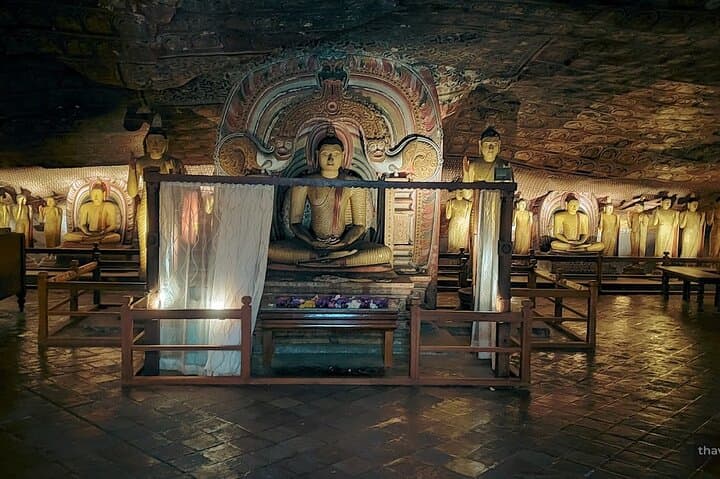
Sigiriya is not just a rock; it is a 5th-century urban plan carved in stone—fresco galleries, water gardens and the lion’s gateway that once announced royal power. Geologically, the rock is a hardened magma plug that resisted erosion while the surrounding land wore away, leaving a vertical climb of staircases and platforms. Dambulla’s caves, formed of the same island’s ancient rock, became a repository of Buddhist art and statues over centuries; murals cover ceilings and walls in layered narratives of devotion.
Between monuments, Matale offers a different rhythm. At Ranweli Spice Garden the air changes—cinnamon and cardamom lift off leaves and bark—and your guide will explain how these crops shaped Sri Lanka’s trade and culture. The Matale Sri Muthumari Amman Kovil introduces Dravidian architecture and living Hindu practice, a reminder that this landscape has been shared by multiple faiths for generations.
Practical rhythm is everything on this tour: expect 6–9 hours on the road with multiple short walks and one steep climb at Sigiriya (roughly 1,200 steps in parts). Wear grippy shoes for uneven stone steps, carry 1–2 liters of water, and bring sun protection—the sun on the summit can be relentless. Start early to avoid crowds and midday heat; a sunrise departure from Kandy is possible but most departures aim for an 8:00–9:00am start to balance comfort and timing.
Guides typically provide context and skip-the-line tips but note that entrance fees for Sigiriya and Dambulla are usually paid on site. Mobility limitations and pregnancy are flagged by operators; the Sigiriya ascent involves exposed sections and tight stairways. For a fuller day, pair the climb to Sigiriya with the alternative viewpoint on Pidurangala—shorter and often quieter, with a comparable panorama.
This route is both architectural history and sensory geography: carved rock and painted caves, spice aromas and watchful peacocks. It’s a concentrated introduction to the Central Province—accessible, demanding in short bursts, and rich with scenes that stick with you long after the bus ride ends.
moderate.
6–9 hours.
Moderate fitness—able to walk on uneven ground and climb stairs; short bursts of exertion required for the Sigiriya ascent.
The drive takes roughly 1.5–2.5 hours depending on traffic and your pickup location in Kandy.
Entrance fees are generally not included and are paid on-site; confirm with your operator before departure.
Older children who can handle stairs and vertigo are usually fine; very young children or those with mobility issues may struggle.
Yes—Pidurangala is often quieter and has a shorter, steeper climb with excellent panoramic views of Sigiriya rock.
Guides are typically English-speaking; private tours allow you to request language needs in advance.
Dress modestly: cover shoulders and knees; remove shoes before entering Dambulla and the Matale kovil.
Sigiriya was developed as a royal citadel in the 5th century CE by King Kasyapa; Dambulla contains Buddhist cave paintings and statues accumulated over centuries.
Visitor numbers are managed at Sigiriya to protect fragile frescoes and water gardens; follow marked paths and avoid touching surfaces to reduce wear.
Travel Sri Lanka Vibes operates guided outdoor trips and adventures with an emphasis on safety, stewardship, and memorable experiences.
The morning begins before the heat—tea-scented air from Kandy’s hills clings to the windows as your private driver eases onto the A9. By the time the road opens into flat rice country, the silhouette of Sigiriya’s monolith appears like an island of stone in a sea of emerald paddy fields. This day tour stitches together two UNESCO sites and local stops: the Dambulla Cave Temple, Sigiriya Rock fortress, a spice garden in Matale and a Hindu kovil, all with a guide who reads the landscape as well as history.
The morning begins before the heat—tea-scented air from Kandy’s hills clings to the windows as your private driver eases onto the A9. By the time the road opens into flat rice country, the silhouette of Sigiriya’s monolith appears like an island of stone in a sea of emerald paddy fields. This day tour stitches together two UNESCO sites and local stops: the Dambulla Cave Temple, Sigiriya Rock fortress, a spice garden in Matale and a Hindu kovil, all with a guide who reads the landscape as well as history.
Sigiriya is not just a rock; it is a 5th-century urban plan carved in stone—fresco galleries, water gardens and the lion’s gateway that once announced royal power. Geologically, the rock is a hardened magma plug that resisted erosion while the surrounding land wore away, leaving a vertical climb of staircases and platforms. Dambulla’s caves, formed of the same island’s ancient rock, became a repository of Buddhist art and statues over centuries; murals cover ceilings and walls in layered narratives of devotion.
Between monuments, Matale offers a different rhythm. At Ranweli Spice Garden the air changes—cinnamon and cardamom lift off leaves and bark—and your guide will explain how these crops shaped Sri Lanka’s trade and culture. The Matale Sri Muthumari Amman Kovil introduces Dravidian architecture and living Hindu practice, a reminder that this landscape has been shared by multiple faiths for generations.
Practical rhythm is everything on this tour: expect 6–9 hours on the road with multiple short walks and one steep climb at Sigiriya (roughly 1,200 steps in parts). Wear grippy shoes for uneven stone steps, carry 1–2 liters of water, and bring sun protection—the sun on the summit can be relentless. Start early to avoid crowds and midday heat; a sunrise departure from Kandy is possible but most departures aim for an 8:00–9:00am start to balance comfort and timing.
Guides typically provide context and skip-the-line tips but note that entrance fees for Sigiriya and Dambulla are usually paid on site. Mobility limitations and pregnancy are flagged by operators; the Sigiriya ascent involves exposed sections and tight stairways. For a fuller day, pair the climb to Sigiriya with the alternative viewpoint on Pidurangala—shorter and often quieter, with a comparable panorama.
This route is both architectural history and sensory geography: carved rock and painted caves, spice aromas and watchful peacocks. It’s a concentrated introduction to the Central Province—accessible, demanding in short bursts, and rich with scenes that stick with you long after the bus ride ends.