THE ADVENTURE COLLECTIVE® · Independent discovery and booking for outdoor travel

An efficiently packed day from Kandy that pairs a climb up the 5th-century Sigiriya Rock Fortress with the painted caverns of Dambulla and an evening jeep safari in Minneriya. Expect history, sweeping lowland views and the chance to see large elephant herds.
An efficiently packed day from Kandy that pairs a climb up the 5th-century Sigiriya Rock Fortress with the painted caverns of Dambulla and an evening jeep safari in Minneriya. Expect history, sweeping lowland views and the chance to see large elephant herds.
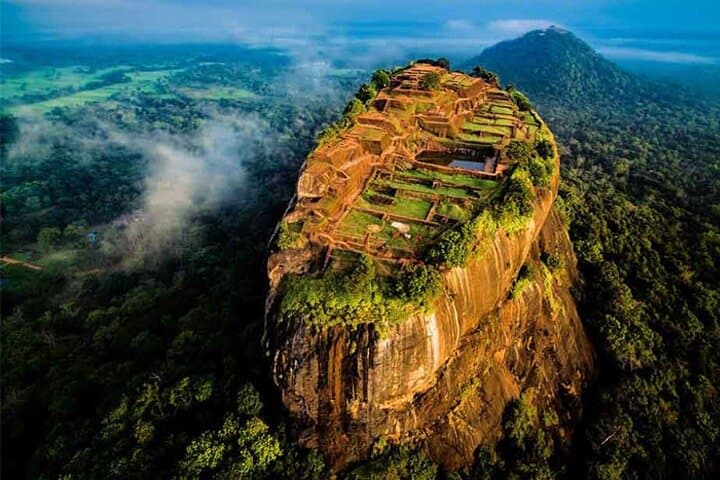
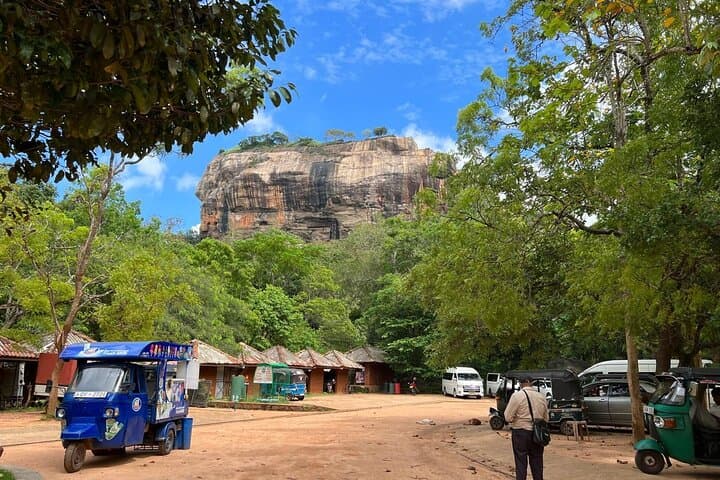
You start before dawn in Kandy, when the city’s market traffic still yawns and the van’s headlights cut a bright ribbon through farmland. The road loosens city tension into a patchwork of rice paddies and tamarind trees; by mid-morning the rock appears on the horizon—a sheer, burnt-orange column rising from green, its crown of ruins catching light like an old coin.
Verified experiences and guided adventures in the surrounding area.
Operated by Kandy Sightseeing Tours · Sigiriya, Central Province
You start before dawn in Kandy, when the city’s market traffic still yawns and the van’s headlights cut a bright ribbon through farmland. The road loosens city tension into a patchwork of rice paddies and tamarind trees; by mid-morning the rock appears on the horizon—a sheer, burnt-orange column rising from green, its crown of ruins catching light like an old coin.
Climbing Sigiriya is part archaeology, part choreography. Steps and iron ladders thread past 5th-century frescoes and the famous mirror wall to the lion-pawed entrance, then keep going to the plateau where terraces, cisterns and scattered foundations mark a king’s brief, audacious project. Geologically the rock is the hardened core of an ancient volcanic plug—resistant dolerite that stands nearly 200 meters above the plains and offers angled views across the central lowlands.
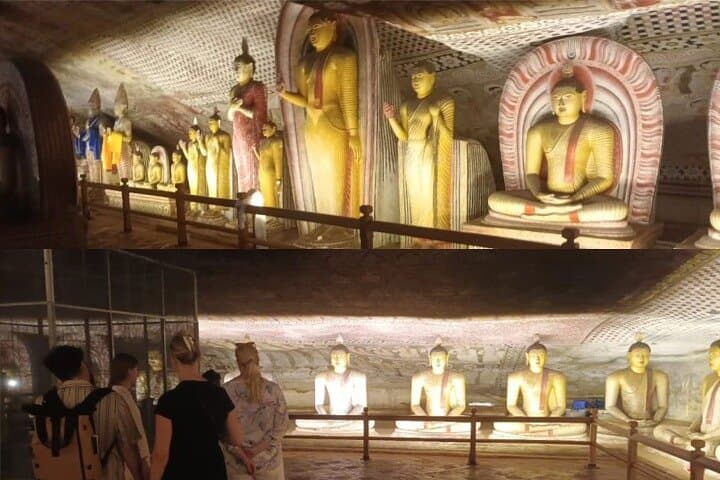
The route swings south to Dambulla, where five painted caverns have been a living temple complex since the late BCE centuries. Murals and over 150 Buddha statues lie in cool, shadowed chambers; human hands retouched and layered them for millennia, so the site reads as a palimpsest of devotion. Between murals and rock, the landscape holds traces of Sri Lanka’s layered past—Buddhist kings, Hindu influences in Matale’s Sri Muthumariamman Temple, and agricultural systems fed for centuries by ancient tanks.
A contrast: Minneriya’s dry-season draw for elephants. From a jeep you watch matriarchs lead slow columns to the tank-edge, calves slipping between trunks and the occasional bull testing the herd. It’s wildlife as social event—if you time it (August–September) you may see hundreds gather.
Practical edge: this is a long, private day—expect 6–8 hours on the road with three main stops and short cultural pauses in Matale. Wear sturdy shoes for steep, sometimes slick stone steps; bring sun protection and insect repellent. The tour includes an English-speaking driver, bottled water and hotel pickup; entrance fees to sites like Sigiriya are typically extra, so carry cash or card.
Planning notes: aim for an early departure from Kandy to avoid midday heat at Sigiriya and to hit Minneriya in late afternoon light when elephants concentrate. Be ready for temple etiquette—remove shoes and cover shoulders and knees inside Dambulla and Sri Muthumariamman. On safari, follow ranger directions: stay in the vehicle, keep noise low and never approach or feed wildlife.
By evening you’re back in Kandy with a day’s worth of rock, cave art and elephants behind you—an efficient tour that packs classical archaeology and active wildlife viewing into a single, well-paced day.
moderate.
6–8 hours.
Suitable for travelers who can climb stairs and handle several hours of light walking and short hikes; basic fitness required.
Entrance fees for Sigiriya and Minneriya are usually not included in the basic tour price; confirm with the operator and bring cash or card for ticket purchases.
The ascent takes roughly 45–90 minutes round-trip depending on fitness and time spent at viewpoints and frescoes.
Late dry season, especially August–September, concentrates elephants around the Minneriya tank; late afternoon sightings are common year-round but peak then.
Yes, but consider the Sigiriya climb—there are steep sections and metal ladders; alternatives include viewing gardens and lower platforms if mobility is limited.
Wear modest clothing that covers shoulders and knees; you’ll need to remove shoes to enter temple interiors.
The tour runs approximately 6–8 hours with pickup and drop-off in Kandy provided; operators usually request guests be ready 10 minutes before pickup time.
Sigiriya was transformed into an elaborate palace and fortress by King Kasyapa in the 5th century AD; Dambulla’s cave temple complex has been a continuous pilgrimage site since ancient times.
Minneriya’s elephant gatherings are a seasonal natural phenomenon; responsible viewing and supporting park fees help fund local conservation and community programs.
Kandy Sightseeing Tours operates guided outdoor trips and adventures with an emphasis on safety, stewardship, and memorable experiences.
You start before dawn in Kandy, when the city’s market traffic still yawns and the van’s headlights cut a bright ribbon through farmland. The road loosens city tension into a patchwork of rice paddies and tamarind trees; by mid-morning the rock appears on the horizon—a sheer, burnt-orange column rising from green, its crown of ruins catching light like an old coin.
You start before dawn in Kandy, when the city’s market traffic still yawns and the van’s headlights cut a bright ribbon through farmland. The road loosens city tension into a patchwork of rice paddies and tamarind trees; by mid-morning the rock appears on the horizon—a sheer, burnt-orange column rising from green, its crown of ruins catching light like an old coin.
Climbing Sigiriya is part archaeology, part choreography. Steps and iron ladders thread past 5th-century frescoes and the famous mirror wall to the lion-pawed entrance, then keep going to the plateau where terraces, cisterns and scattered foundations mark a king’s brief, audacious project. Geologically the rock is the hardened core of an ancient volcanic plug—resistant dolerite that stands nearly 200 meters above the plains and offers angled views across the central lowlands.
The route swings south to Dambulla, where five painted caverns have been a living temple complex since the late BCE centuries. Murals and over 150 Buddha statues lie in cool, shadowed chambers; human hands retouched and layered them for millennia, so the site reads as a palimpsest of devotion. Between murals and rock, the landscape holds traces of Sri Lanka’s layered past—Buddhist kings, Hindu influences in Matale’s Sri Muthumariamman Temple, and agricultural systems fed for centuries by ancient tanks.
A contrast: Minneriya’s dry-season draw for elephants. From a jeep you watch matriarchs lead slow columns to the tank-edge, calves slipping between trunks and the occasional bull testing the herd. It’s wildlife as social event—if you time it (August–September) you may see hundreds gather.
Practical edge: this is a long, private day—expect 6–8 hours on the road with three main stops and short cultural pauses in Matale. Wear sturdy shoes for steep, sometimes slick stone steps; bring sun protection and insect repellent. The tour includes an English-speaking driver, bottled water and hotel pickup; entrance fees to sites like Sigiriya are typically extra, so carry cash or card.
Planning notes: aim for an early departure from Kandy to avoid midday heat at Sigiriya and to hit Minneriya in late afternoon light when elephants concentrate. Be ready for temple etiquette—remove shoes and cover shoulders and knees inside Dambulla and Sri Muthumariamman. On safari, follow ranger directions: stay in the vehicle, keep noise low and never approach or feed wildlife.
By evening you’re back in Kandy with a day’s worth of rock, cave art and elephants behind you—an efficient tour that packs classical archaeology and active wildlife viewing into a single, well-paced day.