THE ADVENTURE COLLECTIVE® · Independent discovery and booking for outdoor travel

A 21-day, high-altitude circuit around Kanchenjunga that reaches Pang Pema base camp (≈5,143 m). Remote trails, cultural villages, and long acclimatization days make this a challenging trek best suited to experienced hikers.
A 21-day, high-altitude circuit around Kanchenjunga that reaches Pang Pema base camp (≈5,143 m). Remote trails, cultural villages, and long acclimatization days make this a challenging trek best suited to experienced hikers.
The trail opens with an airborne slice of Nepal: a short flight from Kathmandu to Suketar drops you into thin-air light and the rattle of propellers, then a day’s trek eases you into rhododendron forests and village trails. By day five the forest thins and the valley begins to speak in stone — moraines, braided streams daring you to pick the higher line.
Verified experiences and guided adventures in the surrounding area.
Operated by Mount Advenutre Holidays · Taplejung, Province No. 1
The trail opens with an airborne slice of Nepal: a short flight from Kathmandu to Suketar drops you into thin-air light and the rattle of propellers, then a day’s trek eases you into rhododendron forests and village trails. By day five the forest thins and the valley begins to speak in stone — moraines, braided streams daring you to pick the higher line.
This circuit threads around Kanchenjunga (8,586 m), the world’s third-highest peak, through terrain shaped by ancient glaciers and active uplift. The route visits traditional Rai and Limbu villages — lives tied to subsistence farming and yak pastures — and passes through Kanchenjunga Conservation Area, an effort to protect endemic oak and rhododendron stands and high-altitude fauna.
Expect a mix of terrain: packed village paths, steep forested switchbacks, exposed alpine meadows, rocky moraines and high passes (Sele La ~4,290 m; Mirgin La ~4,725 m). Key high points include Lhonak (4,780 m) and Pang Pema base camp (~5,143 m), where thin air and panoramic ridgelines make every step feel consequential.
Practicalities: the itinerary runs about 20–21 days with scheduled acclimatization days, private transfers and a licensed English-speaking guide; Kanchenjunga permits and conservation fees are included. Weather windows favor spring and autumn; carry layered insulation, a solid waterproof shell and quality boots. Hydrate frequently, respect daily altitude gain limits, and be prepared for limited services above Ghunsa — food and lodging are basic at high camps. This is remote, demanding terrain for trekkers who want solitude, serious elevation, and an immersion in eastern Nepal’s high country.
challenging.
21 days.
Good aerobic endurance and experience with multi-day backpacking at altitude; able to hike 6–8 hours on steep, uneven terrain.
Yes — Kanchenjunga National Park/Conservation Area permits and associated conservation fees are required and typically arranged by the operator.
Spring (April–May) and autumn (September–November) offer the most stable weather, clearer views and milder temperatures; shoulder seasons may have more snow or rain.
You should have multi-day trekking experience, prior exposure to 3,000–4,000 m environments, and be comfortable hiking long days with a light pack.
Yes — the route reaches over 5,000 m; follow acclimatization days, ascend gradually, stay hydrated and communicate symptoms to your guide immediately.
Kanchenjunga has cultural importance to local Rai and Limbu communities and was long considered sacred and largely off-limits to casual visitors until trekking opened in recent decades.
The Kanchenjunga Conservation Area protects fragile alpine ecosystems; trekkers are expected to carry out waste, minimize campfire use and follow permit regulations.
Mount Advenutre Holidays operates guided outdoor trips and adventures with an emphasis on safety, stewardship, and memorable experiences.


The trail opens with an airborne slice of Nepal: a short flight from Kathmandu to Suketar drops you into thin-air light and the rattle of propellers, then a day’s trek eases you into rhododendron forests and village trails. By day five the forest thins and the valley begins to speak in stone — moraines, braided streams daring you to pick the higher line.
The trail opens with an airborne slice of Nepal: a short flight from Kathmandu to Suketar drops you into thin-air light and the rattle of propellers, then a day’s trek eases you into rhododendron forests and village trails. By day five the forest thins and the valley begins to speak in stone — moraines, braided streams daring you to pick the higher line.
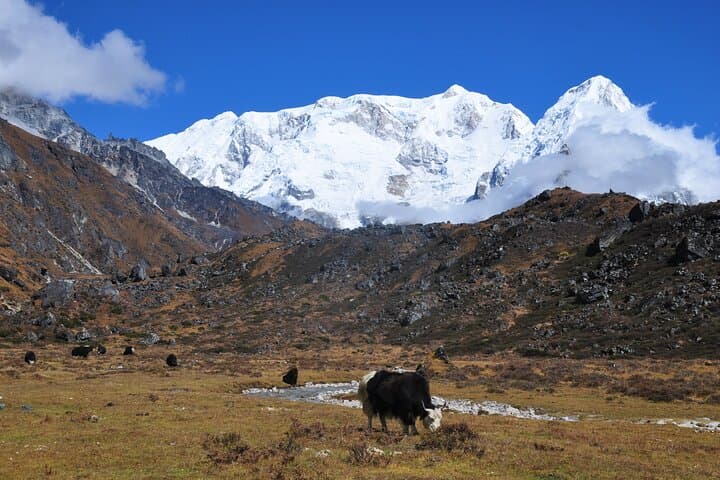
This circuit threads around Kanchenjunga (8,586 m), the world’s third-highest peak, through terrain shaped by ancient glaciers and active uplift. The route visits traditional Rai and Limbu villages — lives tied to subsistence farming and yak pastures — and passes through Kanchenjunga Conservation Area, an effort to protect endemic oak and rhododendron stands and high-altitude fauna.
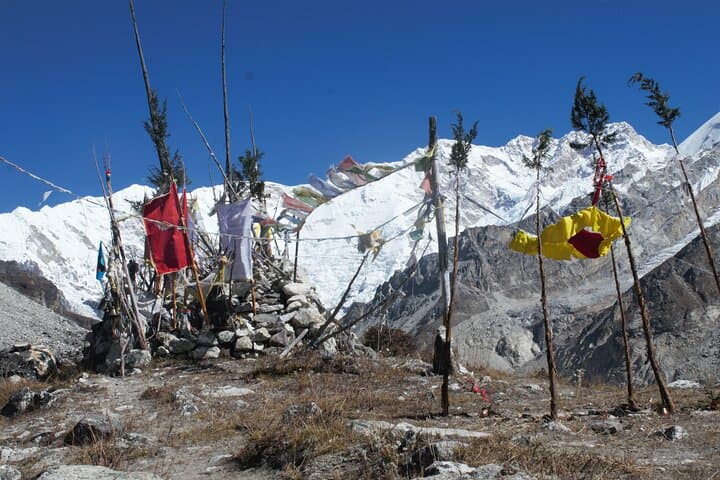
Expect a mix of terrain: packed village paths, steep forested switchbacks, exposed alpine meadows, rocky moraines and high passes (Sele La ~4,290 m; Mirgin La ~4,725 m). Key high points include Lhonak (4,780 m) and Pang Pema base camp (~5,143 m), where thin air and panoramic ridgelines make every step feel consequential.
Practicalities: the itinerary runs about 20–21 days with scheduled acclimatization days, private transfers and a licensed English-speaking guide; Kanchenjunga permits and conservation fees are included. Weather windows favor spring and autumn; carry layered insulation, a solid waterproof shell and quality boots. Hydrate frequently, respect daily altitude gain limits, and be prepared for limited services above Ghunsa — food and lodging are basic at high camps. This is remote, demanding terrain for trekkers who want solitude, serious elevation, and an immersion in eastern Nepal’s high country.