THE ADVENTURE COLLECTIVE® · Independent discovery and booking for outdoor travel

An 11‑hour day trip from Bangkok to Kanchanaburi that pairs sobering WWII history with riverside scenery. Ride part of the original Death Railway, walk the steel bridge, and opt for a boat trip on the River Kwai while learning local context from a guide.
An 11‑hour day trip from Bangkok to Kanchanaburi that pairs sobering WWII history with riverside scenery. Ride part of the original Death Railway, walk the steel bridge, and opt for a boat trip on the River Kwai while learning local context from a guide.
You step off an air‑conditioned van into heat that smells of wet river and frying garlic, the lurch of a distant diesel train like a history lesson arriving at the platform. The steel bridge arches across the River Kwai, its rivets and planks bearing the quiet weight of wartime stories as paddlers and sampans thread the current below.
Verified experiences and guided adventures in the surrounding area.
Operated by MyProGuide Thailand · Kanchanaburi, Kanchanaburi
You step off an air‑conditioned van into heat that smells of wet river and frying garlic, the lurch of a distant diesel train like a history lesson arriving at the platform. The steel bridge arches across the River Kwai, its rivets and planks bearing the quiet weight of wartime stories as paddlers and sampans thread the current below.
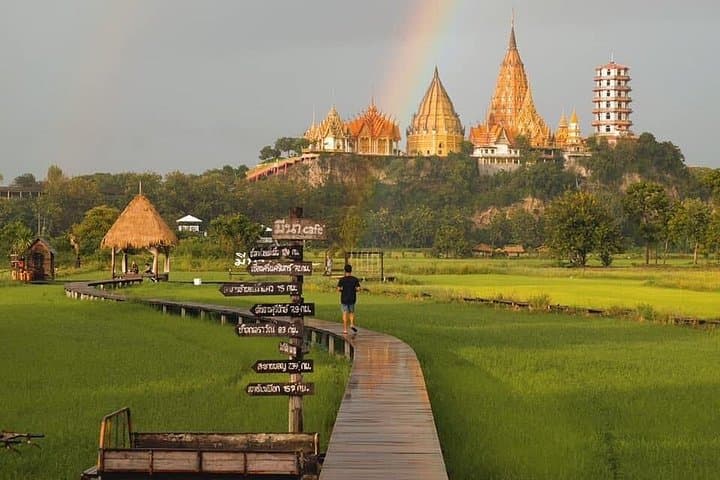
Kanchanaburi sits where two tributaries meet and open into a broad floodplain edged by forested ridges. The bridge and the Thailand–Burma Railway were built during World War II by prisoners and conscripted labor; the War Cemetery and small museums here record those events in sober, factual detail. Geologically the valley is riverine plain—sandy banks and alluvial soil—with nearby limestone outcrops that rise into low, green hills. Culturally, the town mixes Mon and Thai traditions with riverside markets, temples, and cafés that serve iced Thai tea and fried fish.
On a full‑day itinerary from Bangkok (roughly 10–12 hours), expect a combination of short walks, an optional historic train ride along the “Death Railway,” and opportunities for an optional boat trip on the Kwai. Lunch is typically on your own at a riverside restaurant; the tour includes transport, a guide, and air‑conditioned transit.
Practical notes: carry Thai baht for meals and small entrance fees, bring sun protection and mosquito repellent, and plan for long stretches on your feet. Be respectful at memorial sites—photograph with care and follow guide directions. Timing your return to Bangkok before evening traffic will make the day feel less rushed and leave room to reflect on the landscape and its layered past.
easy.
10–12 hours.
Suitable for most people who can handle several short walks and standing; not strenuous but expect a long day.
The itinerary offers an optional train ride; inclusion depends on the booking option—confirm when you book and reserve seats early if required.
Lunch is typically at your own expense with a stop at a riverside restaurant or cafe; the guide can recommend local dishes.
The tour is about 11 hours and usually departs from Bangkok in the morning with return the same day; check exact pick‑up details with the operator.
The tour is generally suitable for most fitness levels but involves standing, short walks, and some stairways; it’s not recommended for people with serious spinal, heart, or pregnancy concerns—confirm fitness considerations when booking.
The Thailand–Burma Railway was built in 1942–43 using forced labor—Allied prisoners of war and civilian laborers—to link Thailand and Burma; the bridge became a focal point of remembrance.
Tourism here affects riverbanks and memorial sites—stick to paths, avoid feeding wildlife, and support local guides and vendors to ensure sustainable economic benefit.
MyProGuide Thailand operates guided outdoor trips and adventures with an emphasis on safety, stewardship, and memorable experiences.

You step off an air‑conditioned van into heat that smells of wet river and frying garlic, the lurch of a distant diesel train like a history lesson arriving at the platform. The steel bridge arches across the River Kwai, its rivets and planks bearing the quiet weight of wartime stories as paddlers and sampans thread the current below.
You step off an air‑conditioned van into heat that smells of wet river and frying garlic, the lurch of a distant diesel train like a history lesson arriving at the platform. The steel bridge arches across the River Kwai, its rivets and planks bearing the quiet weight of wartime stories as paddlers and sampans thread the current below.
Kanchanaburi sits where two tributaries meet and open into a broad floodplain edged by forested ridges. The bridge and the Thailand–Burma Railway were built during World War II by prisoners and conscripted labor; the War Cemetery and small museums here record those events in sober, factual detail. Geologically the valley is riverine plain—sandy banks and alluvial soil—with nearby limestone outcrops that rise into low, green hills. Culturally, the town mixes Mon and Thai traditions with riverside markets, temples, and cafés that serve iced Thai tea and fried fish.
On a full‑day itinerary from Bangkok (roughly 10–12 hours), expect a combination of short walks, an optional historic train ride along the “Death Railway,” and opportunities for an optional boat trip on the Kwai. Lunch is typically on your own at a riverside restaurant; the tour includes transport, a guide, and air‑conditioned transit.
Practical notes: carry Thai baht for meals and small entrance fees, bring sun protection and mosquito repellent, and plan for long stretches on your feet. Be respectful at memorial sites—photograph with care and follow guide directions. Timing your return to Bangkok before evening traffic will make the day feel less rushed and leave room to reflect on the landscape and its layered past.