THE ADVENTURE COLLECTIVE® · Independent discovery and booking for outdoor travel

Trace wartime history and cool off in emerald pools on a full‑day Kanchanaburi tour. Visit Don Rak Cemetery and the Bridge on the River Kwai, ride a short section of the Death Railway, then hike and swim at Erawan Waterfall.
Trace wartime history and cool off in emerald pools on a full‑day Kanchanaburi tour. Visit Don Rak Cemetery and the Bridge on the River Kwai, ride a short section of the Death Railway, then hike and swim at Erawan Waterfall.
You step off the air‑conditioned van onto hot asphalt and the hum of provincial Thailand — the river runs wide and slow, and the iron ribs of a famous bridge cut a hard line across the water. The day peels back layers: memorial stones and museum displays that make history tactile, a short, rattling train ride tracing cliff edges above the Khwae Noi, and later the cool, green shock of limestone pools at Erawan.
Verified experiences and guided adventures in the surrounding area.
Operated by Roam Wander World Tour · Kanchanaburi, Kanchanaburi
You step off the air‑conditioned van onto hot asphalt and the hum of provincial Thailand — the river runs wide and slow, and the iron ribs of a famous bridge cut a hard line across the water. The day peels back layers: memorial stones and museum displays that make history tactile, a short, rattling train ride tracing cliff edges above the Khwae Noi, and later the cool, green shock of limestone pools at Erawan.
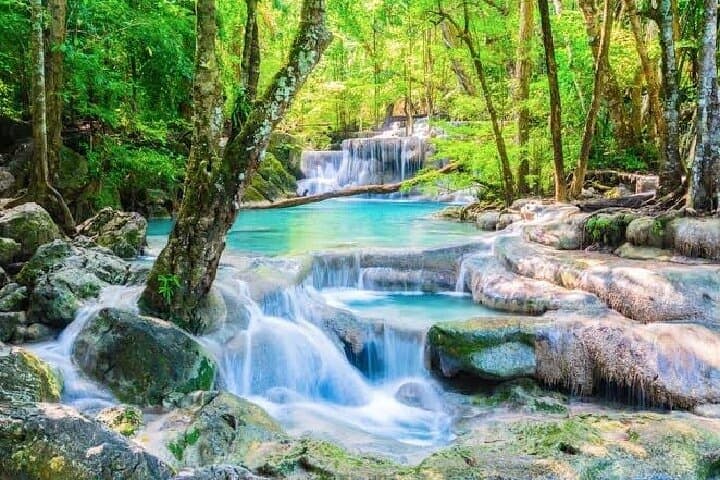
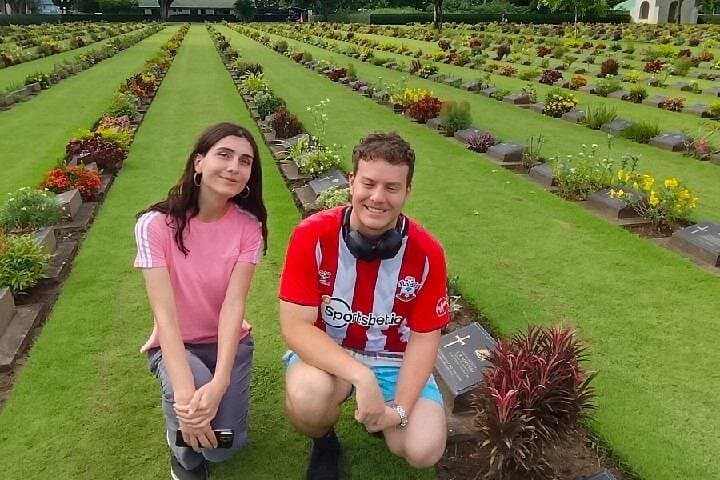
Kanchanaburi’s terrain is a mix of alluvial plains, limestone outcrops and the lower reaches of the Tenasserim Hills. The Thai–Burma Railway — built under wartime duress — and the Bridge on the River Kwai are central to the town’s 20th‑century identity; nearby cemeteries and museums document the international stories tied to these sites. Erawan’s seven tiers cascade over travertine and tufa, forming emerald pools that invite a swim after the morning’s walking.
Expect relatively easy walking: museum galleries, a 30–45 minute visit on the iron bridge, a 15–20 minute heritage train segment, and a moderate 1–2 hour uphill stroll among Erawan’s tiers if you hike past the lower falls. Cultural cues: dress respectfully at memorials and cover shoulders for indoor exhibits. Practical tips: bring a refillable water bottle, quick‑dry clothing for the waterfall, sturdy sandals or trail shoes for slippery rocks, and a sun hat for the midday heat.
This itinerary pairs historical reflection with simple nature immersion — a full day that balances steady pacing with striking contrasts: industry and memory, rail and river, rock and water.
moderate.
10–12 hours.
Suitable for travelers in average fitness; includes short walks, a moderate hike at Erawan and some standing/walking between sites.
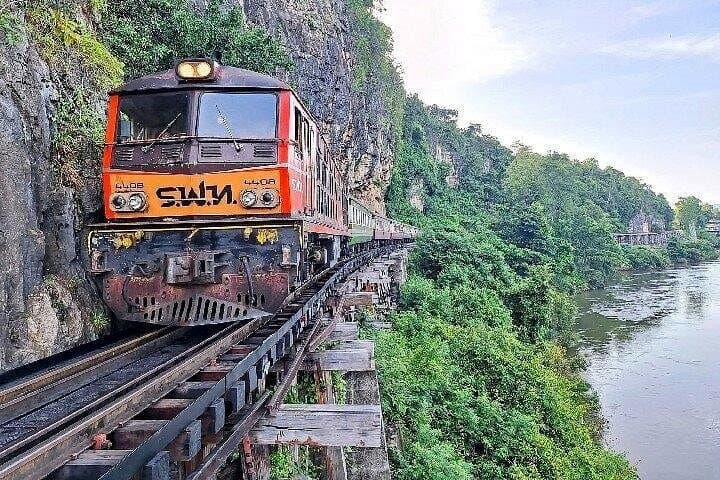
The heritage segment between Thakilen and Krasae Cave is about 15–20 minutes and offers cliffside and river views.
Yes — the lower tiers have designated swimming pools; follow park rules and avoid swimming after heavy rains when currents are stronger.
The tour is accessible for many ages; it involves some walking but no technical sections — check mobility needs for steps at memorials and uneven ground at the falls.
Wear modest clothing, bring sunscreen, bottled water, and a respectful attitude; guided commentary will deepen understanding of the historical sites.
Kanchanaburi became internationally known during WWII for the Thai–Burma Railway; Allied POWs and conscripted laborers endured harsh conditions building the line across difficult terrain.
Erawan National Park manages visitor numbers and requires fees to support trail maintenance; avoid single‑use plastics and stay on marked paths to protect fragile pools and limestone formations.
Roam Wander World Tour operates guided outdoor trips and adventures with an emphasis on safety, stewardship, and memorable experiences.
You step off the air‑conditioned van onto hot asphalt and the hum of provincial Thailand — the river runs wide and slow, and the iron ribs of a famous bridge cut a hard line across the water. The day peels back layers: memorial stones and museum displays that make history tactile, a short, rattling train ride tracing cliff edges above the Khwae Noi, and later the cool, green shock of limestone pools at Erawan.
You step off the air‑conditioned van onto hot asphalt and the hum of provincial Thailand — the river runs wide and slow, and the iron ribs of a famous bridge cut a hard line across the water. The day peels back layers: memorial stones and museum displays that make history tactile, a short, rattling train ride tracing cliff edges above the Khwae Noi, and later the cool, green shock of limestone pools at Erawan.
Kanchanaburi’s terrain is a mix of alluvial plains, limestone outcrops and the lower reaches of the Tenasserim Hills. The Thai–Burma Railway — built under wartime duress — and the Bridge on the River Kwai are central to the town’s 20th‑century identity; nearby cemeteries and museums document the international stories tied to these sites. Erawan’s seven tiers cascade over travertine and tufa, forming emerald pools that invite a swim after the morning’s walking.
Expect relatively easy walking: museum galleries, a 30–45 minute visit on the iron bridge, a 15–20 minute heritage train segment, and a moderate 1–2 hour uphill stroll among Erawan’s tiers if you hike past the lower falls. Cultural cues: dress respectfully at memorials and cover shoulders for indoor exhibits. Practical tips: bring a refillable water bottle, quick‑dry clothing for the waterfall, sturdy sandals or trail shoes for slippery rocks, and a sun hat for the midday heat.
This itinerary pairs historical reflection with simple nature immersion — a full day that balances steady pacing with striking contrasts: industry and memory, rail and river, rock and water.