THE ADVENTURE COLLECTIVE® · Independent discovery and booking for outdoor travel

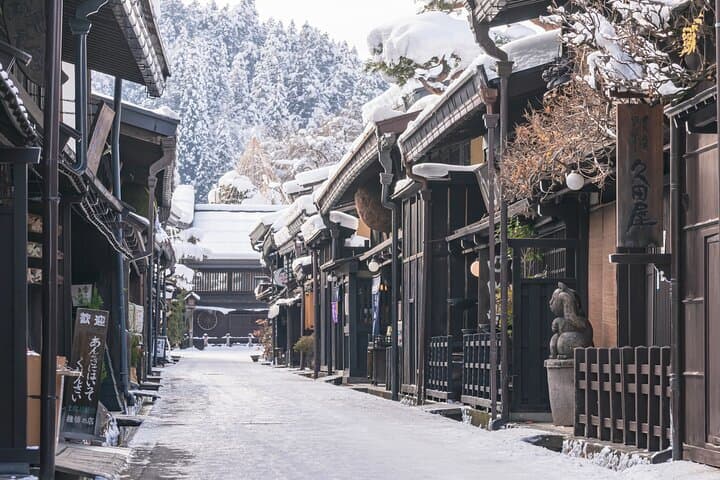
Ride a direct coach from Kanazawa to Takayama with a timed 90-minute stop at Shirakawa-go. This self-guided visit highlights the UNESCO-listed gassho-zukuri village with timed convenience for travelers moving between two historic towns.
Ride a direct coach from Kanazawa to Takayama with a timed 90-minute stop at Shirakawa-go. This self-guided visit highlights the UNESCO-listed gassho-zukuri village with timed convenience for travelers moving between two historic towns.
You step onto an air-conditioned coach in Kanazawa after lunch; the city’s samurai districts fade behind you as rice terraces and steep valley ridges edge into view. The bus hums along winding mountain roads, and after about an hour you arrive at Shirakawa-go, where time slows around rows of steep, thatched gassho-zukuri roofs.
Verified experiences and guided adventures in the surrounding area.
Operated by LIMON Tours · Shirakawa-go, Gifu Prefecture
You step onto an air-conditioned coach in Kanazawa after lunch; the city’s samurai districts fade behind you as rice terraces and steep valley ridges edge into view. The bus hums along winding mountain roads, and after about an hour you arrive at Shirakawa-go, where time slows around rows of steep, thatched gassho-zukuri roofs.
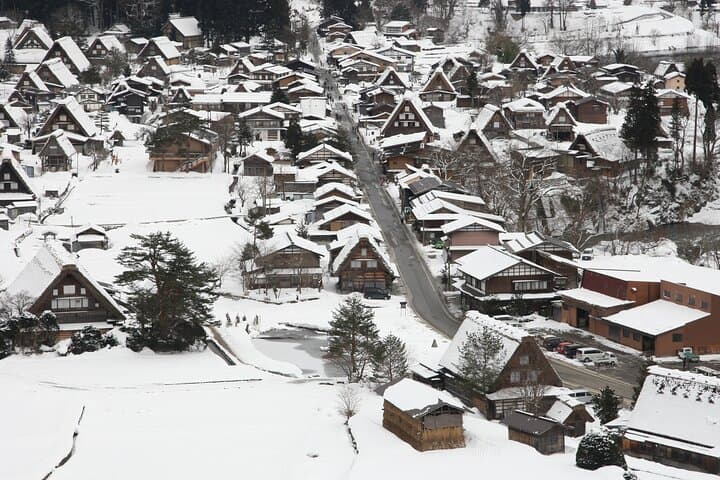
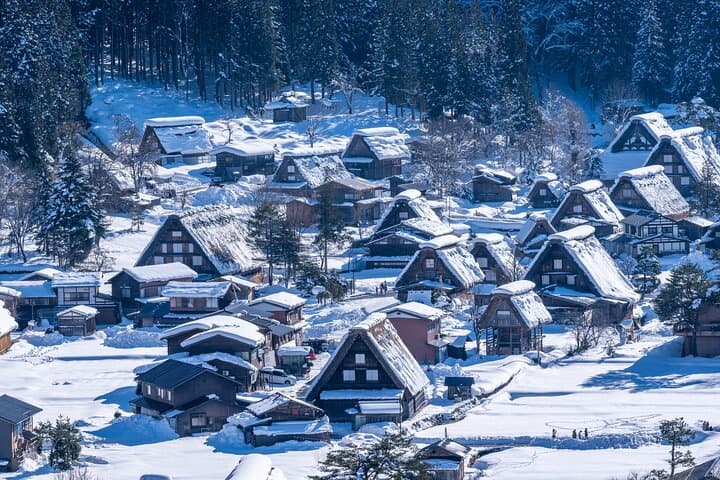
Shirakawa-go’s cluster of Ogimachi houses preserves a farming architecture shaped by heavy winter snow — steeply pitched thatch designed to shrug off deep drifts. Designated a UNESCO World Heritage site in 1995, the village still reflects communal rice cultivation, hand-built timber joints, and seasonal festivals that mark harvest and winter preparations.
Geology is visible in the folded valleys and river terraces carved by the Sho River; culture is in wooden eaves and local soba shops. The main viewpoint above the village gives a panoramic read on the roofs and valley, while narrow lanes lead past the Wada House and small museums that explain silk cultivation and sericulture once common here.
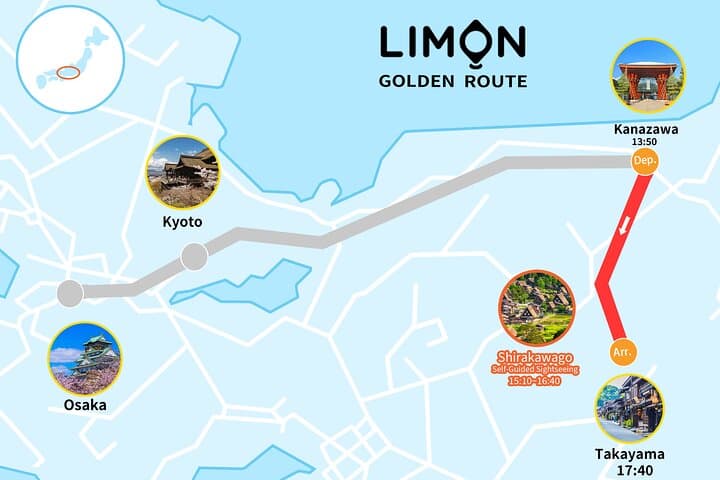
Practical guidance: this is a one-way transport service (Kanazawa departs ~13:50; Shirakawa-go stop ~15:10–16:40; arrival in Takayama ~17:40). The 90-minute stop is strictly self-guided; the driver hands out a walking map and stores luggage on the coach. Prioritize the observation deck and one museum — winter snow or crowds can eat into minutes. Wear sturdy shoes for uneven lanes, carry water, and allow time to return to the coach 10 minutes before departure. Expect schedule shifts from traffic or weather; this service is ideal for travelers who want a focused, time-efficient visit without a formal guide.
easy.
4 hours.
Suitable for most fitness levels; involves short stretches of walking on uneven village lanes.
No — this is a transportation service only; sightseeing during the 90-minute stop is entirely self-guided and a walking map is provided by the driver.
Yes — luggage storage and transport are provided on the coach for the duration of the one-way trip.
Times are scheduled (Kanazawa ~13:50, Shirakawa-go arrival ~15:10, depart ~16:40, Takayama arrival ~17:40) but may shift due to traffic or weather; arrive 10 minutes early to the boarding point.
90 minutes allows a quick visit to the main cluster and viewpoint; prioritize the observatory and one museum or house to make the most of your stop.
Shirakawa-go’s gassho-zukuri houses evolved over centuries to support mulberry cultivation and sericulture; the village was inscribed as a UNESCO World Heritage site in 1995 for its unique vernacular architecture.
Local regulations limit access to private properties and encourage staying on designated paths; visitors should avoid drones and respect quiet to reduce wear on thatched roofs and village life.
LIMON Tours operates guided outdoor trips and adventures with an emphasis on safety, stewardship, and memorable experiences.
You step onto an air-conditioned coach in Kanazawa after lunch; the city’s samurai districts fade behind you as rice terraces and steep valley ridges edge into view. The bus hums along winding mountain roads, and after about an hour you arrive at Shirakawa-go, where time slows around rows of steep, thatched gassho-zukuri roofs.
You step onto an air-conditioned coach in Kanazawa after lunch; the city’s samurai districts fade behind you as rice terraces and steep valley ridges edge into view. The bus hums along winding mountain roads, and after about an hour you arrive at Shirakawa-go, where time slows around rows of steep, thatched gassho-zukuri roofs.
Shirakawa-go’s cluster of Ogimachi houses preserves a farming architecture shaped by heavy winter snow — steeply pitched thatch designed to shrug off deep drifts. Designated a UNESCO World Heritage site in 1995, the village still reflects communal rice cultivation, hand-built timber joints, and seasonal festivals that mark harvest and winter preparations.
Geology is visible in the folded valleys and river terraces carved by the Sho River; culture is in wooden eaves and local soba shops. The main viewpoint above the village gives a panoramic read on the roofs and valley, while narrow lanes lead past the Wada House and small museums that explain silk cultivation and sericulture once common here.
Practical guidance: this is a one-way transport service (Kanazawa departs ~13:50; Shirakawa-go stop ~15:10–16:40; arrival in Takayama ~17:40). The 90-minute stop is strictly self-guided; the driver hands out a walking map and stores luggage on the coach. Prioritize the observation deck and one museum — winter snow or crowds can eat into minutes. Wear sturdy shoes for uneven lanes, carry water, and allow time to return to the coach 10 minutes before departure. Expect schedule shifts from traffic or weather; this service is ideal for travelers who want a focused, time-efficient visit without a formal guide.