THE ADVENTURE COLLECTIVE® · Independent discovery and booking for outdoor travel

Spend a day exploring Kampot and Kep’s working countryside — from salt pans and a 7th-century cave temple to pepper tastings and the lively Kep crab market. This practical guide prepares you for terrain, history, and what to bring.
Spend a day exploring Kampot and Kep’s working countryside — from salt pans and a 7th-century cave temple to pepper tastings and the lively Kep crab market. This practical guide prepares you for terrain, history, and what to bring.
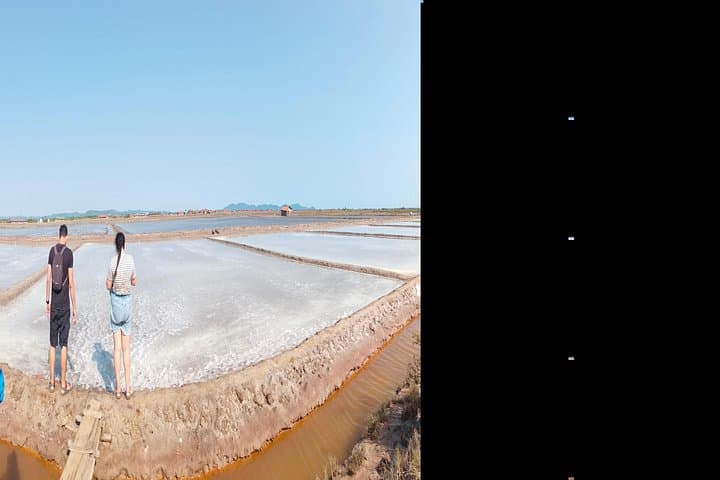
You step off the minivan onto cracked earth where salt pans glow like a pale grid under the sun; the air tastes faintly briny and a worker’s rake clicks rhythmically. The road threads between low hills, pepper vines, and small Khmer villages until a limestone flank rises and the 203 steps to Phnom Chhngok appear, carved into karst that has held a 7th-century brick shrine for centuries.
Verified experiences and guided adventures in the surrounding area.
Operated by Peppercorn private tour (Kampot & Kep) · Kampot, Kampot Province
You step off the minivan onto cracked earth where salt pans glow like a pale grid under the sun; the air tastes faintly briny and a worker’s rake clicks rhythmically. The road threads between low hills, pepper vines, and small Khmer villages until a limestone flank rises and the 203 steps to Phnom Chhngok appear, carved into karst that has held a 7th-century brick shrine for centuries.
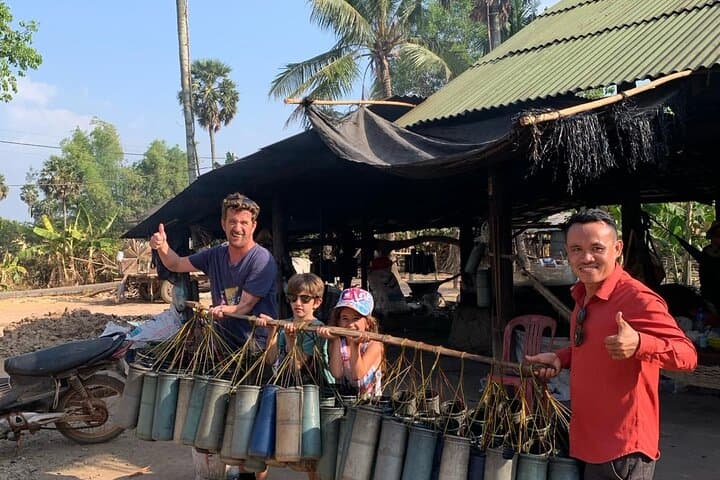
This full-day outing around Kampot and Kep weaves local industry, geology and wartime history. Salt production here uses tidal channels and evaporation; pepper vines on family plantations are trained and dried on bamboo racks; Brateak Krola Lake is a large artificial reservoir whose construction during the Khmer Rouge era left a stark imprint on the landscape. At Phnom Chhngok the cave-temple’s Funan-era brickwork offers a direct tactile link to early Cambodian history, while Kep’s crab market and shoreline show the region’s maritime culture and fresh seafood economy.
Expect 7–8 hours of touring with walking at sites—moderate fitness helps for stairs and short dirt trails. Guides often include pepper tastings and a beach stop for a swim or relaxation. Practical notes: carry water, sun protection, and sturdy shoes for uneven surfaces; respectful clothing is required for temple visits. Timing your day to reach Kep before late afternoon keeps the heat manageable and the crab market lively. This itinerary balances sensory detail—squeaky salt, the bite of fresh pepper, and the sea’s pull—with concrete logistics so you know what to bring and when to move.
moderate.
7–8 hours.
Moderate fitness recommended—able to climb stairs, walk short dirt trails, and handle heat.
The tour lasts about 7–8 hours and includes visits to a salt factory, Phnom Chhngok cave temple, Brateak Krola Lake, a pepper plantation with tastings, and Kep’s crab market with beach time.
Children who can manage stairs and short walks are fine; the 203 steps at Phnom Chhngok and uneven terrain make it unsuitable for travelers with serious mobility limitations.
Inclusions list entrance fees, a fresh coconut, water, and a guide—seafood at the crab market or formal lunch may be extra depending on options chosen.
Morning or late afternoon is best: cooler temperatures and less direct sun make climbing the steps and exploring the cave-temple more comfortable.
Phnom Chhngok contains a 7th-century Funan-era brick shrine; Brateak Krola Lake was expanded during the Khmer Rouge period, leaving a complex legacy in the landscape.
Salt pans and pepper farms are sensitive to runoff and plastic waste—carry out trash and consider buying local produce to support sustainable livelihoods.
Peppercorn private tour (Kampot & Kep) operates guided outdoor trips and adventures with an emphasis on safety, stewardship, and memorable experiences.
You step off the minivan onto cracked earth where salt pans glow like a pale grid under the sun; the air tastes faintly briny and a worker’s rake clicks rhythmically. The road threads between low hills, pepper vines, and small Khmer villages until a limestone flank rises and the 203 steps to Phnom Chhngok appear, carved into karst that has held a 7th-century brick shrine for centuries.
You step off the minivan onto cracked earth where salt pans glow like a pale grid under the sun; the air tastes faintly briny and a worker’s rake clicks rhythmically. The road threads between low hills, pepper vines, and small Khmer villages until a limestone flank rises and the 203 steps to Phnom Chhngok appear, carved into karst that has held a 7th-century brick shrine for centuries.
This full-day outing around Kampot and Kep weaves local industry, geology and wartime history. Salt production here uses tidal channels and evaporation; pepper vines on family plantations are trained and dried on bamboo racks; Brateak Krola Lake is a large artificial reservoir whose construction during the Khmer Rouge era left a stark imprint on the landscape. At Phnom Chhngok the cave-temple’s Funan-era brickwork offers a direct tactile link to early Cambodian history, while Kep’s crab market and shoreline show the region’s maritime culture and fresh seafood economy.
Expect 7–8 hours of touring with walking at sites—moderate fitness helps for stairs and short dirt trails. Guides often include pepper tastings and a beach stop for a swim or relaxation. Practical notes: carry water, sun protection, and sturdy shoes for uneven surfaces; respectful clothing is required for temple visits. Timing your day to reach Kep before late afternoon keeps the heat manageable and the crab market lively. This itinerary balances sensory detail—squeaky salt, the bite of fresh pepper, and the sea’s pull—with concrete logistics so you know what to bring and when to move.