THE ADVENTURE COLLECTIVE® · Independent discovery and booking for outdoor travel

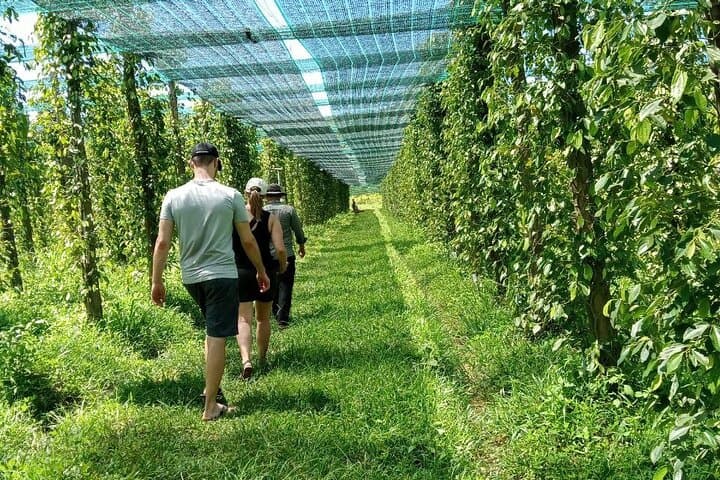
A full-day tour from Sihanoukville to Kampot visits salt fields, an ancient cave temple, a clear mountain lake and the famed La Plantation pepper farm. Perfect for travelers who want cultural history, geology and farm-to-table flavors in one day.
A full-day tour from Sihanoukville to Kampot visits salt fields, an ancient cave temple, a clear mountain lake and the famed La Plantation pepper farm. Perfect for travelers who want cultural history, geology and farm-to-table flavors in one day.
Early light unspools over the coastal road as the vehicle leaves Sihanoukville and the countryside opens into rice paddies and limestone karsts. By mid-morning the air tastes faintly of sea salt; black pepper vines and salt flats announce Kampot's agricultural economy. Walking the riverfront in town, travelers meet low colonial facades, small cafés, and the steady current that keeps the town moving.
Verified experiences and guided adventures in the surrounding area.
Operated by Cambodia Tourist Car · Kampot, Kampot Province
Early light unspools over the coastal road as the vehicle leaves Sihanoukville and the countryside opens into rice paddies and limestone karsts. By mid-morning the air tastes faintly of sea salt; black pepper vines and salt flats announce Kampot's agricultural economy. Walking the riverfront in town, travelers meet low colonial facades, small cafés, and the steady current that keeps the town moving.
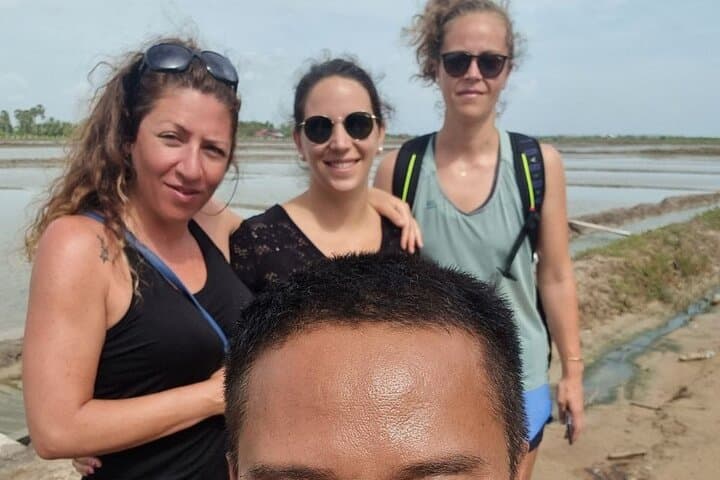
Kampot's landscape is shaped by its geology and history. The hulking Phnom Chhngok is a pre-Angkorian limestone karst pierced by caverns that shelter a 7th-century brick shrine. The salt fields, productive from roughly December through April, speak to a long coastal industry; nearby pepper farms like La Plantation continue an agricultural tradition that has placed Kampot pepper on international menus.
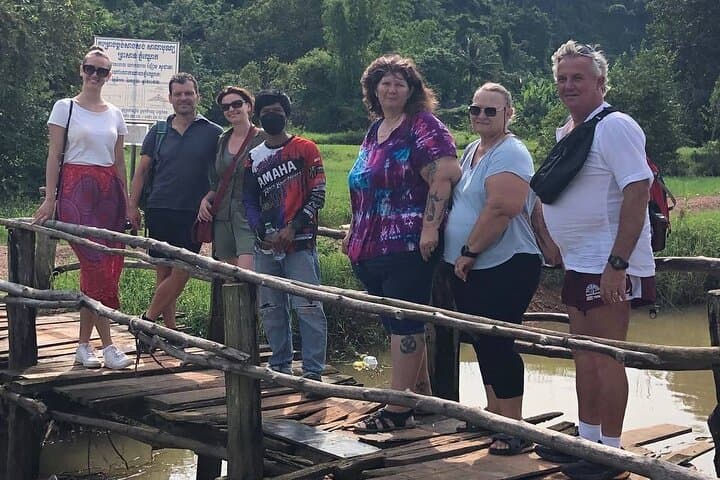
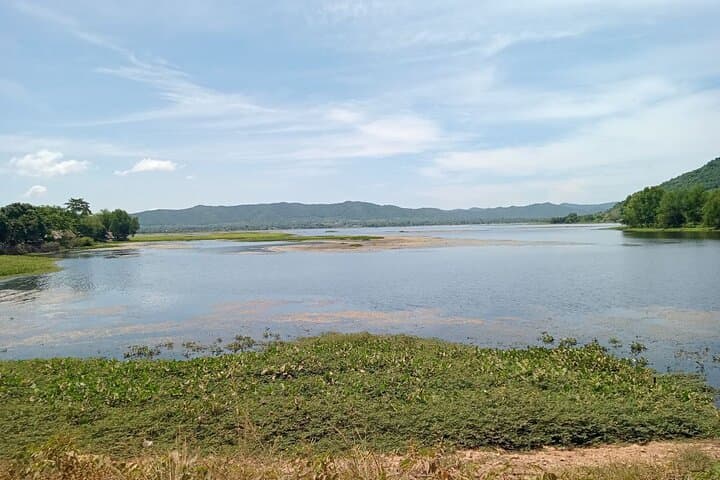
Culturally, the region blends Khmer village life, French-era architecture, and the slow rhythms of river commerce. Hidden pockets — a clear mountain-fed lake en route and quieter river bends — reward those who step away from the main stops.
Practical guidance: plan for a 6–8 hour day with multiple short stops and two longer visits—cave and pepper farm. Wear sturdy closed shoes for uneven limestone steps and a hat and sun protection for exposed salt flats. Bring insect repellent for shaded areas and at dusk along the river. If visiting in the wet season, expect muddy side roads and check vehicle access; the salt harvest is most active in the dry season (Dec–Apr). Expect bottled water provided by the operator and pick-up from Sihanoukville.
easy.
6–8 hours.
Suitable for most fitness levels; involves short walks, some stairs in the cave, and light walking at farms and salt fields.
The full experience runs about 6–8 hours depending on traffic and time spent at each stop; the operator provides hotel pickup in Sihanoukville and drop-off in Kampot town.
Bottled water and some entrance fees are included; check the operator for specific admissions or meals not covered in the itinerary.
The cave involves some steps and uneven terrain but is generally accessible to most visitors; wear good shoes and move carefully on wet or narrow sections.
Yes, but expect muddy side roads and potential delays; the salt fields are most active and visually striking in the dry season (Dec–Apr).
Phnom Chhngok houses a pre-Angkorian brick shrine likely from the 7th-century Funan period, and Kampot's pepper and salt industries have shaped local culture for centuries.
Many pepper farms practice organic cultivation to protect soil quality; visitors should stay on paths and avoid disturbing farm plots and cave formations.
Cambodia Tourist Car operates guided outdoor trips and adventures with an emphasis on safety, stewardship, and memorable experiences.
Early light unspools over the coastal road as the vehicle leaves Sihanoukville and the countryside opens into rice paddies and limestone karsts. By mid-morning the air tastes faintly of sea salt; black pepper vines and salt flats announce Kampot's agricultural economy. Walking the riverfront in town, travelers meet low colonial facades, small cafés, and the steady current that keeps the town moving.
Early light unspools over the coastal road as the vehicle leaves Sihanoukville and the countryside opens into rice paddies and limestone karsts. By mid-morning the air tastes faintly of sea salt; black pepper vines and salt flats announce Kampot's agricultural economy. Walking the riverfront in town, travelers meet low colonial facades, small cafés, and the steady current that keeps the town moving.
Kampot's landscape is shaped by its geology and history. The hulking Phnom Chhngok is a pre-Angkorian limestone karst pierced by caverns that shelter a 7th-century brick shrine. The salt fields, productive from roughly December through April, speak to a long coastal industry; nearby pepper farms like La Plantation continue an agricultural tradition that has placed Kampot pepper on international menus.
Culturally, the region blends Khmer village life, French-era architecture, and the slow rhythms of river commerce. Hidden pockets — a clear mountain-fed lake en route and quieter river bends — reward those who step away from the main stops.
Practical guidance: plan for a 6–8 hour day with multiple short stops and two longer visits—cave and pepper farm. Wear sturdy closed shoes for uneven limestone steps and a hat and sun protection for exposed salt flats. Bring insect repellent for shaded areas and at dusk along the river. If visiting in the wet season, expect muddy side roads and check vehicle access; the salt harvest is most active in the dry season (Dec–Apr). Expect bottled water provided by the operator and pick-up from Sihanoukville.