THE ADVENTURE COLLECTIVE® · Independent discovery and booking for outdoor travel

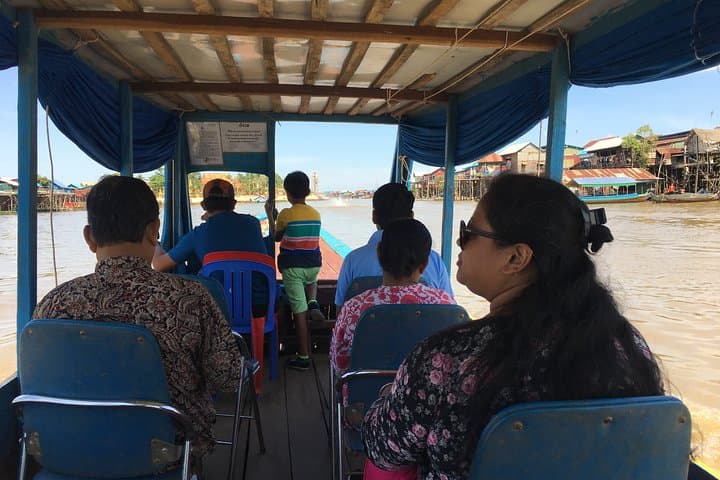
Visit Kampong Phluk for a half-day glimpse into life above Tonle Sap’s floodplain. Glide through flooded forest in the wet season or walk the raised walkways at low water while local guides explain the village’s fishing and seasonal rhythms.
Visit Kampong Phluk for a half-day glimpse into life above Tonle Sap’s floodplain. Glide through flooded forest in the wet season or walk the raised walkways at low water while local guides explain the village’s fishing and seasonal rhythms.
The morning light slices across Tonle Sap as you step onto a narrow pier and the village rises up on stilts—houses, walkways and weathered boats stacked three to four metres above the seasonal floodplain. Your private guide steers you through alleys of bamboo platforms and into a small skiff; the lake’s surface reflects mangrove trunks and the low hum of nets being mended.
Verified experiences and guided adventures in the surrounding area.
Operated by Day Trip Cambodia · Siem Reap, Siem Reap Province
The morning light slices across Tonle Sap as you step onto a narrow pier and the village rises up on stilts—houses, walkways and weathered boats stacked three to four metres above the seasonal floodplain. Your private guide steers you through alleys of bamboo platforms and into a small skiff; the lake’s surface reflects mangrove trunks and the low hum of nets being mended.
Kampong Phluk, whose name is often translated as "Harbor of the Tusks," developed around the lake’s extraordinary hydrology. Every year the Mekong reverses flow and Tonle Sap swells, turning forest into waterways and delivering the fish that sustained generations. The stilt architecture and floating life are responses to that rhythm—homes built to live with water rather than fight it.
Culturally, visits here reveal a fishing economy, seasonal farming, and a growing tourism role. Geologically, the lake’s shallow basin and monsoon-fed pulse create expansive flooded forests and mudflats that migrate with the seasons.
Practical side: trips run as half-day tours from Siem Reap (about 45–60 minutes by road). Wear quick-dry clothing, Sun protection and insect repellent, and plan for either a boat ride through the flooded forest (wet season) or village walking at low water (dry season). Bring local cash for small purchases, and move deliberately on uneven planks. Photography is welcome, but ask before shooting portraits—residents live where you roam. Timing your visit for early morning light reduces heat and maximizes wildlife sightings, offering the clearest sense of life on Tonle Sap.
easy.
3–4 hours.
Suitable for most fitness levels; involves short walks on uneven stilt platforms and low-impact boat travel
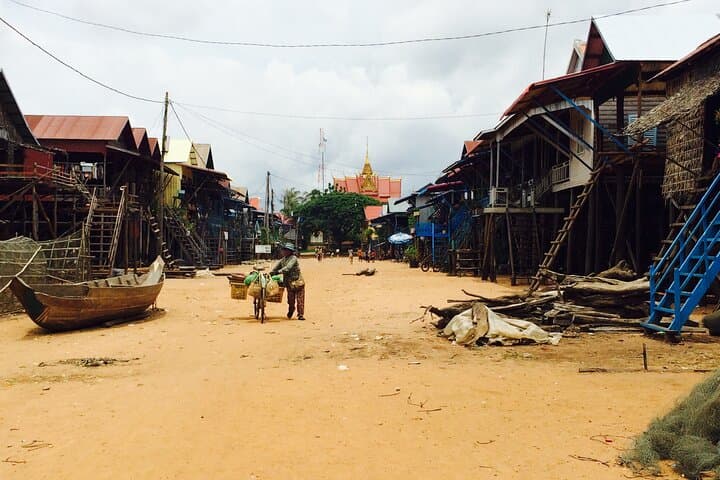
Boat trips are included in wet-season departures when the floodplain is navigable; during the dry season guides lead short walks through the stilt village instead.
Typical drive time is 45–60 minutes each way depending on traffic and your pickup location in Siem Reap.
Basic facilities exist near tourist piers, but expect limited options; plan accordingly, especially for morning departures.
Yes—this tour is rated easy. Families and seniors should note uneven planks and step heights; guides will assist with boat boarding.
Kampong Phluk adapted to Tonle Sap’s seasonal flood pulse; stilted homes and raised walkways reflect centuries of living with annual changes in water level.
Tonle Sap is a UNESCO Biosphere Reserve facing pressures from overfishing and development—low-impact visits and supporting local businesses help conserve resources and livelihoods.
Day Trip Cambodia operates guided outdoor trips and adventures with an emphasis on safety, stewardship, and memorable experiences.
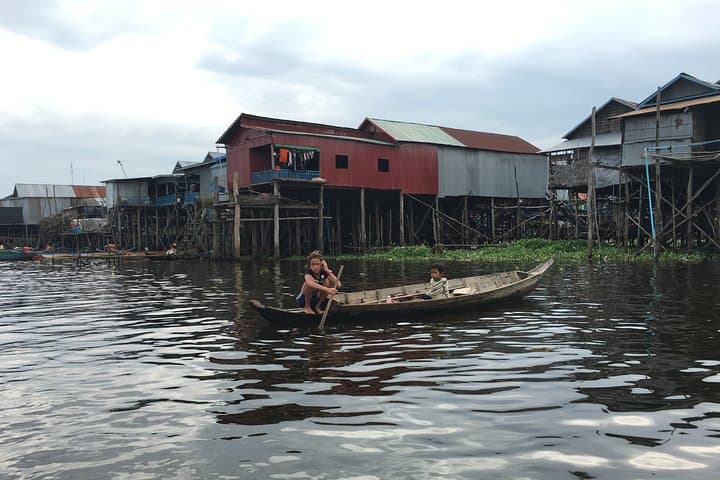
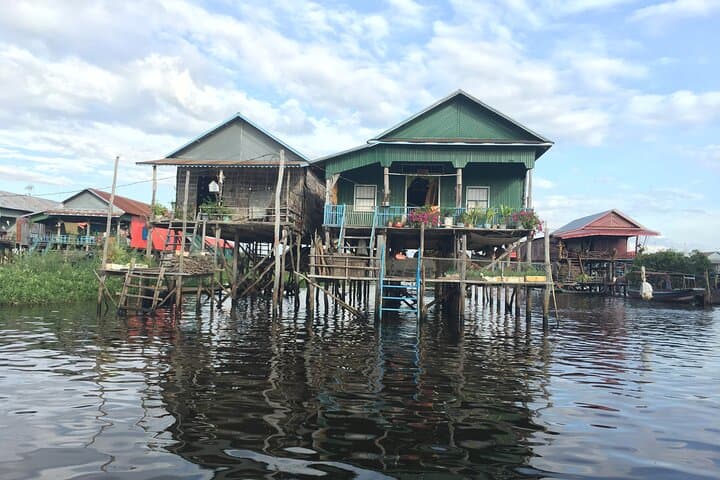
The morning light slices across Tonle Sap as you step onto a narrow pier and the village rises up on stilts—houses, walkways and weathered boats stacked three to four metres above the seasonal floodplain. Your private guide steers you through alleys of bamboo platforms and into a small skiff; the lake’s surface reflects mangrove trunks and the low hum of nets being mended.
The morning light slices across Tonle Sap as you step onto a narrow pier and the village rises up on stilts—houses, walkways and weathered boats stacked three to four metres above the seasonal floodplain. Your private guide steers you through alleys of bamboo platforms and into a small skiff; the lake’s surface reflects mangrove trunks and the low hum of nets being mended.
Kampong Phluk, whose name is often translated as "Harbor of the Tusks," developed around the lake’s extraordinary hydrology. Every year the Mekong reverses flow and Tonle Sap swells, turning forest into waterways and delivering the fish that sustained generations. The stilt architecture and floating life are responses to that rhythm—homes built to live with water rather than fight it.
Culturally, visits here reveal a fishing economy, seasonal farming, and a growing tourism role. Geologically, the lake’s shallow basin and monsoon-fed pulse create expansive flooded forests and mudflats that migrate with the seasons.
Practical side: trips run as half-day tours from Siem Reap (about 45–60 minutes by road). Wear quick-dry clothing, Sun protection and insect repellent, and plan for either a boat ride through the flooded forest (wet season) or village walking at low water (dry season). Bring local cash for small purchases, and move deliberately on uneven planks. Photography is welcome, but ask before shooting portraits—residents live where you roam. Timing your visit for early morning light reduces heat and maximizes wildlife sightings, offering the clearest sense of life on Tonle Sap.