THE ADVENTURE COLLECTIVE® · Independent discovery and booking for outdoor travel

Experience daily life on Tonle Sap with a private motorboat cruise through Kampong Phluk’s stilted village, then switch to a quiet canoe to explore shaded mangrove channels. This half-day tour blends cultural insight with close encounters of Cambodia’s living lake.
Experience daily life on Tonle Sap with a private motorboat cruise through Kampong Phluk’s stilted village, then switch to a quiet canoe to explore shaded mangrove channels. This half-day tour blends cultural insight with close encounters of Cambodia’s living lake.
You push off from a low wooden jetty into a wide, breathing lake; the motor’s low thrum fades as you glide past houses on stilts and children dipping nets. Tonle Sap here moves with the seasons—expanding into vast shallow floodplains in the rains, retracting in the dry months to reveal mudflats and mangrove channels.
Verified experiences and guided adventures in the surrounding area.
Operated by Southeast Asia Journeys · Siem Reap, Siem Reap Province
You push off from a low wooden jetty into a wide, breathing lake; the motor’s low thrum fades as you glide past houses on stilts and children dipping nets. Tonle Sap here moves with the seasons—expanding into vast shallow floodplains in the rains, retracting in the dry months to reveal mudflats and mangrove channels.
Kampong Phluk developed as an adaptive community where people build high on stilts and live with the lake’s rhythm. Geologically Tonle Sap is unique: it reverses flow into the Mekong during the monsoon, swelling the lake and creating a dynamic wetland that supports fisheries and migratory birds. Culturally, local guides—often from the village—explain everyday life, from floating markets to schools built above the water.
This private half-day pairs a motorized cruise through the floating village with a quiet canoe trip led by local women into mangrove channels. Expect close-up views of stilted pagodas, fishing activity, and dense, shaded waterways that funnel bird song and the occasional water monitor.
Practical guidance: dress in lightweight, sun-protective layers and slip-resistant shoes you don’t mind getting damp. Bring insect repellent, a dry bag for electronics, and small cash for donations or souvenirs. Morning departures are cooler and busier with village routines; late afternoons offer softer light and calmer canals. The tour is suitable for most fitness levels but not recommended for those with severe back or heart conditions. Respect private spaces—ask before photographing people—and avoid feeding wildlife. With local guides and a private vehicle, this is a manageable, immersive way to understand Tonle Sap’s living wetlands and the communities that depend on them.
easy.
4 hours.
Suitable for most travelers with basic mobility; canoeing is passive and guided.
The private half-day lasts about four hours and includes hotel pickup/drop-off, an English-speaking guide, boat tickets, cold towels, and bottled water.
No; local paddlers guide the canoe and it’s a tranquil, low-effort experience suitable for most ages.
Yes—infants must sit on an adult’s lap; infant seats are available by request but check with your provider beforehand.
The tour involves boarding small boats and walking on uneven jetties, so it’s not recommended for travelers with severe mobility or spinal issues.
Kampong Phluk grew as a lakeside community shaped by Tonle Sap’s annual flood pulse; houses and infrastructure are raised to adapt to dramatic seasonal water level changes.
Tonle Sap is a globally important wetland facing pressure from overfishing and development—choose operators who support local livelihoods and avoid disturbing nesting birds or wildlife.
Southeast Asia Journeys operates guided outdoor trips and adventures with an emphasis on safety, stewardship, and memorable experiences.

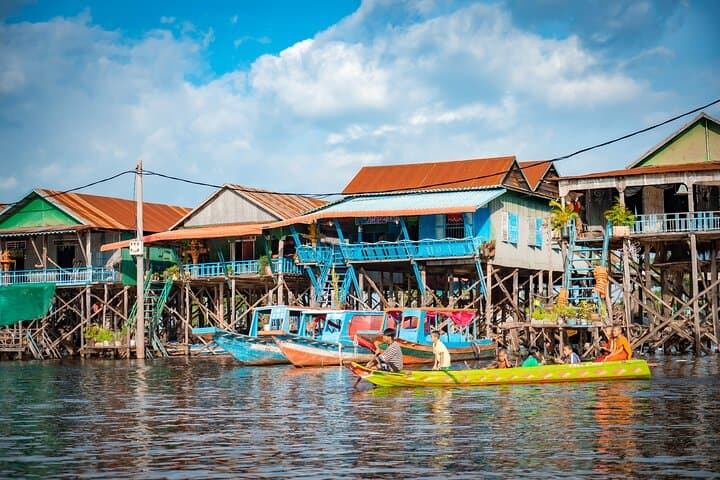
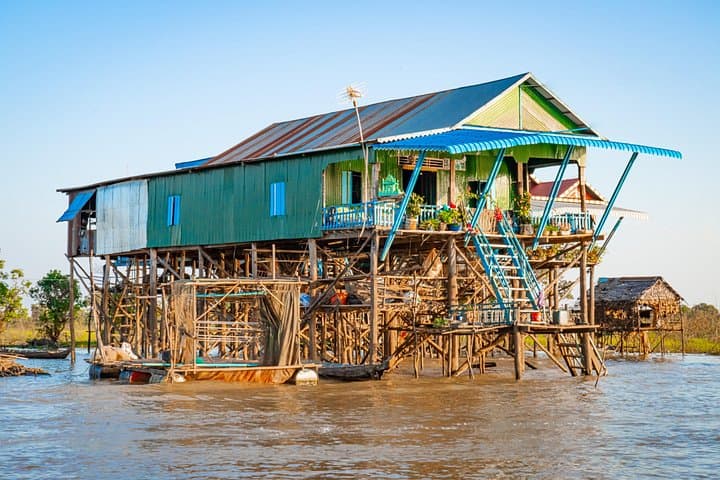
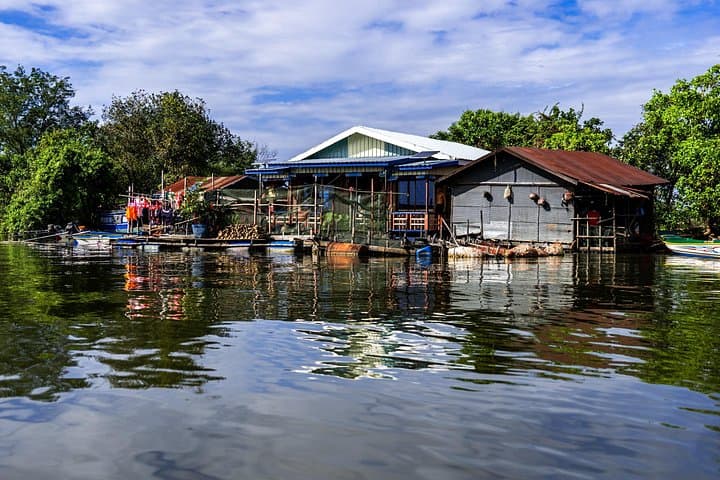
You push off from a low wooden jetty into a wide, breathing lake; the motor’s low thrum fades as you glide past houses on stilts and children dipping nets. Tonle Sap here moves with the seasons—expanding into vast shallow floodplains in the rains, retracting in the dry months to reveal mudflats and mangrove channels.
You push off from a low wooden jetty into a wide, breathing lake; the motor’s low thrum fades as you glide past houses on stilts and children dipping nets. Tonle Sap here moves with the seasons—expanding into vast shallow floodplains in the rains, retracting in the dry months to reveal mudflats and mangrove channels.
Kampong Phluk developed as an adaptive community where people build high on stilts and live with the lake’s rhythm. Geologically Tonle Sap is unique: it reverses flow into the Mekong during the monsoon, swelling the lake and creating a dynamic wetland that supports fisheries and migratory birds. Culturally, local guides—often from the village—explain everyday life, from floating markets to schools built above the water.
This private half-day pairs a motorized cruise through the floating village with a quiet canoe trip led by local women into mangrove channels. Expect close-up views of stilted pagodas, fishing activity, and dense, shaded waterways that funnel bird song and the occasional water monitor.
Practical guidance: dress in lightweight, sun-protective layers and slip-resistant shoes you don’t mind getting damp. Bring insect repellent, a dry bag for electronics, and small cash for donations or souvenirs. Morning departures are cooler and busier with village routines; late afternoons offer softer light and calmer canals. The tour is suitable for most fitness levels but not recommended for those with severe back or heart conditions. Respect private spaces—ask before photographing people—and avoid feeding wildlife. With local guides and a private vehicle, this is a manageable, immersive way to understand Tonle Sap’s living wetlands and the communities that depend on them.