THE ADVENTURE COLLECTIVE® · Independent discovery and booking for outdoor travel

Explore Kampong Khleang’s stilted and floating houses on the Tonle Sap, then confront Cambodia’s recent past at a war museum and Wat Thmey Killing Fields. This full-day, private tour blends river life with local history and market culture.
Explore Kampong Khleang’s stilted and floating houses on the Tonle Sap, then confront Cambodia’s recent past at a war museum and Wat Thmey Killing Fields. This full-day, private tour blends river life with local history and market culture.
The morning fog lifts off the Tonle Sap and wooden skiffs begin to creak. Boats thread between stilt houses as children wave from porches eight meters above the mud—this is Kampong Khleang, where the river dares you to keep up with changing seasons.
Verified experiences and guided adventures in the surrounding area.
Operated by Angkor Doors · Siem Reap, Siem Reap Province
The morning fog lifts off the Tonle Sap and wooden skiffs begin to creak. Boats thread between stilt houses as children wave from porches eight meters above the mud—this is Kampong Khleang, where the river dares you to keep up with changing seasons.
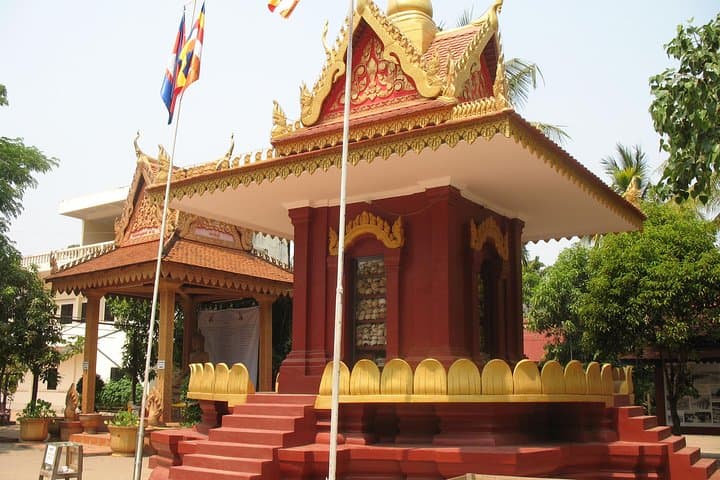
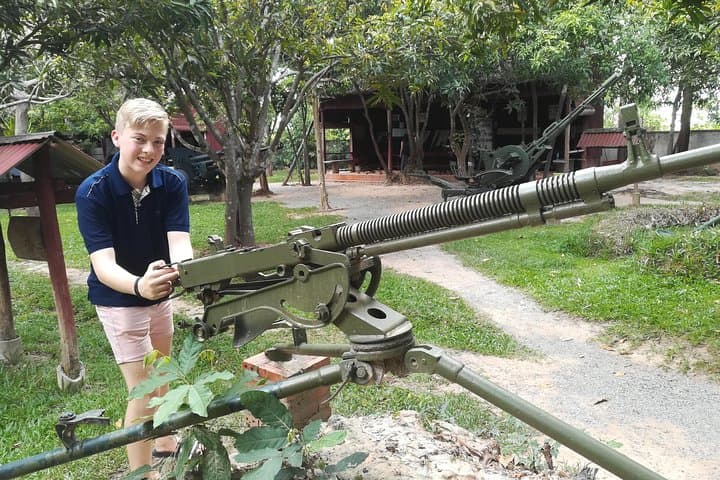
This day tour pairs that living-water landscape with hard, recent history: a local war museum displaying vehicles and small arms from Cambodia’s civil conflict, and Wat Thmey (the Killing Fields) where visitors confront the brutality of the Khmer Rouge era. Geologically, the Tonle Sap is unique—its seasonal flood pulse reverses the flow of the river, swelling shorelines into an inland sea and shaping homes on stilts and floating platforms. Culturally, the area is majority Khmer with Vietnamese minority communities; livelihoods rotate between fishing, farming, trading and seasonal tourism.
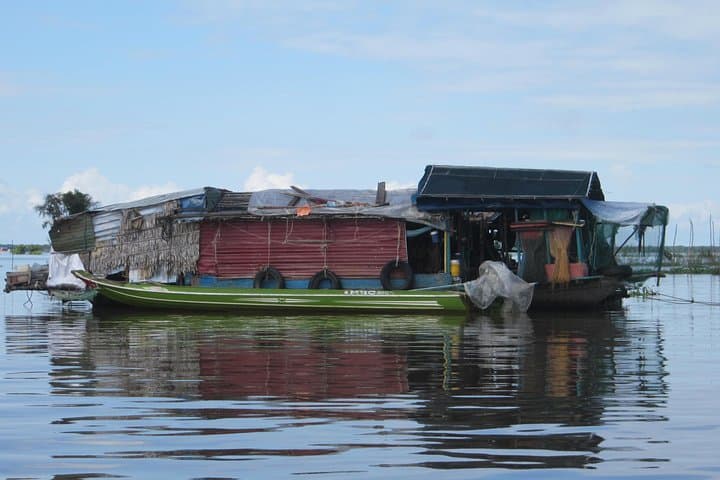
Expect a mix of slow boat travel and short land stops. In the dry months you may step through the village; in the wet season, houses float and boats are the only lifeline. The museum and Wat Thmey require quiet attention—their stories are personal, often relayed by guides who lived through the conflict.
Practical notes: this is a full-day outing (roughly 7–8 hours) with moderate travel between sites—bring sun protection, insect repellent, cash for market purchases and optional donations. Wear comfortable, quick-drying shoes for wet or muddy approaches, and plan early departures to avoid midday heat. A respectful demeanor at Wat Thmey and at local homes keeps the focus where it should be: on people, place, and history.
easy.
7–8 hours.
Suitable for most fitness levels; involves short walks, boat transfers, and getting on/off small boats
The tour runs about 7–8 hours (roughly 420–480 minutes) including drive time, a boat cruise, and museum/memorial visits.
Yes—this itinerary includes a cruise on the Tonle Sap and entrance to Kampong Khleang as noted in inclusions.
Walking is possible in the dry season when water levels are low; in the wet season movement is by boat only.
Yes—English-speaking guides are provided and often share personal or community recollections of the Khmer Rouge period.
Kampong Khleang evolved around the Tonle Sap’s flood pulse; Wat Thmey marks a local site of Khmer Rouge atrocities and community memory.
Rising tourism and changing water regimes stress the Tonle Sap—visit with local guides, avoid littering, and support community-run businesses.
Angkor Doors operates guided outdoor trips and adventures with an emphasis on safety, stewardship, and memorable experiences.
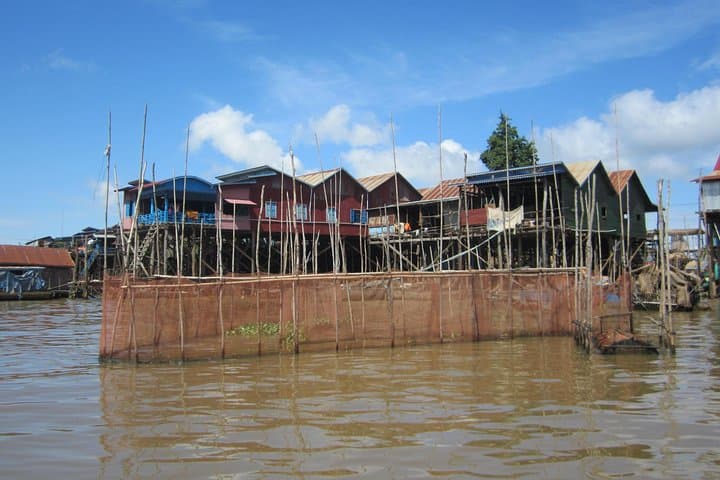
The morning fog lifts off the Tonle Sap and wooden skiffs begin to creak. Boats thread between stilt houses as children wave from porches eight meters above the mud—this is Kampong Khleang, where the river dares you to keep up with changing seasons.
The morning fog lifts off the Tonle Sap and wooden skiffs begin to creak. Boats thread between stilt houses as children wave from porches eight meters above the mud—this is Kampong Khleang, where the river dares you to keep up with changing seasons.
This day tour pairs that living-water landscape with hard, recent history: a local war museum displaying vehicles and small arms from Cambodia’s civil conflict, and Wat Thmey (the Killing Fields) where visitors confront the brutality of the Khmer Rouge era. Geologically, the Tonle Sap is unique—its seasonal flood pulse reverses the flow of the river, swelling shorelines into an inland sea and shaping homes on stilts and floating platforms. Culturally, the area is majority Khmer with Vietnamese minority communities; livelihoods rotate between fishing, farming, trading and seasonal tourism.
Expect a mix of slow boat travel and short land stops. In the dry months you may step through the village; in the wet season, houses float and boats are the only lifeline. The museum and Wat Thmey require quiet attention—their stories are personal, often relayed by guides who lived through the conflict.
Practical notes: this is a full-day outing (roughly 7–8 hours) with moderate travel between sites—bring sun protection, insect repellent, cash for market purchases and optional donations. Wear comfortable, quick-drying shoes for wet or muddy approaches, and plan early departures to avoid midday heat. A respectful demeanor at Wat Thmey and at local homes keeps the focus where it should be: on people, place, and history.