THE ADVENTURE COLLECTIVE® · Independent discovery and booking for outdoor travel

Walk from vermilion torii through bamboo groves to the 13th-century Great Buddha on a 5‑hour guided tour that mixes temple history, coastal views, and a restorative lunch at La Terrasse Zen. Ideal for travelers who want an accessible, immersive cultural walk in Kamakura.
Walk from vermilion torii through bamboo groves to the 13th-century Great Buddha on a 5‑hour guided tour that mixes temple history, coastal views, and a restorative lunch at La Terrasse Zen. Ideal for travelers who want an accessible, immersive cultural walk in Kamakura.
A morning breeze off Sagami Bay cools the pavement as a guide leads the group from Kamakura Station into a web of mossy lanes and temple gates. The first turn brings you under vermilion torii at Sasuke Inari, where fox statues watch the path; later the trail narrows to a stone stairway that seems to fold into the hillside toward Zeniarai Benten’s spring.
Verified experiences and guided adventures in the surrounding area.
Operated by KAMAKURA GUIDED TOURS · Kamakura, Kanagawa
A morning breeze off Sagami Bay cools the pavement as a guide leads the group from Kamakura Station into a web of mossy lanes and temple gates. The first turn brings you under vermilion torii at Sasuke Inari, where fox statues watch the path; later the trail narrows to a stone stairway that seems to fold into the hillside toward Zeniarai Benten’s spring.
This five-hour walk threads together Kamakura’s medieval history and coastal geography. The Daibutsu at Kotoku-in, a 13th-century bronze Amitabha, stands outside the temple hall, a weathered figure that survived earthquakes and tsunamis and anchors the city’s Buddhist legacy. Nearby, Eisyo-ji’s bamboo grove and small nunnery reveal quieter strands of Kamakura’s religious life. Geologically, the city sits on uplifted marine terraces; the shoreline at Yuigahama shows the meeting place of mountains and sea that shaped local culture and trade.
Expect uneven stone steps, short uphill stretches, and narrow shrine approaches rather than long mountain climbs. Lunch at La Terrasse Zen punctuates the tour with seasonal flavors and time to rest.
Practical points: wear grippy walking shoes for stones and steps; bring a light rain layer in spring and typhoon season; carry cash for small shrine offerings and souvenirs; plan to finish at Yuigahama Beach if you want to add a seaside walk. The pace is gentle but continuous—this is cultural walking, where curiosity and steady legs make the day rewarding.
moderate.
5 hours.
Suitable for travelers with basic fitness who can handle several hours of mostly gentle walking with short uphill sections.
The tour is about five hours with continuous walking between short stops—expect a mix of flat streets, stone steps and short uphill sections.
Entrance fees to Kotoku-in and Eisyo-ji are included per the tour details; small donations at shrines may be extra.
Yes—notify special dietary requirements at booking and the restaurant will accommodate common restrictions.
The itinerary finishes at Yuigahama Beach so you can relax by the sea or return to Kamakura Station independently.
Kamakura was Japan’s political center in the 12th–14th centuries; many surviving temples and the outdoor Daibutsu reflect that era’s mix of samurai patronage and religious development.
Shrines and temples rely on visitor donations and respect for pathways—stay on marked routes, avoid loud behavior, and use local trash bins to protect fragile shrine grounds.
KAMAKURA GUIDED TOURS operates guided outdoor trips and adventures with an emphasis on safety, stewardship, and memorable experiences.


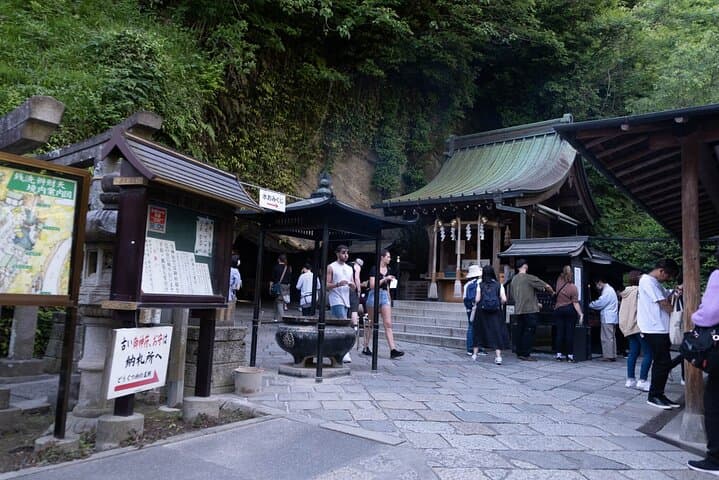

A morning breeze off Sagami Bay cools the pavement as a guide leads the group from Kamakura Station into a web of mossy lanes and temple gates. The first turn brings you under vermilion torii at Sasuke Inari, where fox statues watch the path; later the trail narrows to a stone stairway that seems to fold into the hillside toward Zeniarai Benten’s spring.
A morning breeze off Sagami Bay cools the pavement as a guide leads the group from Kamakura Station into a web of mossy lanes and temple gates. The first turn brings you under vermilion torii at Sasuke Inari, where fox statues watch the path; later the trail narrows to a stone stairway that seems to fold into the hillside toward Zeniarai Benten’s spring.
This five-hour walk threads together Kamakura’s medieval history and coastal geography. The Daibutsu at Kotoku-in, a 13th-century bronze Amitabha, stands outside the temple hall, a weathered figure that survived earthquakes and tsunamis and anchors the city’s Buddhist legacy. Nearby, Eisyo-ji’s bamboo grove and small nunnery reveal quieter strands of Kamakura’s religious life. Geologically, the city sits on uplifted marine terraces; the shoreline at Yuigahama shows the meeting place of mountains and sea that shaped local culture and trade.
Expect uneven stone steps, short uphill stretches, and narrow shrine approaches rather than long mountain climbs. Lunch at La Terrasse Zen punctuates the tour with seasonal flavors and time to rest.
Practical points: wear grippy walking shoes for stones and steps; bring a light rain layer in spring and typhoon season; carry cash for small shrine offerings and souvenirs; plan to finish at Yuigahama Beach if you want to add a seaside walk. The pace is gentle but continuous—this is cultural walking, where curiosity and steady legs make the day rewarding.