THE ADVENTURE COLLECTIVE® · Independent discovery and booking for outdoor travel

A private day tour that packs Kamakura’s historic Great Buddha, a Lake Ashi pirate-ship cruise in Hakone, the crystal ponds of Oshino Hakkai and panoramic Mount Fuji views at Kawaguchiko into one well-paced itinerary. Ideal for travelers based in Tokyo who want maximum variety with minimal transit stress.
A private day tour that packs Kamakura’s historic Great Buddha, a Lake Ashi pirate-ship cruise in Hakone, the crystal ponds of Oshino Hakkai and panoramic Mount Fuji views at Kawaguchiko into one well-paced itinerary. Ideal for travelers based in Tokyo who want maximum variety with minimal transit stress.
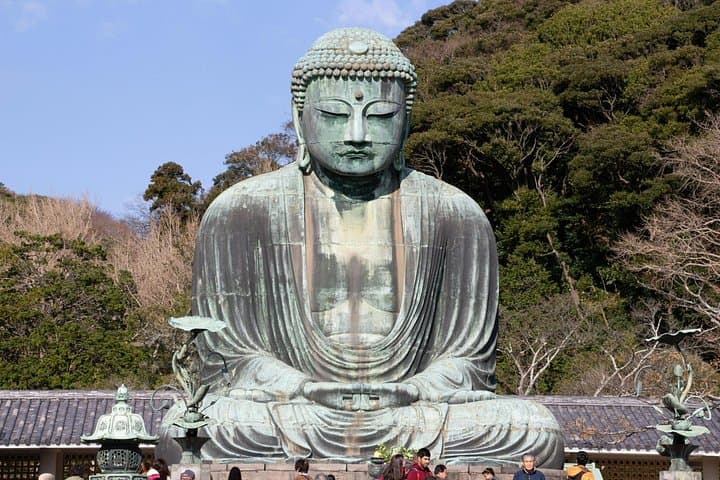
You begin the day in the hush of Kamakura’s temple lanes, the Great Buddha rising bronze and still against the morning sky.
Verified experiences and guided adventures in the surrounding area.
Operated by Asoko LLC · Hakone, Kanagawa
You begin the day in the hush of Kamakura’s temple lanes, the Great Buddha rising bronze and still against the morning sky.
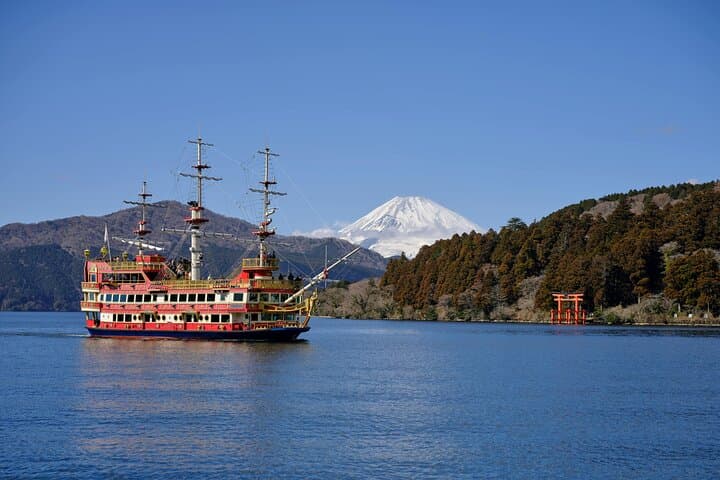
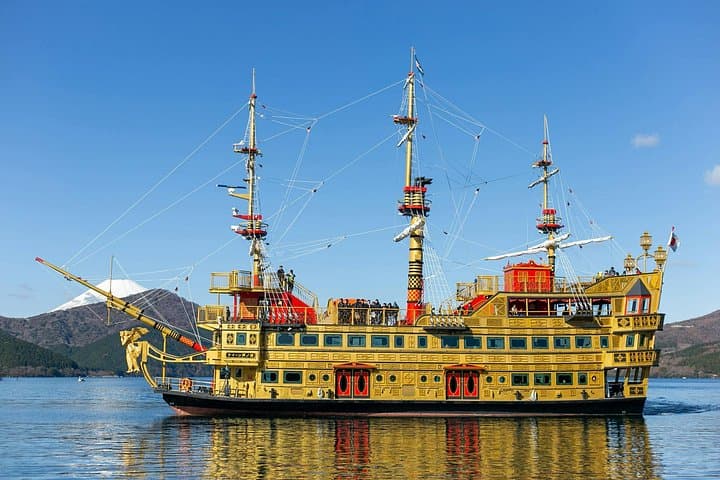
The statue’s quiet scale sets the tone—an entry into Japan’s medieval capital where samurai-era shrines and narrow alleys hold stories of faith and urban change. From there the route opens: a run through tree-lined roads into Hakone’s volcanic amphitheater, where Lake Ashi spreads like a polished mirror and a replica pirate ship threads the water, daring you toward a view of Mount Fuji when the clouds part.
Geology pins the route together: Hakone sits inside a volcanic caldera; Fuji’s snowmelt feeds the karst-filtered ponds of Oshino Hakkai; Kawaguchiko’s bridge frames glacially sculpted slopes that climb into Fuji’s flanks.
Culturally the day balances religious quiet—Kotoku-in’s 13th-century bronze Buddha—and Edo-era travel lore along the old Tokaido routes. Local vendors at Oshino Hakkai sell spring-water tofu and snacks made from the mountain’s pure aquifer.
Practical guidance follows the rhythm of the route. This private, roughly 10-hour tour moves at a relaxed pace but includes multiple short walks, stair sections at temple sites, boat boarding at Lake Ashi, and photo stops. Morning is the best bet for Fuji visibility; cloud cover increases by afternoon. Carry layered clothing, comfortable walking shoes, cash for small stalls, sun protection, and a camera with a short telephoto or binoculars.
Expect helpful commentary from an English-speaking driver-guide, minimal lines at major stops on a private route, and a full day that trades strenuous ascent for a varied, scenic sampler of Kanagawa and Fuji-area highlights.
moderate.
10 hours.
Moderate fitness—able to walk short distances, manage stairs and stand for photo stops throughout the day
Visibility depends on weather—clear mornings offer the best views; your guide times stops to maximize chances but cannot guarantee a view.
The itinerary includes the Lake Ashi cruise as a scheduled stop; admission and boarding are typically arranged by the guide but confirm at booking.
Walking is moderate: expect short walks of 10–30 minutes at most sites, plus stair sections at temples and boardings at the lakeshore.
The tour notes wheelchair-accessible transport and some accessible areas, but terrain at shrines and village ponds can be uneven—discuss needs with the operator before booking.
Kamakura’s Great Buddha dates to the 13th century and reflects the city’s role as a samurai capital; Hakone grew as a strategic checkpoint on the historic Tokaido route.
Mount Fuji’s watershed and Oshino Hakkai ponds are protected; visitors are encouraged to minimize litter, stay on paths, and avoid disrupting springs and shoreline habitat.
Asoko LLC operates guided outdoor trips and adventures with an emphasis on safety, stewardship, and memorable experiences.
You begin the day in the hush of Kamakura’s temple lanes, the Great Buddha rising bronze and still against the morning sky.
You begin the day in the hush of Kamakura’s temple lanes, the Great Buddha rising bronze and still against the morning sky.
The statue’s quiet scale sets the tone—an entry into Japan’s medieval capital where samurai-era shrines and narrow alleys hold stories of faith and urban change. From there the route opens: a run through tree-lined roads into Hakone’s volcanic amphitheater, where Lake Ashi spreads like a polished mirror and a replica pirate ship threads the water, daring you toward a view of Mount Fuji when the clouds part.
Geology pins the route together: Hakone sits inside a volcanic caldera; Fuji’s snowmelt feeds the karst-filtered ponds of Oshino Hakkai; Kawaguchiko’s bridge frames glacially sculpted slopes that climb into Fuji’s flanks.
Culturally the day balances religious quiet—Kotoku-in’s 13th-century bronze Buddha—and Edo-era travel lore along the old Tokaido routes. Local vendors at Oshino Hakkai sell spring-water tofu and snacks made from the mountain’s pure aquifer.
Practical guidance follows the rhythm of the route. This private, roughly 10-hour tour moves at a relaxed pace but includes multiple short walks, stair sections at temple sites, boat boarding at Lake Ashi, and photo stops. Morning is the best bet for Fuji visibility; cloud cover increases by afternoon. Carry layered clothing, comfortable walking shoes, cash for small stalls, sun protection, and a camera with a short telephoto or binoculars.
Expect helpful commentary from an English-speaking driver-guide, minimal lines at major stops on a private route, and a full day that trades strenuous ascent for a varied, scenic sampler of Kanagawa and Fuji-area highlights.