THE ADVENTURE COLLECTIVE® · Independent discovery and booking for outdoor travel

A compact coastal day trip from Tokyo that pairs the Great Buddha of Kotoku-in with shrine-lined Kamakura streets and the ocean-swept island of Enoshima. Expect temple gates, seaside viewpoints and a full-day, guide-led itinerary with a mix of cultural history and walkable sights.
A compact coastal day trip from Tokyo that pairs the Great Buddha of Kotoku-in with shrine-lined Kamakura streets and the ocean-swept island of Enoshima. Expect temple gates, seaside viewpoints and a full-day, guide-led itinerary with a mix of cultural history and walkable sights.
You step off the Enoden at a seaside stop and the bay air pushes at your face like an invitation — salt and gulls urging you toward the island of Enoshima. The day unfolds as a sequence of contrasts: a hulking bronze Buddha sitting calmly in a temple courtyard; a shrine-lined avenue where banners snap in the wind; a compact volcanic islet whose stairways climb toward ocean viewpoints.
Verified experiences and guided adventures in the surrounding area.
Operated by Scenic Bend · Kamakura, Kanagawa
You step off the Enoden at a seaside stop and the bay air pushes at your face like an invitation — salt and gulls urging you toward the island of Enoshima. The day unfolds as a sequence of contrasts: a hulking bronze Buddha sitting calmly in a temple courtyard; a shrine-lined avenue where banners snap in the wind; a compact volcanic islet whose stairways climb toward ocean viewpoints.
Kamakura served as Japan’s political center under the Kamakura Shogunate (1192–1333), and those layers of medieval history remain visible in wooden torii, temple gates and the city’s human-scale layout. Geology plays its part: Enoshima itself is a sand-and-volcanic formation that rose from the surf in ancient accounts, while the coastal plain frames occasional, crisp views of Mount Fuji on clear days.
Culturally the route mixes religion and pop culture — Tsurugaoka Hachimangu was the samurai’s focal point, while Enoshima appears in modern animation and local folklore celebrating Benzaiten, the island’s patron deity.
Practical guidance: the tour is a full-day shared coach itinerary of about 9–10 hours with guided stops — expect roughly 30 minutes at Kotoku-in (Great Buddha), 110 minutes on Enoshima and about 70 minutes at Tsurugaoka Hachimangu. Bring small cash for shrine admissions (Kotoku-in charges separate fees), comfortable grippy shoes for temple steps and coastal paths, sun and rain protection, and a refillable bottle. The route is mostly paved with some uneven stone steps; the pace is moderate and suitable for most travelers. Morning departures from Tokyo give the best chance of clear views and lighter crowds.
easy.
9–10 hours.
Able to walk several short urban and coastal sections, climb stairs, and stand for guided commentary; suitable for most fitness levels.
No — the tour includes guide and transport but some local admissions are not covered; Kotoku-in charges around 300¥ for grounds and 50¥ to enter the Buddha interior.
Morning departures begin from central Tokyo meeting points (JR Tokyo Station under the BEAMS sign or Tokyo Mode Gakuen) — check your voucher for the exact time and meeting location.
Foldable strollers are permitted if noted at booking and infants must sit on an adult’s lap; inform the operator in advance to avoid refusal on the day.
No — the itinerary is fixed for carpooling; leaving the group is treated as a cancellation of participation and may forfeit refunds and assistance.
Kamakura was Japan’s de facto capital under the Kamakura Shogunate (1192–1333), and its shrines and temples served political as well as spiritual roles for samurai elites.
High foot traffic at shrines and Enoshima pressures fragile coastal vegetation; stick to paths, avoid littering, and respect shrine rules to reduce impact.
Scenic Bend operates guided outdoor trips and adventures with an emphasis on safety, stewardship, and memorable experiences.
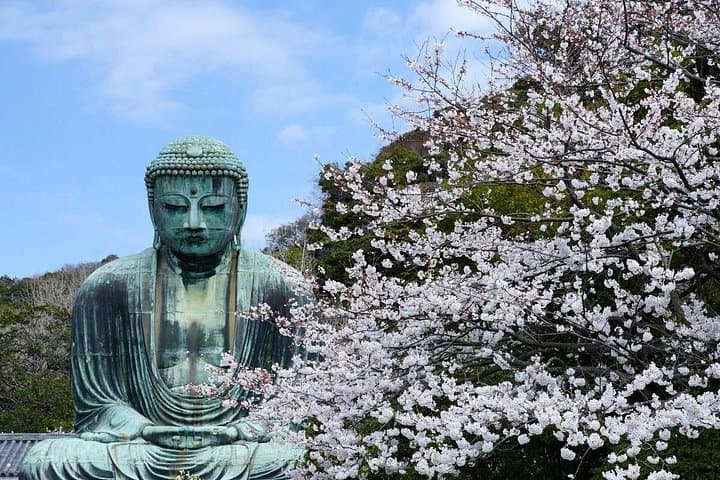
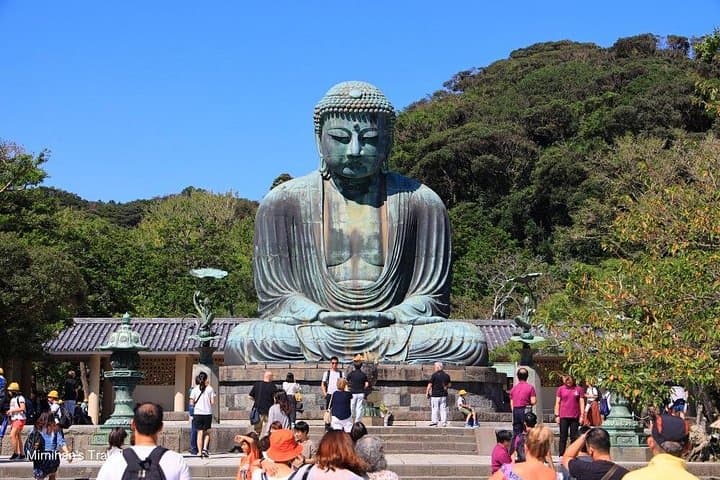
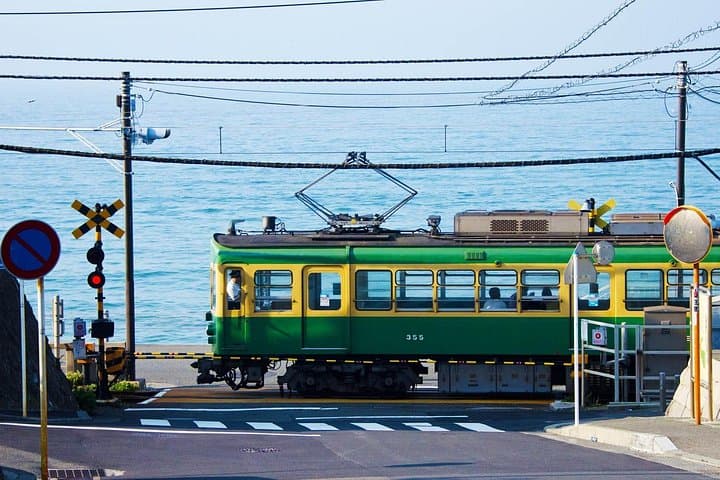
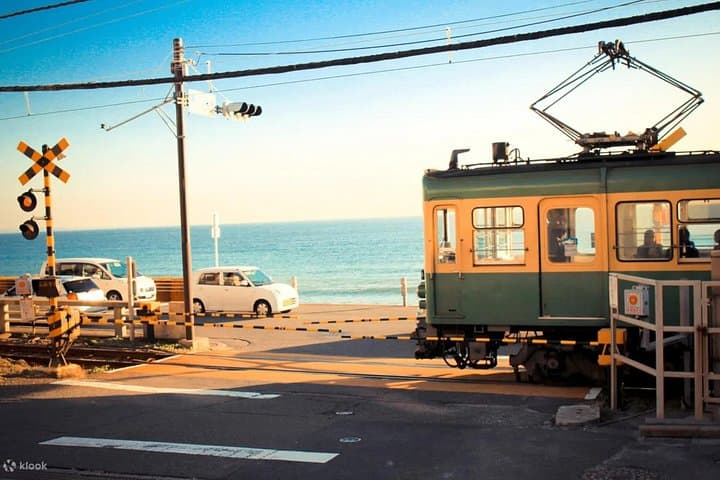
You step off the Enoden at a seaside stop and the bay air pushes at your face like an invitation — salt and gulls urging you toward the island of Enoshima. The day unfolds as a sequence of contrasts: a hulking bronze Buddha sitting calmly in a temple courtyard; a shrine-lined avenue where banners snap in the wind; a compact volcanic islet whose stairways climb toward ocean viewpoints.
You step off the Enoden at a seaside stop and the bay air pushes at your face like an invitation — salt and gulls urging you toward the island of Enoshima. The day unfolds as a sequence of contrasts: a hulking bronze Buddha sitting calmly in a temple courtyard; a shrine-lined avenue where banners snap in the wind; a compact volcanic islet whose stairways climb toward ocean viewpoints.
Kamakura served as Japan’s political center under the Kamakura Shogunate (1192–1333), and those layers of medieval history remain visible in wooden torii, temple gates and the city’s human-scale layout. Geology plays its part: Enoshima itself is a sand-and-volcanic formation that rose from the surf in ancient accounts, while the coastal plain frames occasional, crisp views of Mount Fuji on clear days.
Culturally the route mixes religion and pop culture — Tsurugaoka Hachimangu was the samurai’s focal point, while Enoshima appears in modern animation and local folklore celebrating Benzaiten, the island’s patron deity.
Practical guidance: the tour is a full-day shared coach itinerary of about 9–10 hours with guided stops — expect roughly 30 minutes at Kotoku-in (Great Buddha), 110 minutes on Enoshima and about 70 minutes at Tsurugaoka Hachimangu. Bring small cash for shrine admissions (Kotoku-in charges separate fees), comfortable grippy shoes for temple steps and coastal paths, sun and rain protection, and a refillable bottle. The route is mostly paved with some uneven stone steps; the pace is moderate and suitable for most travelers. Morning departures from Tokyo give the best chance of clear views and lighter crowds.