THE ADVENTURE COLLECTIVE® · Independent discovery and booking for outdoor travel

Experience Kakum’s famous canopy walkway on a private shore excursion from Takoradi. Walk suspended 100 feet above the forest floor, learn local history from an expert guide, and return the same day to port.
Experience Kakum’s famous canopy walkway on a private shore excursion from Takoradi. Walk suspended 100 feet above the forest floor, learn local history from an expert guide, and return the same day to port.
You step off the vehicle and into humidity that smells of earth and green. The rainforest closes around you like a living room, trunks rising in vertical rhythm while the canopy walkway sways gently above—100 feet up where the light slants through a web of leaves. The path beneath your boots is damp loam, and the air carries the distant chatter of monkeys and the sharper calls of canopy birds.
Verified experiences and guided adventures in the surrounding area.
Operated by Hausa Tours · Cape Coast, Central Region
You step off the vehicle and into humidity that smells of earth and green. The rainforest closes around you like a living room, trunks rising in vertical rhythm while the canopy walkway sways gently above—100 feet up where the light slants through a web of leaves. The path beneath your boots is damp loam, and the air carries the distant chatter of monkeys and the sharper calls of canopy birds.
Kakum sits on the coastal plain of Ghana’s Central Region, a remnant of lowland tropical forest that survived patterns of colonial clearing and cocoa expansion. The park’s geology is old, a shallow landscape of laterite and weathered bedrock that channels streams into narrow valleys; that structure is why the canopy walkway can span dramatic voids between tall trees. Culturally, the area links to Cape Coast’s trading history—drive past colonial forts and fishing harbors and you’ll feel the coastline’s role in Ghanaian history. Local guides share stories about Monkey Hill and the traditional uses of forest plants as you move between towers.
Practically, this is an all-day shore excursion: expect around 8–9 hours including transfers, a guided canopy walk of roughly 60–120 minutes, and a roadside lunch stop. Trails are steep in short bursts and muddy in the rainy season; bring sturdy shoes, sun and rain layers, and insect protection. Start early to avoid heat and mid-day crowds, and listen closely to your ranger—safety briefings and weight limits on the bridges are enforced.
Respect the forest: stay on the walkway, avoid feeding wildlife and pack out waste. Do that and the canopy will give you a rare, high-altitude view of a resilient West African ecosystem.
moderate.
8–9 hours.
Good general fitness for short steep sections, some hiking on uneven ground and ability to climb stairs to the walkway towers.
Guided time on the canopy walkway and immediate trails is typically 60–120 minutes, part of an 8–9 hour shore excursion including transfers.
Yes—children are allowed but should be supervised; weight limits and safety briefings are enforced, and very young children may find the height intimidating.
This private excursion includes park admission as listed in the itinerary—confirm at booking if you need separate receipts for group entries.
The drier months (roughly December–March) offer clearer trails and easier walking, while the rainy season (May–June and Sept–Oct) brings lush foliage but mud and heavier showers.
The park lies near Cape Coast, an area shaped by colonial-era forts and the coastal trade; local communities have long used the forest for medicinal plants and cultural practices.
Kakum is managed for conservation and ecotourism; staying on trails, avoiding litter, and supporting local guides helps minimize visitor impact.
Hausa Tours operates guided outdoor trips and adventures with an emphasis on safety, stewardship, and memorable experiences.
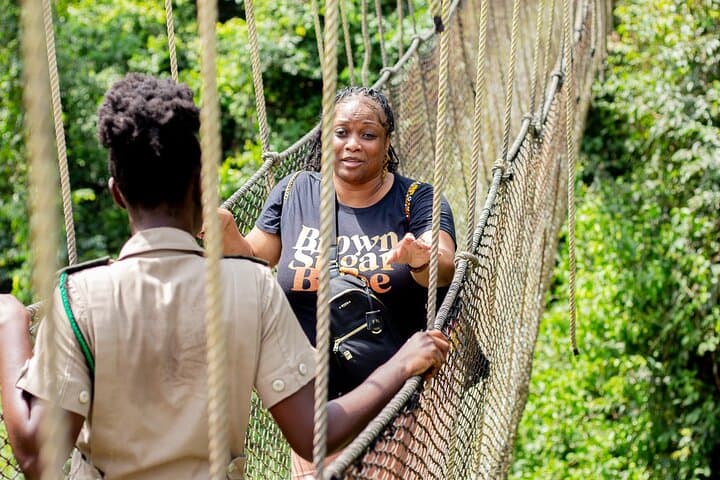
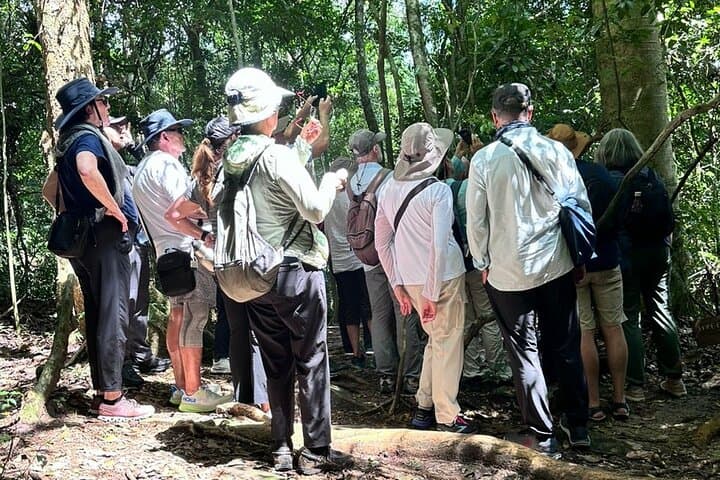
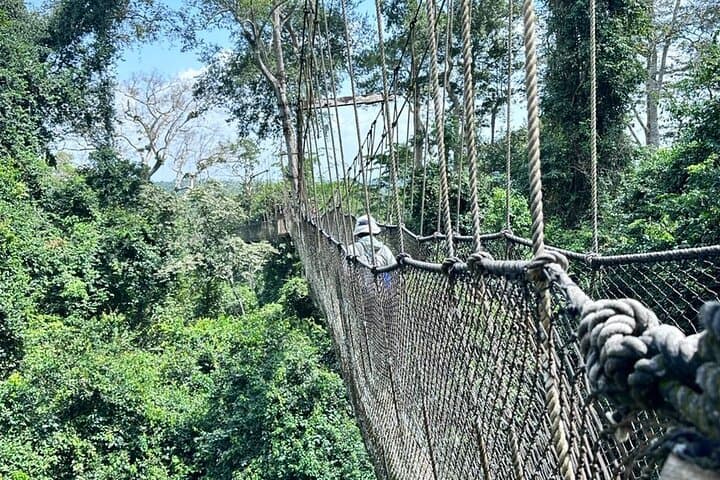

You step off the vehicle and into humidity that smells of earth and green. The rainforest closes around you like a living room, trunks rising in vertical rhythm while the canopy walkway sways gently above—100 feet up where the light slants through a web of leaves. The path beneath your boots is damp loam, and the air carries the distant chatter of monkeys and the sharper calls of canopy birds.
You step off the vehicle and into humidity that smells of earth and green. The rainforest closes around you like a living room, trunks rising in vertical rhythm while the canopy walkway sways gently above—100 feet up where the light slants through a web of leaves. The path beneath your boots is damp loam, and the air carries the distant chatter of monkeys and the sharper calls of canopy birds.
Kakum sits on the coastal plain of Ghana’s Central Region, a remnant of lowland tropical forest that survived patterns of colonial clearing and cocoa expansion. The park’s geology is old, a shallow landscape of laterite and weathered bedrock that channels streams into narrow valleys; that structure is why the canopy walkway can span dramatic voids between tall trees. Culturally, the area links to Cape Coast’s trading history—drive past colonial forts and fishing harbors and you’ll feel the coastline’s role in Ghanaian history. Local guides share stories about Monkey Hill and the traditional uses of forest plants as you move between towers.
Practically, this is an all-day shore excursion: expect around 8–9 hours including transfers, a guided canopy walk of roughly 60–120 minutes, and a roadside lunch stop. Trails are steep in short bursts and muddy in the rainy season; bring sturdy shoes, sun and rain layers, and insect protection. Start early to avoid heat and mid-day crowds, and listen closely to your ranger—safety briefings and weight limits on the bridges are enforced.
Respect the forest: stay on the walkway, avoid feeding wildlife and pack out waste. Do that and the canopy will give you a rare, high-altitude view of a resilient West African ecosystem.