THE ADVENTURE COLLECTIVE® · Independent discovery and booking for outdoor travel

See Kakadu from both sky and river: a two-hour scenic flight over escarpments and a cultural cruise and rock-art visit at Ubirr. This full-day trip pairs dramatic aerial views with guided insights into Bininj/Mungguy culture and wetland ecology.
See Kakadu from both sky and river: a two-hour scenic flight over escarpments and a cultural cruise and rock-art visit at Ubirr. This full-day trip pairs dramatic aerial views with guided insights into Bininj/Mungguy culture and wetland ecology.
You rise above the red escarpment as the aircraft banks over jagged sandstone, the floodplain below opening into ribbons of wetlands and paperbark forest. From the cabin window the Arnhem Land escarpment slices the horizon; on the ground a small group disembarks to trace ancient ochre handprints and layered rock galleries at Ubirr.
Verified experiences and guided adventures in the surrounding area.
Operated by Kakadu Air Services · Jabiru, Northern Territory
You rise above the red escarpment as the aircraft banks over jagged sandstone, the floodplain below opening into ribbons of wetlands and paperbark forest. From the cabin window the Arnhem Land escarpment slices the horizon; on the ground a small group disembarks to trace ancient ochre handprints and layered rock galleries at Ubirr.
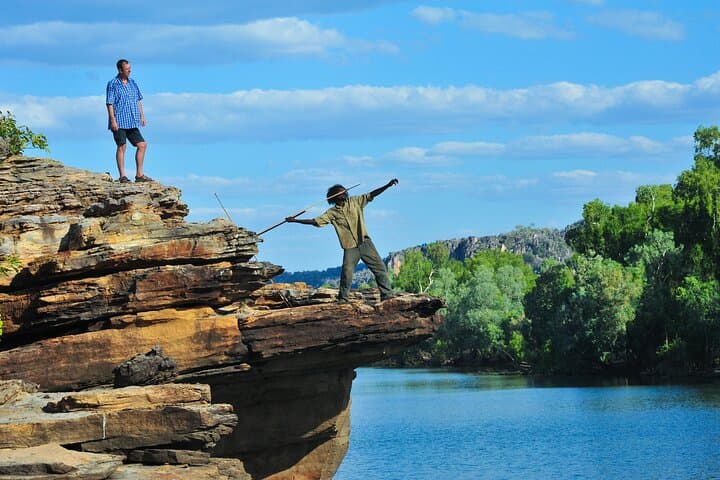
Kakadu’s dual World Heritage listing recognizes both its extraordinary biodiversity and the cultural continuity of the Bininj / Mungguy people. The park’s geology—ancient sandstones eroded into escarpments, billabongs formed by seasonal flooding—frames millennia of human habitation recorded in rock art. A Guluyambi Cultural Cruise along the East Alligator River offers a different perspective: submerged forests and tidal channels where saltwater crocodiles patrol and waterbirds congregate.
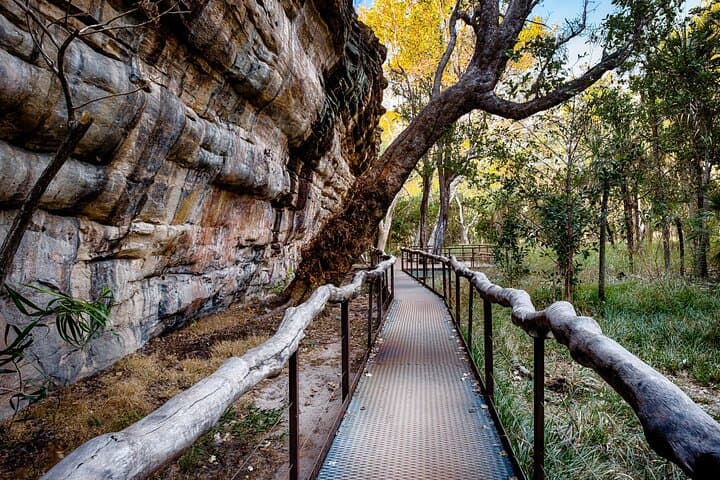
This full-day loop mixes a scenic flight (about two hours of aerial viewing) with guided stops at Ubirr rock art and a leisurely cultural cruise. Expect short, interpretive walks to viewing platforms, gentle boat movement, and periods spent standing on uneven rock. Guides discuss creation stories, traditional land management and the ways seasonal cycles shape life here.
Practical notes: travel from Darwin in the early morning; wear sun-protective clothing, sturdy walking shoes and insect repellent; carry at least 2 liters of water. The wet season (roughly November–April) can close roads and alter wildlife sightings—flights and cruise schedules are weather-dependent. Respect cultural restrictions at rock art sites: follow guide directions, don’t touch art, and photograph only where allowed. By late afternoon you’ll be back in Darwin with a clearer sense of why Kakadu’s landscape and culture are inseparable.
easy.
7 hours.
Suitable for people in average fitness—short, mostly flat walks and brief boardings of small boats; some standing and uneven rock surfaces.
The scenic flying component is nearly two hours of aerial viewing integrated into the full-day itinerary.
Yes—tour operators allow infants (often required to sit on laps) and the experience is family-friendly, though attention is needed near water and rocky areas.
Wet-season conditions can cancel or modify the itinerary; flights and cruises are weather-dependent and operators may reschedule or refund per policy.
Yes—this tour includes the Kakadu National Park permit and landing/facility fees as listed in inclusions.
Kakadu has been occupied by Bininj / Mungguy people for at least 65,000 years; rock art sites like Ubirr document long-standing cultural and environmental relationships.
Kakadu’s World Heritage status requires permits and adherence to cultural site protections; staying on trails and following guide instructions helps protect fragile rock art and wetland ecosystems.
Kakadu Air Services operates guided outdoor trips and adventures with an emphasis on safety, stewardship, and memorable experiences.
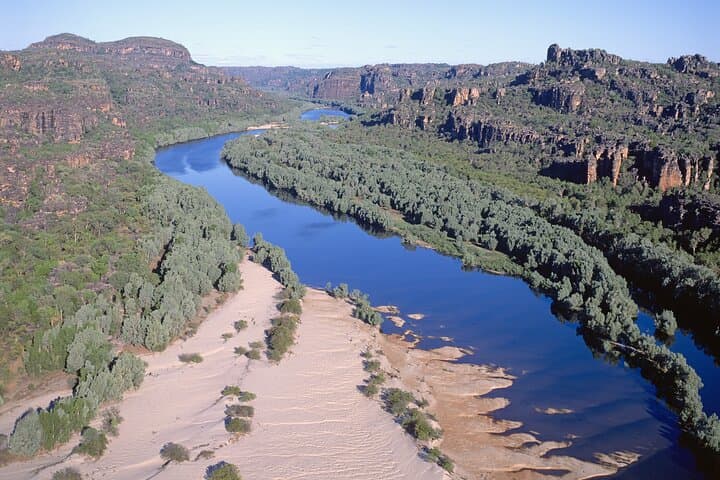
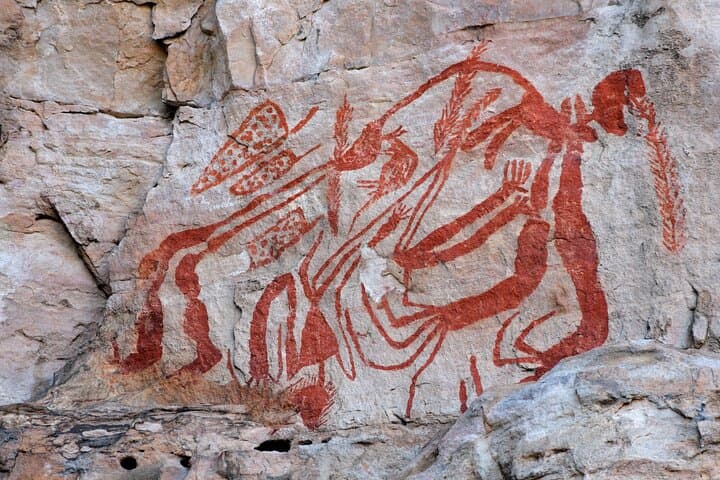
You rise above the red escarpment as the aircraft banks over jagged sandstone, the floodplain below opening into ribbons of wetlands and paperbark forest. From the cabin window the Arnhem Land escarpment slices the horizon; on the ground a small group disembarks to trace ancient ochre handprints and layered rock galleries at Ubirr.
You rise above the red escarpment as the aircraft banks over jagged sandstone, the floodplain below opening into ribbons of wetlands and paperbark forest. From the cabin window the Arnhem Land escarpment slices the horizon; on the ground a small group disembarks to trace ancient ochre handprints and layered rock galleries at Ubirr.
Kakadu’s dual World Heritage listing recognizes both its extraordinary biodiversity and the cultural continuity of the Bininj / Mungguy people. The park’s geology—ancient sandstones eroded into escarpments, billabongs formed by seasonal flooding—frames millennia of human habitation recorded in rock art. A Guluyambi Cultural Cruise along the East Alligator River offers a different perspective: submerged forests and tidal channels where saltwater crocodiles patrol and waterbirds congregate.
This full-day loop mixes a scenic flight (about two hours of aerial viewing) with guided stops at Ubirr rock art and a leisurely cultural cruise. Expect short, interpretive walks to viewing platforms, gentle boat movement, and periods spent standing on uneven rock. Guides discuss creation stories, traditional land management and the ways seasonal cycles shape life here.
Practical notes: travel from Darwin in the early morning; wear sun-protective clothing, sturdy walking shoes and insect repellent; carry at least 2 liters of water. The wet season (roughly November–April) can close roads and alter wildlife sightings—flights and cruise schedules are weather-dependent. Respect cultural restrictions at rock art sites: follow guide directions, don’t touch art, and photograph only where allowed. By late afternoon you’ll be back in Darwin with a clearer sense of why Kakadu’s landscape and culture are inseparable.