THE ADVENTURE COLLECTIVE® · Independent discovery and booking for outdoor travel

Spend a long day tracing Tunisia’s layered past: the Aghlabid grandeur of Kairouan and the monumental Roman amphitheatre at El Jem. This private tour from Hammamet combines focused historic sites with practical transport and a local guide.
Spend a long day tracing Tunisia’s layered past: the Aghlabid grandeur of Kairouan and the monumental Roman amphitheatre at El Jem. This private tour from Hammamet combines focused historic sites with practical transport and a local guide.
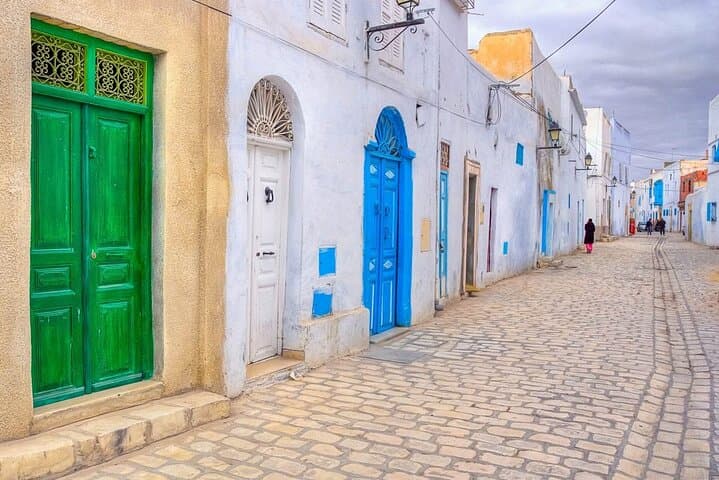
You step out of the air-conditioned vehicle into a sunbaked street and the call to prayer folds across low, ochre walls — this is Kairouan at first light, a city that once sent scholars and imams across the Mediterranean.
Verified experiences and guided adventures in the surrounding area.
Operated by Ôthentic Travel & Services · Kairouan, Kairouan Governorate
You step out of the air-conditioned vehicle into a sunbaked street and the call to prayer folds across low, ochre walls — this is Kairouan at first light, a city that once sent scholars and imams across the Mediterranean.
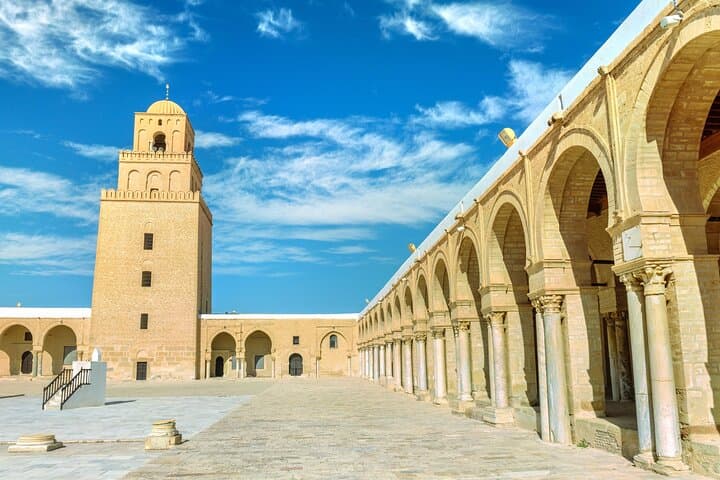
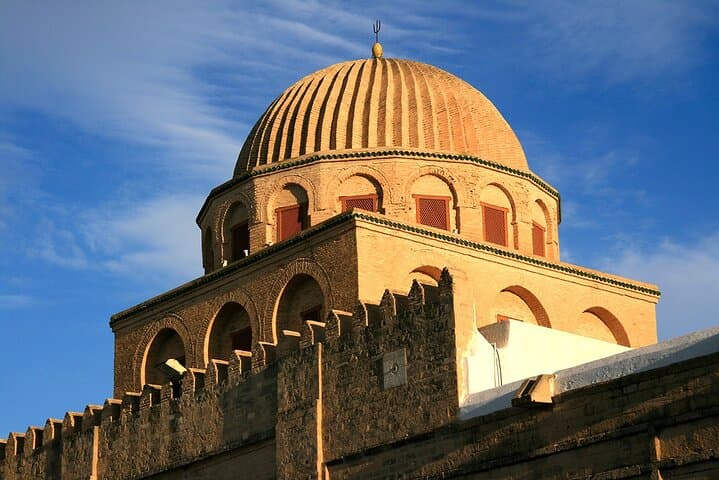
Walk the courtyard of the Great Mosque and feel the weight of centuries in its thick walls and carved wooden doors; the Aghlabids built here in the 9th century and the site became a pivot for Islamic learning in North Africa. The medina’s narrow alleys are lined with low shops where carpets and ceramics are worked with the same motions passed through generations. Later, the landscape opens to the plains toward El Jem, where Roman ambition still casts a shadow.
The amphitheatre at El Jem (ancient Thysdrus) rises from flat farmland — tiers of stone that once held gladiatorial games for a prosperous provincial capital. Geologically the route traces Tunisia’s coastal plain: limestone outcrops and loess soils, crops of olive and grain bending to the heat.
Practical guidance: this private day tour runs about 7–9 hours including transport from Hammamet; bring a refillable water bottle, sun protection and comfortable walking shoes for uneven stone. Dress respectfully for mosque visits (shoulders and knees covered). Expect short guided stops inside museums and the amphitheatre; audio can be difficult on windy days, so ask your guide for quieter spots to hear the history.
Timing tip: start early to avoid midday heat in summer and to catch the medina when shops first open — the rhythm of the day is part of the story.
moderate.
7–9 hours.
Moderate fitness — mostly walking and short stair climbs; not suitable for those with serious mobility issues.
The private tour lasts about 7–9 hours (420–540 minutes) and includes private, air-conditioned transportation with pickup from Hammamet.
Admission to the Great Mosque in Kairouan is included as a guided stop, and entrance to El Jem amphitheatre and museum is included per the itinerary.
Infants and small children may ride in a stroller; however the tour involves walking on uneven surfaces and stairs, so it’s not recommended for people with serious mobility issues.
Guides typically provide commentary in common tourist languages; as a private tour you can request emphasis on particular sites or a longer lunch, subject to time.
Kairouan was founded in the 7th century and became an Aghlabid capital in the 9th century, a key center for Islamic scholarship; El Jem (Thysdrus) grew wealthy under Rome and built one of the empire’s largest amphitheatres.
Both sites are fragile — stay on marked paths, avoid touching mosaics and carved stone, and follow guide instructions to reduce erosion and wear from foot traffic.
Ôthentic Travel & Services operates guided outdoor trips and adventures with an emphasis on safety, stewardship, and memorable experiences.
You step out of the air-conditioned vehicle into a sunbaked street and the call to prayer folds across low, ochre walls — this is Kairouan at first light, a city that once sent scholars and imams across the Mediterranean.
You step out of the air-conditioned vehicle into a sunbaked street and the call to prayer folds across low, ochre walls — this is Kairouan at first light, a city that once sent scholars and imams across the Mediterranean.
Walk the courtyard of the Great Mosque and feel the weight of centuries in its thick walls and carved wooden doors; the Aghlabids built here in the 9th century and the site became a pivot for Islamic learning in North Africa. The medina’s narrow alleys are lined with low shops where carpets and ceramics are worked with the same motions passed through generations. Later, the landscape opens to the plains toward El Jem, where Roman ambition still casts a shadow.
The amphitheatre at El Jem (ancient Thysdrus) rises from flat farmland — tiers of stone that once held gladiatorial games for a prosperous provincial capital. Geologically the route traces Tunisia’s coastal plain: limestone outcrops and loess soils, crops of olive and grain bending to the heat.
Practical guidance: this private day tour runs about 7–9 hours including transport from Hammamet; bring a refillable water bottle, sun protection and comfortable walking shoes for uneven stone. Dress respectfully for mosque visits (shoulders and knees covered). Expect short guided stops inside museums and the amphitheatre; audio can be difficult on windy days, so ask your guide for quieter spots to hear the history.
Timing tip: start early to avoid midday heat in summer and to catch the medina when shops first open — the rhythm of the day is part of the story.