THE ADVENTURE COLLECTIVE® · Independent discovery and booking for outdoor travel

Walk Kona’s shoreline with a storyteller who links the town’s colonial-era landmarks to older Hawaiian accounts of prophecy, spirits and sacred stones. This two-hour guided ghost walk blends archaeology, cultural context and eerie local lore for a brisk, illuminating evening in Kailua-Kona.
Walk Kona’s shoreline with a storyteller who links the town’s colonial-era landmarks to older Hawaiian accounts of prophecy, spirits and sacred stones. This two-hour guided ghost walk blends archaeology, cultural context and eerie local lore for a brisk, illuminating evening in Kailua-Kona.
The tour begins where Kona’s black lava meets the Pacific—wind pulled thin across the surface, the ocean daring you to listen. Guide and storyteller step forward with an easy authority, voice low so the surf seems to lean in. You walk the shoreline where steamship chimneys once punctuated the skyline and where folklore gathers beneath palm shadows: shark-eyed cravings, prophetic birthrights and the restless presence of chiefs who changed an island’s fate.
Verified experiences and guided adventures in the surrounding area.
Operated by American Ghost Walks - Hawaii · Kailua-Kona, Hawaii
The tour begins where Kona’s black lava meets the Pacific—wind pulled thin across the surface, the ocean daring you to listen. Guide and storyteller step forward with an easy authority, voice low so the surf seems to lean in. You walk the shoreline where steamship chimneys once punctuated the skyline and where folklore gathers beneath palm shadows: shark-eyed cravings, prophetic birthrights and the restless presence of chiefs who changed an island’s fate.
Kailua-Kona wears its past in plain sight. The route threads colonial storefronts, the coral-stone foundations of 19th-century missions, and the Hulihe‘e Palace where ali‘i (chiefs) once retired. Geologically, you’re moving across a young landscape—black pahoehoe flows smoothed by decades of salt and foot traffic—land that still remembers the heat of eruptions and the ocean’s slow polishing. Culturally, each stop is a seam between two worlds: traditional kapu-era belief and the rapid missionary-era changes that reshaped Hawaiian society. Here the story of King Kamehameha—born beneath an auspicious, almost monstrous craving—meets rumors of more recent poltergeists haunting guest rooms and piers.
The tour balances uncanny tales with tangible context. At the pier, you’ll hear accounts of the steamship Mauna Loa and a grief that left echoes in the harbor. At Hulihe‘e Palace, the guide points out ki‘i akua—wooden images that carried mana—and explains why a pohaku (sacred stone) was guarded and sometimes moved to avert misfortune. Along the way you’ll learn how tattoos, chants and place names functioned as maps of allegiance and spiritual geography, connecting visible streets to invisible tracks of meaning.
Practicality anchors the storytelling. This is a two-hour, mostly flat walk along paved sidewalks and coastal boardwalk; expect frequent stops and standing-room storytelling. Bring a sun hat and water—Kona’s sun finds shade in unexpected places—and a light layer for evening breezes. Respect sacred sites: don’t climb on artifacts or move rocks; ask before photographing people at private shrines. The guide is a local paranormal enthusiast and interpreter who layers first-hand anecdote with archival fact, so questions about provenance are welcome.
For travelers, the tour doubles as orientation: it points you to quieter beaches, the palace museum, and small museums with artifacts you can later visit. If you come for a thrill, you’ll get it; if you come for history, you’ll leave with sharper questions about power, prophecy and how a small town keeps the past alive—sometimes insistently so.
easy.
2 hours.
Suitable for most fitness levels—expect gentle walking and standing during storytelling stops.
The walk is approximately two hours with multiple 10–15 minute storytelling stops along the route.
Yes—most surfaces are paved and wheelchair accessible; notify the operator when booking if you need accommodations.
Yes; the stories are family-friendly but include themes of death and superstition—use discretion for very young children.
Stops are exterior and interpretive; specific museum access is not included but guides will point out nearby museums you can visit separately.
Tours are conducted in English; check with the operator for special-language offerings.
Yes—stroller access is permitted and surfaces are generally smooth, though some narrow sidewalks require care.
Kailua-Kona was a seat of power in the late 18th and early 19th centuries; it witnessed key events in Kamehameha’s rise and the arrival of missionaries that reshaped Hawaiian governance and religion.
Respect for cultural sites is enforced by local stewards; avoid touching artifacts or removing stones and use reef-safe sunscreen to protect nearshore ecosystems.
American Ghost Walks - Hawaii operates guided outdoor trips and adventures with an emphasis on safety, stewardship, and memorable experiences.
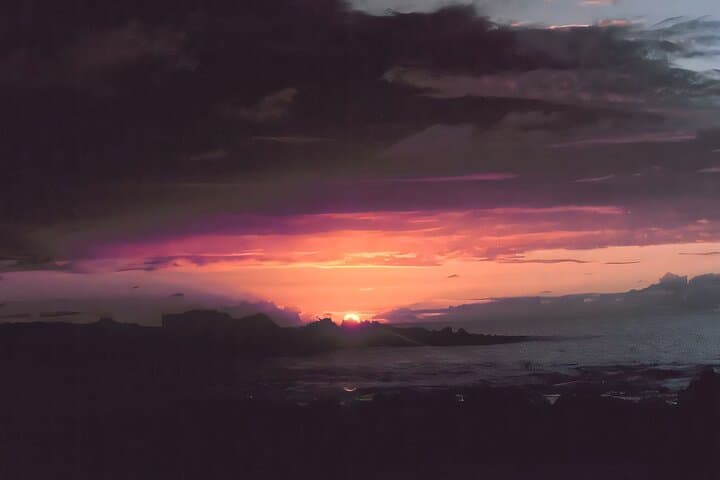
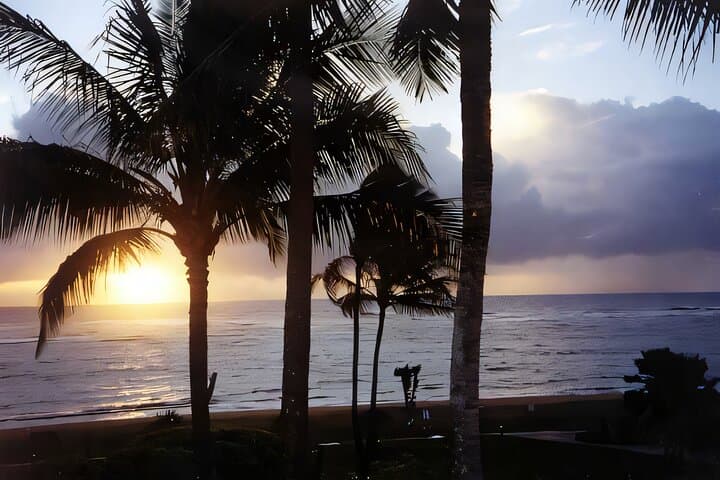
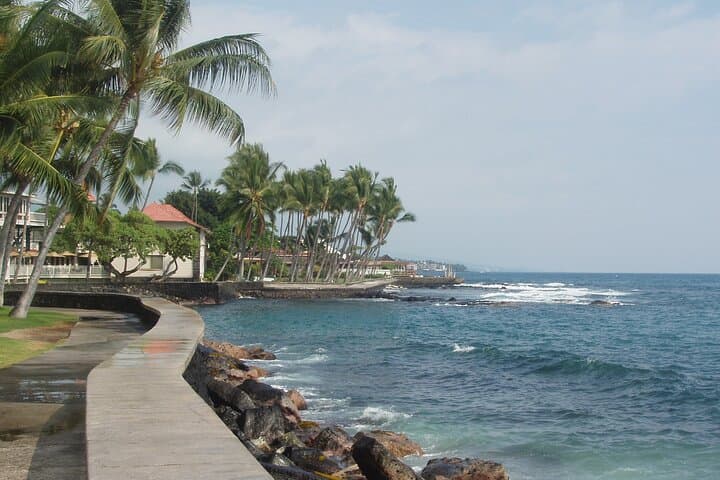
The tour begins where Kona’s black lava meets the Pacific—wind pulled thin across the surface, the ocean daring you to listen. Guide and storyteller step forward with an easy authority, voice low so the surf seems to lean in. You walk the shoreline where steamship chimneys once punctuated the skyline and where folklore gathers beneath palm shadows: shark-eyed cravings, prophetic birthrights and the restless presence of chiefs who changed an island’s fate.
The tour begins where Kona’s black lava meets the Pacific—wind pulled thin across the surface, the ocean daring you to listen. Guide and storyteller step forward with an easy authority, voice low so the surf seems to lean in. You walk the shoreline where steamship chimneys once punctuated the skyline and where folklore gathers beneath palm shadows: shark-eyed cravings, prophetic birthrights and the restless presence of chiefs who changed an island’s fate.
Kailua-Kona wears its past in plain sight. The route threads colonial storefronts, the coral-stone foundations of 19th-century missions, and the Hulihe‘e Palace where ali‘i (chiefs) once retired. Geologically, you’re moving across a young landscape—black pahoehoe flows smoothed by decades of salt and foot traffic—land that still remembers the heat of eruptions and the ocean’s slow polishing. Culturally, each stop is a seam between two worlds: traditional kapu-era belief and the rapid missionary-era changes that reshaped Hawaiian society. Here the story of King Kamehameha—born beneath an auspicious, almost monstrous craving—meets rumors of more recent poltergeists haunting guest rooms and piers.
The tour balances uncanny tales with tangible context. At the pier, you’ll hear accounts of the steamship Mauna Loa and a grief that left echoes in the harbor. At Hulihe‘e Palace, the guide points out ki‘i akua—wooden images that carried mana—and explains why a pohaku (sacred stone) was guarded and sometimes moved to avert misfortune. Along the way you’ll learn how tattoos, chants and place names functioned as maps of allegiance and spiritual geography, connecting visible streets to invisible tracks of meaning.
Practicality anchors the storytelling. This is a two-hour, mostly flat walk along paved sidewalks and coastal boardwalk; expect frequent stops and standing-room storytelling. Bring a sun hat and water—Kona’s sun finds shade in unexpected places—and a light layer for evening breezes. Respect sacred sites: don’t climb on artifacts or move rocks; ask before photographing people at private shrines. The guide is a local paranormal enthusiast and interpreter who layers first-hand anecdote with archival fact, so questions about provenance are welcome.
For travelers, the tour doubles as orientation: it points you to quieter beaches, the palace museum, and small museums with artifacts you can later visit. If you come for a thrill, you’ll get it; if you come for history, you’ll leave with sharper questions about power, prophecy and how a small town keeps the past alive—sometimes insistently so.