THE ADVENTURE COLLECTIVE® · Independent discovery and booking for outdoor travel

Visit two of the Kathmandu Valley’s most significant Shaiva sites in one half-day: the towering Kailashnath Mahadev statue and the ancient Doleshwor Mahadev temple. Expect panoramic views, active ritual, and short walks between sanctums.
Visit two of the Kathmandu Valley’s most significant Shaiva sites in one half-day: the towering Kailashnath Mahadev statue and the ancient Doleshwor Mahadev temple. Expect panoramic views, active ritual, and short walks between sanctums.
A low hill outside Kathmandu opens like a stage: metal and stone converge where a 44-meter Shiva keeps watch over the valley. The Kailashnath Mahadev statue dominates the ridge — arms folded in protective poise — while winding lanes and temple steps funnel pilgrims, priests and curious travelers around its base.
Verified experiences and guided adventures in the surrounding area.
Operated by Himalayan Advisor Pvt. Ltd. · Kathmandu, Bagmati Province
A low hill outside Kathmandu opens like a stage: metal and stone converge where a 44-meter Shiva keeps watch over the valley. The Kailashnath Mahadev statue dominates the ridge — arms folded in protective poise — while winding lanes and temple steps funnel pilgrims, priests and curious travelers around its base.
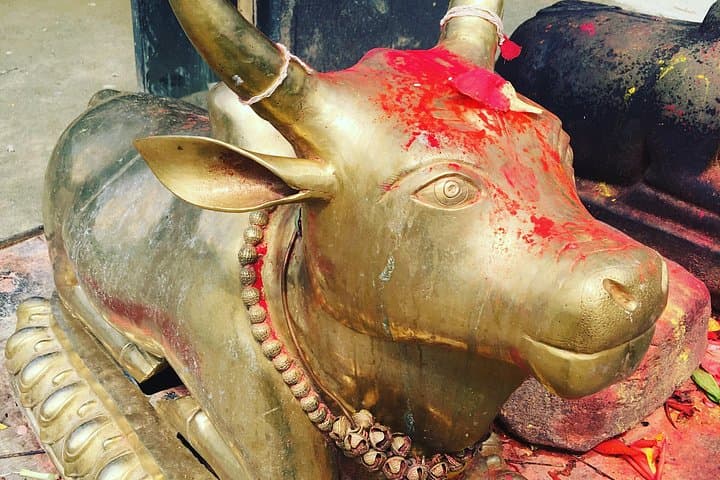
The tour pairs this modern colossus with Doleshwor Mahadev, an older temple site south of Bhaktapur tied in local memory to the Mahabharata and the legend of Kedarnath's lost head. Geology here is Kathmandu Valley’s basin: riverine terraces, compacted alluvium and low ridgelines that give short bursts of elevation rather than alpine climbs. Culturally, both sites are live places of worship — bells, vermilion, and ongoing puja bring continuity between ancient myths and present practice.
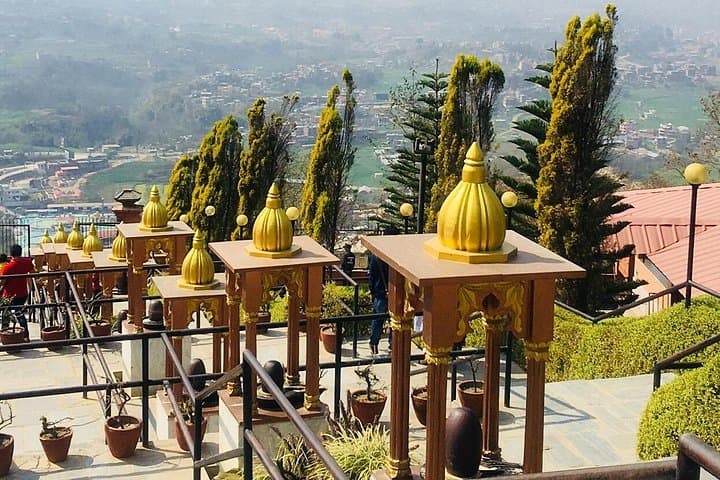
Visitors should expect a short, vehicle-based day trip (about four hours) with guided stops, photo opportunities and time to observe rituals. The Kailashnath complex offers panoramic valley views; Doleshwor’s sanctum is intimate and reverent. Practical notes: wear modest, breathable clothing that can be layered for sun and wind; remove shoes where required; carry small change for offerings; and allow time for traffic between sites.
This is not a strenuous hike but a culturally dense excursion—ideal for travelers who want a compact, respectful encounter with Kathmandu Valley’s Shaiva heritage. Morning departures avoid heat and crowds; bring water, a hat, and a willingness to follow guide instructions during temple visits.
easy.
4 hours.
Suitable for travelers in regular, everyday physical condition; involves short walks and steps at each site.
The tour is approximately four hours door-to-door and includes transport, guide, and entrance fees.
Yes — the itinerary is vehicle-based with short walks; inform the operator of mobility needs at booking for pickup accommodations.
Yes — entrance fees for both Kailashnath and Doleshwor are included in the tour price.
Yes — shoes are typically removed at inner shrines; wear socks or be prepared to step barefoot on clean floors.
Kailashnath Mahadev was constructed as a modern monumental statue honoring Lord Shiva and overlooks the ancient Kathmandu Valley; Doleshwor is linked locally to the Mahabharata legend of Kedarnath’s lost head and has served as a longstanding pilgrimage site.
Temple grounds are managed locally; visitors should avoid littering, limit single-use plastics, and respect restricted areas to reduce wear on heritage surfaces.
Himalayan Advisor Pvt. Ltd. operates guided outdoor trips and adventures with an emphasis on safety, stewardship, and memorable experiences.
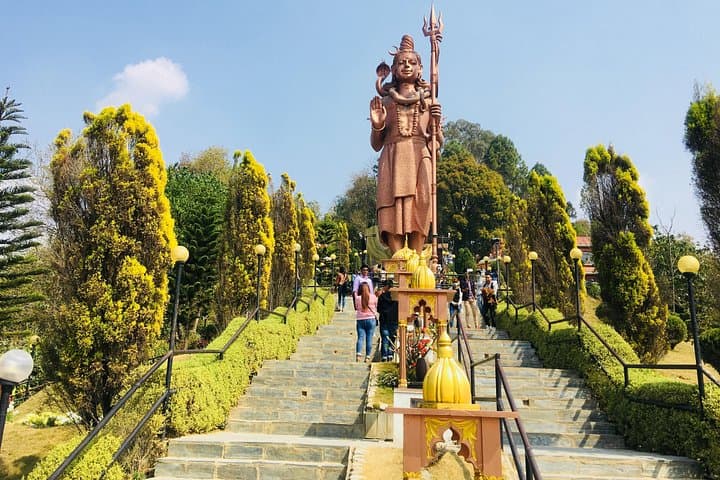
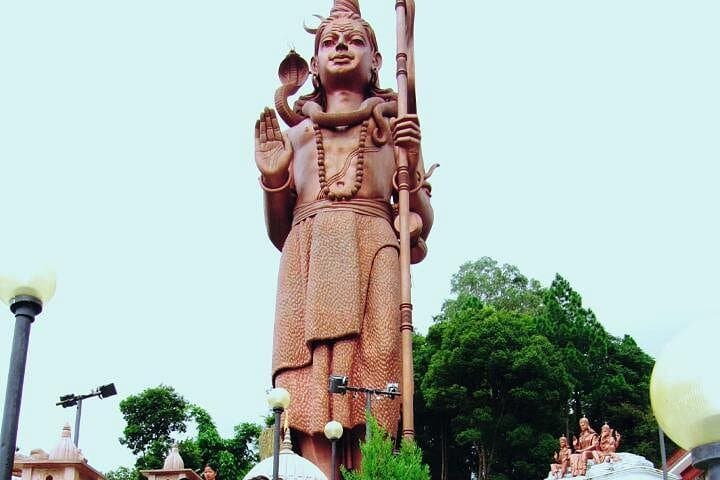
A low hill outside Kathmandu opens like a stage: metal and stone converge where a 44-meter Shiva keeps watch over the valley. The Kailashnath Mahadev statue dominates the ridge — arms folded in protective poise — while winding lanes and temple steps funnel pilgrims, priests and curious travelers around its base.
A low hill outside Kathmandu opens like a stage: metal and stone converge where a 44-meter Shiva keeps watch over the valley. The Kailashnath Mahadev statue dominates the ridge — arms folded in protective poise — while winding lanes and temple steps funnel pilgrims, priests and curious travelers around its base.
The tour pairs this modern colossus with Doleshwor Mahadev, an older temple site south of Bhaktapur tied in local memory to the Mahabharata and the legend of Kedarnath's lost head. Geology here is Kathmandu Valley’s basin: riverine terraces, compacted alluvium and low ridgelines that give short bursts of elevation rather than alpine climbs. Culturally, both sites are live places of worship — bells, vermilion, and ongoing puja bring continuity between ancient myths and present practice.
Visitors should expect a short, vehicle-based day trip (about four hours) with guided stops, photo opportunities and time to observe rituals. The Kailashnath complex offers panoramic valley views; Doleshwor’s sanctum is intimate and reverent. Practical notes: wear modest, breathable clothing that can be layered for sun and wind; remove shoes where required; carry small change for offerings; and allow time for traffic between sites.
This is not a strenuous hike but a culturally dense excursion—ideal for travelers who want a compact, respectful encounter with Kathmandu Valley’s Shaiva heritage. Morning departures avoid heat and crowds; bring water, a hat, and a willingness to follow guide instructions during temple visits.